White Lake Mongolia: A Crater Lake, a Volcano, and Zero Crowds
At 2,000 metres in central Mongolia, White Lake is a volcanic crater lake with water so clear it mirrors the sky. Ger camps, an extinct volcano, and some of the best stargazing in Asia await anyone willing to make the drive.
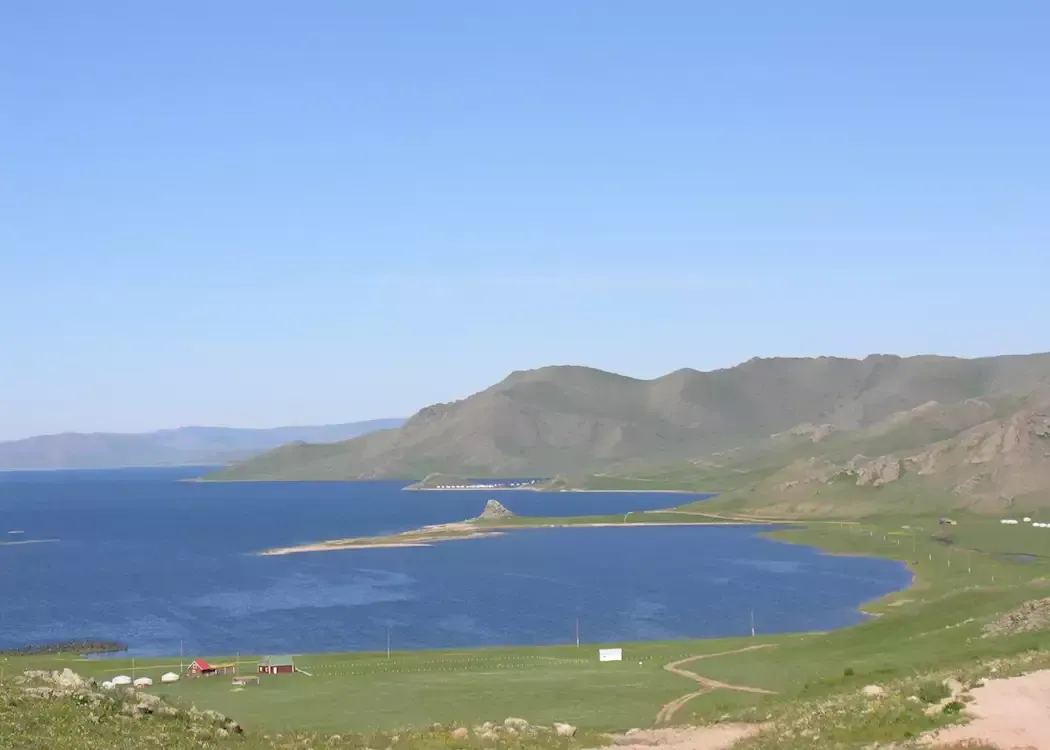
When a volcanic eruption carved a vast basin into the Mongolian steppe thousands of years ago, it left behind something that still feels undiscovered. White Lake Mongolia, known locally as Terkhiin Tsagaan Nuur, is a freshwater crater lake perched above 2,000 metres in central Mongolia. It sits surrounded by grassy hills, ancient lava fields, and the dark silhouette of the extinct Khorgo Volcano. The water is so transparent it mirrors the sky without a ripple. And the nights deliver a star show that genuinely stops people in their tracks.
What makes White Lake Mongolia special
I have been to plenty of lakes, but the combination of volcanic geology and stillness here is something else. White Lake sits inside Khorgo-Terkhiin Tsagaan Nuur National Park, a place shaped by fire and softened by water, grass, and time. The lake stretches across a serious basin. Different measurements put it between 16 and 36 kilometres long and 4 to 10 kilometres wide. The water clarity is the kind of thing people compare to Lake Tahoe in California. Stand at the shore and you can see straight to the bottom. No exaggeration.
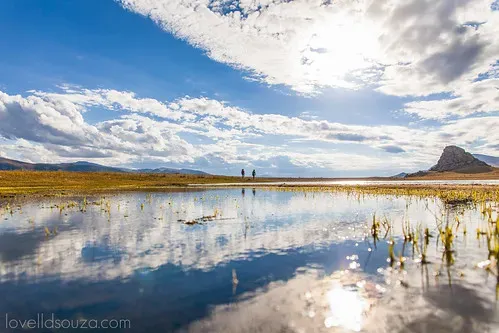
The volcanic setting is what sets White Lake apart from Mongolia's other natural attractions. Black lava rocks litter the shoreline. The extinct Khorgo Volcano rises nearby, its slopes etched with the marks of past eruptions. Grassy hills roll gently down to the water. It is a place of hard contrasts: dark volcanic stone against green grass, still turquoise water under wide-open skies. And it shifts dramatically with the seasons. In late spring, parts of the lake stay frozen into May, which makes for surreal photos. By summer, the water opens up into shimmering expanses ideal for fishing and boating. Autumn drapes the hills in gold and the whole scene quiets down.
Then there are the nights. Lying on the grass staring up at the stars above White Lake is the kind of thing that stays with you. There is no light pollution this far into the Mongolian countryside. The Milky Way stretches across the sky in astonishing detail. It is a quiet, humbling thing to watch, and it pulls people out of their ger tents well past midnight.
The experience at White Lake
Where is White Lake in Mongolia?
White Lake sits in central Mongolia, inside Khorgo-Terkhiin Tsagaan Nuur National Park near the town of Tariat in Arkhangai Province. From Ulaanbaatar it is roughly 680 kilometres. That means a drive of about 10 to 12 hours by car. The route itself is a highlight. It winds through mountains, crosses rivers, and cuts across traditional Mongolian countryside. Herds of horses, yaks, and sheep appear in the distance, and the further you travel from the capital, the more the country opens up into the Mongolia most travellers dream about.
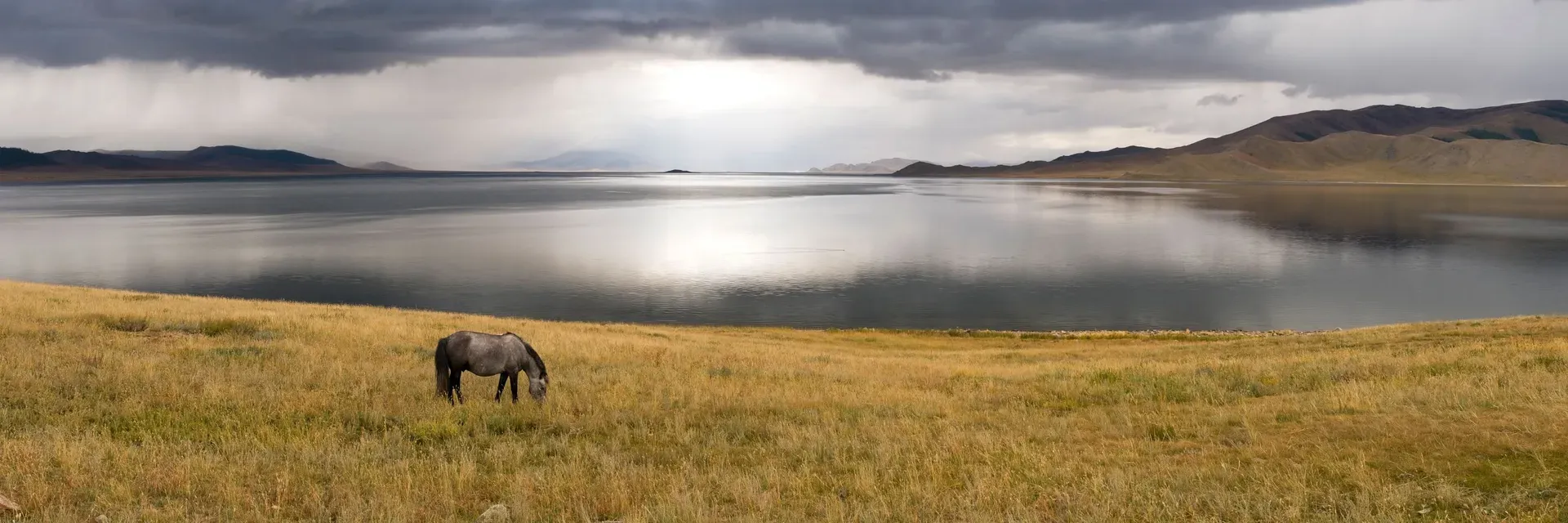
The drive is not without its frustrations. While the main approach road has been paved in recent years, the final stretches can be rough. One 20-kilometre stretch has been known to take two hours when conditions are poor. Some visitors report a bumpy ride no matter the season. A sturdy vehicle and patience are both part of the deal. The views more than justify the effort.
How was White Lake formed?
White Lake owes its existence to violent geology. Thousands of years ago, a massive eruption centred on what is now the extinct Khorgo Volcano (Khorgiin Togoo) reshaped the terrain and left behind a deep basin that gradually filled with freshwater. The volcano still looms near the lake, its slopes scattered with volcanic rocks and clear signs of the eruption that created everything around you. Hiking up Khorgo gives you panoramic views of the lake basin below and a close look at the lava fields and geological formations that define the national park.
What is White Lake known for?
Above all, White Lake is known for its beauty and its remoteness. The water is exceptionally clear and well-preserved. Even on rainy days, the views hold up. Photographers come for the perfect reflections. Anglers come for the fishing. And plenty of people come for the kind of quiet that only exists far from city lights and tourist crowds.
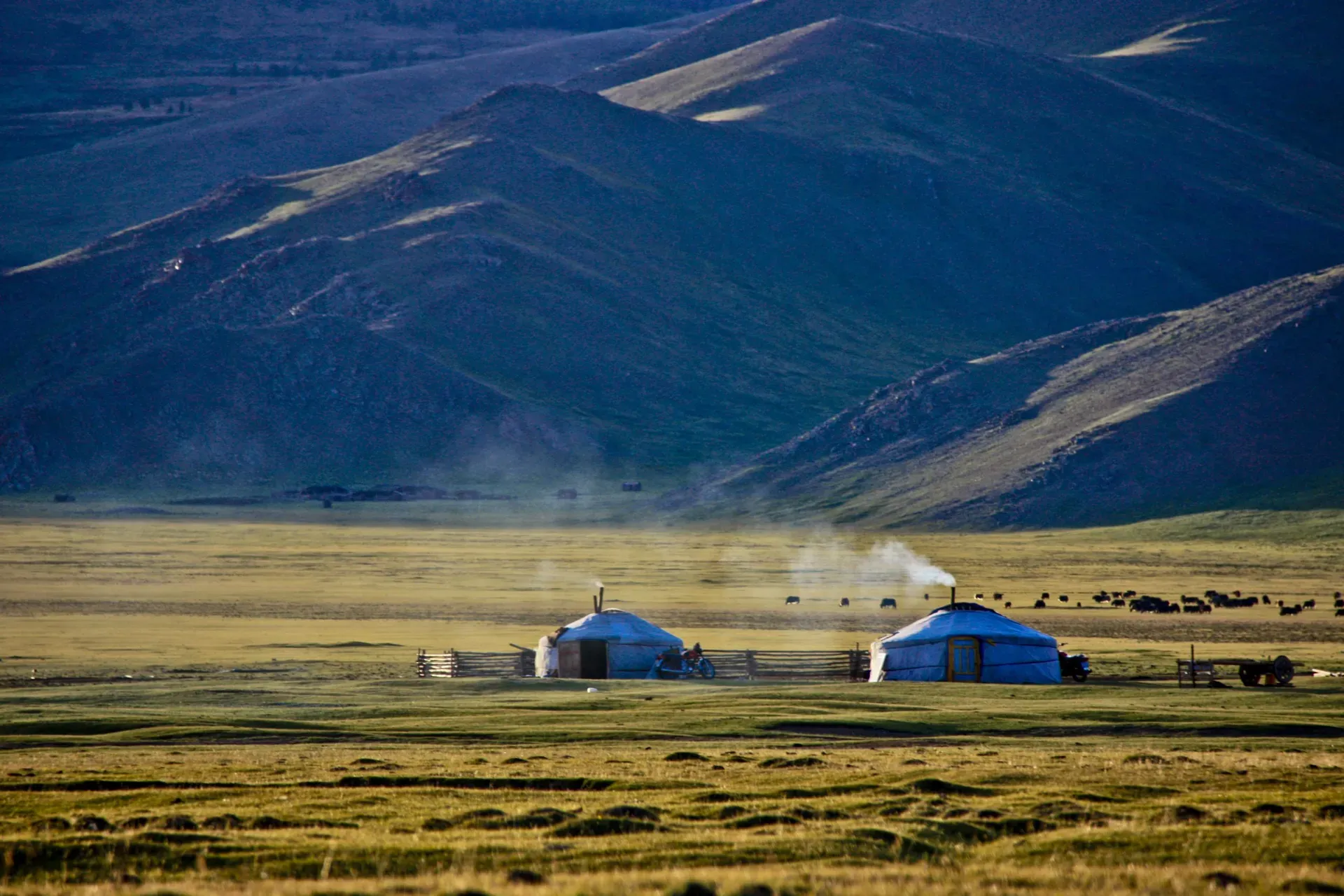
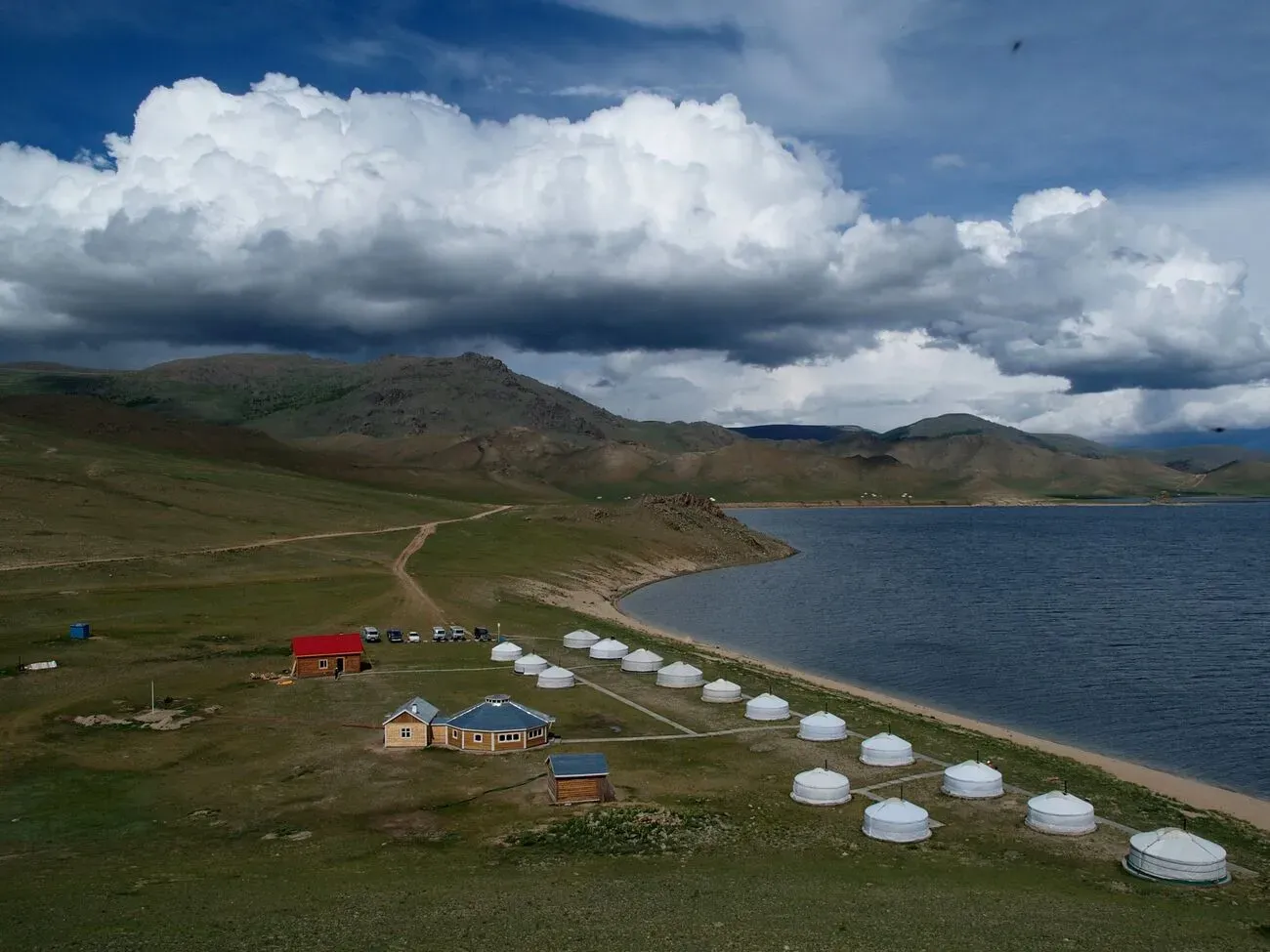
The surrounding hills are dotted with traditional Mongolian ger camps, their white felt tents standing in quiet clusters against the green landscape. Horses, yaks, and livestock move freely across the plains. Around 5 AM, the light across the lake hits a kind of perfection that rewards anyone willing to drag themselves out of bed. Sunsets are similarly worth planning around. The warm, fading light across the volcanic terrain does not disappoint.
Things to do at White Lake Mongolia
The main draw is simply being there and soaking up the stillness, the space, and the scenery. But if you want to explore actively, there is plenty to keep you busy.
The Khorgo Volcano trail is the standout hike in the area. It takes you across lava fields and up to the crater rim for sweeping views of the lake and national park. The volcanic rocks along the trail are fascinating, and walking across terrain forged by ancient eruptions adds a dramatic edge to every step. Around the lake itself, hiking trails trace the shoreline and climb the surrounding hills. Wind can make some days tough. Gusts above 30 kilometres per hour are common.
Camping in the forest near the lake or pitching a tent on the grassy shores is one of the most rewarding ways to experience White Lake. Waking up to birdsong with calm water metres away is something people do not forget. The stargazing earns its reputation. Lying on the grass watching the sky fill with stars in absolute silence is one of those rare travel moments that genuinely sticks.
The clear waters make White Lake a prime fishing destination. The lake is well stocked, and its protected status within the national park helps maintain healthy populations. Boating gives you a different angle on the volcanic shoreline and the surrounding hills.
Between the mirror-like water reflections, volcanic rock formations, ger camps on the hills, and the dramatic Mongolian sky, White Lake draws photographers for good reason. The frozen-lake scenes in May are particularly striking. Cracked ice and snow create compositions that look more Arctic than central Asian.
If you can time your visit to coincide with Mongolia's Naadam Festival, do it. Horse racing, traditional wrestling, archery, and local celebrations around the lake communities add a cultural dimension that matches the scenery itself.
Where to stay at White Lake Mongolia
Accommodation around White Lake centres on traditional Mongolian ger camps. These circular felt tents offer an authentic and comfortable way to stay close to nature. Camps are scattered along the shoreline and throughout the hills, with options for different budgets. Prices range from 60,000 to 200,000 Mongolian tögrög per night, depending on the camp's facilities and location.
The "Surtiin Tulga" cooperative on the north side of the lake has earned positive mentions from visitors for its welcoming atmosphere. Families, take note: the area works well for camping with children. The lake sits just below the Khorgo Volcano, and the combination of safe swimming areas, open space, and the novelty of sleeping in a ger appeals across ages.
Not all accommodation around the lake is equal, and honestly some of it is worth avoiding. Several mediocre resort-style developments have appeared in the area with significant drawbacks. Many are overpriced for what they provide, with unreliable electricity and accommodations that fall short on hygiene. Some resort owners have gone as far as erecting illegal fences that restrict access to parts of the lake. This has angered both locals and visitors. The ger camps offer a far more authentic and better-value experience. Choosing them over the larger resort operations also supports local families rather than opportunistic developers.
Camping independently in the forest near the lake is another popular option if you have your own gear. Peaceful natural surroundings, birdsong at dawn, and the freedom to pick your own spot make it a favourite among independent travellers.
Best time to visit White Lake Mongolia
The best window for visiting White Lake runs from June to September. Temperatures are comfortable, the lake is fully thawed, and all activities are accessible. July stands out for the Naadam Festival, which adds a cultural richness hard to beat. Late September brings pleasant autumn weather. It is cooler but still perfectly good for hiking and camping, with golden grasses and fewer fellow travellers.
Visiting outside the core summer window brings its own mix of rewards and challenges. May can be spectacular. Much of the lake stays frozen, and the ice creates compositions that feel worlds away from typical summer scenes. The trade-off: cold temperatures. It can drop to 5°C or lower, and combined with strong winds exceeding 30 kilometres per hour, hiking becomes a serious undertaking. If you have warm layers and windproof gear, though, the frozen-lake scenery is worth the discomfort.
One seasonal detail worth knowing: flies can be abundant in summer around certain areas of the lake. Insect repellent and some tolerance for buzzing company will serve you well during the warmer months.
Practical tips for your White Lake Mongolia trip
Wind is a constant at White Lake. The lake sits above 2,000 metres in exposed terrain, and strong gusts are normal. Bring windproof layers, a sturdy tent if camping, and realistic expectations about hiking on blustery days.
Set an alarm for 5 AM at least once. The lake at dawn is still, silent, and bathed in the softest light. Photographers and anyone chasing a moment of pure calm will find it worthwhile. Sunsets deserve the same planning.
Bring insect repellent in summer. Flies can be persistent in certain spots during the warmer months, and a good repellent, perhaps a head net for particularly buggy areas, makes a noticeable difference.
Budget realistically for accommodation. Ger camp prices range from 60,000 to 200,000 MNT. The cheaper end gets you a simple but authentic experience. The higher end may include more amenities. Skip the larger resort-style operations. They tend to be overpriced and poorly maintained.
Plan for the road. While the main road to the lake area is now paved, the final approach can be rough. A 20-kilometre section can take two hours in poor conditions. A 4x4 vehicle is strongly recommended, and building extra time into your itinerary for slow stretches is smart.
Respect the environment and local access. The area faces growing pains from unregulated development. Stick to established ger camps rather than the larger resorts. Do not contribute to litter problems. Be aware that some fences near the lake may be illegal attempts to restrict access. The lake belongs to everyone. Responsible visitors can help protect that principle by supporting ethical operators.
Pack for altitude and temperature swings. Above 2,000 metres, the sun is stronger and the air thinner than many visitors expect. Daytime temperatures can be pleasant while nights and early mornings are cold, especially outside July and August. Layering is essential.
Final thoughts
White Lake Mongolia is one of those places that actually delivers. Raw, unpolished natural beauty, no crowds, and none of the disappointment that often follows once a destination gets popular. You can camp in a forest by the shore, hike an extinct volcano, watch the sunset turn the water gold, and fall asleep under a sky packed with stars. All within a place shaped by ancient eruptions and protected by its own remoteness.
The challenges are real. Rough roads, strong winds, inconsistent accommodation, the odd swarm of summer flies. But they pale against what the place gives back. Whether the lake is frozen in May, shimmering in July, or golden in September, the journey pays off. I would not call it magical. But I would call it worth it.