Wadi Tiwi Oman: A Canyon Oasis Worth the Effort
Wadi Tiwi Oman sits less than 30 minutes from Wadi Shab but feels worlds apart. Emerald pools, a waterfall, and narrow canyon walls: here's what to know before you go.
What makes Wadi Tiwi Oman special
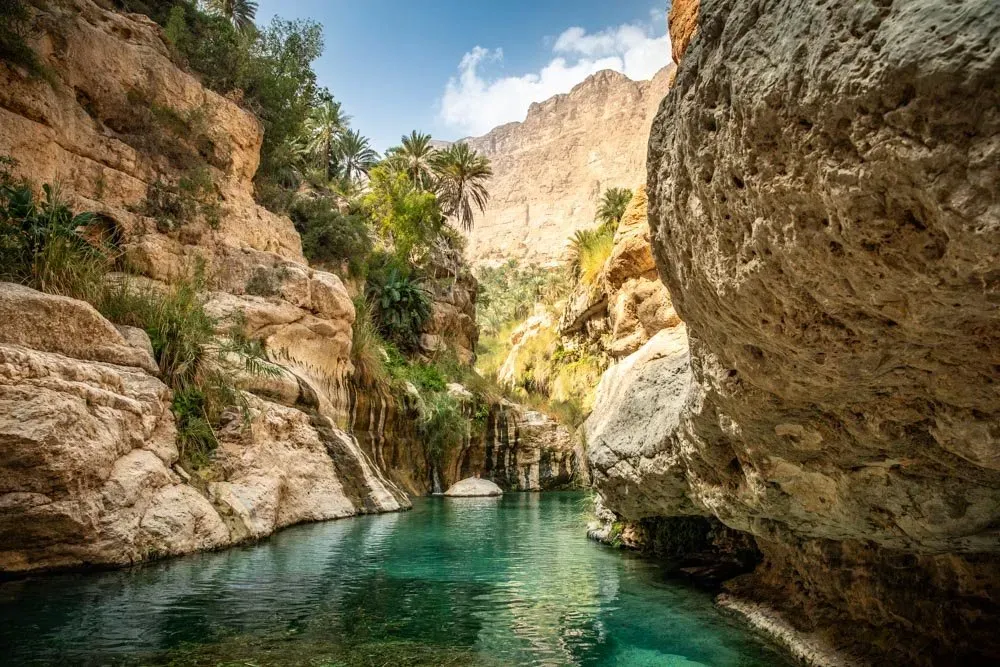
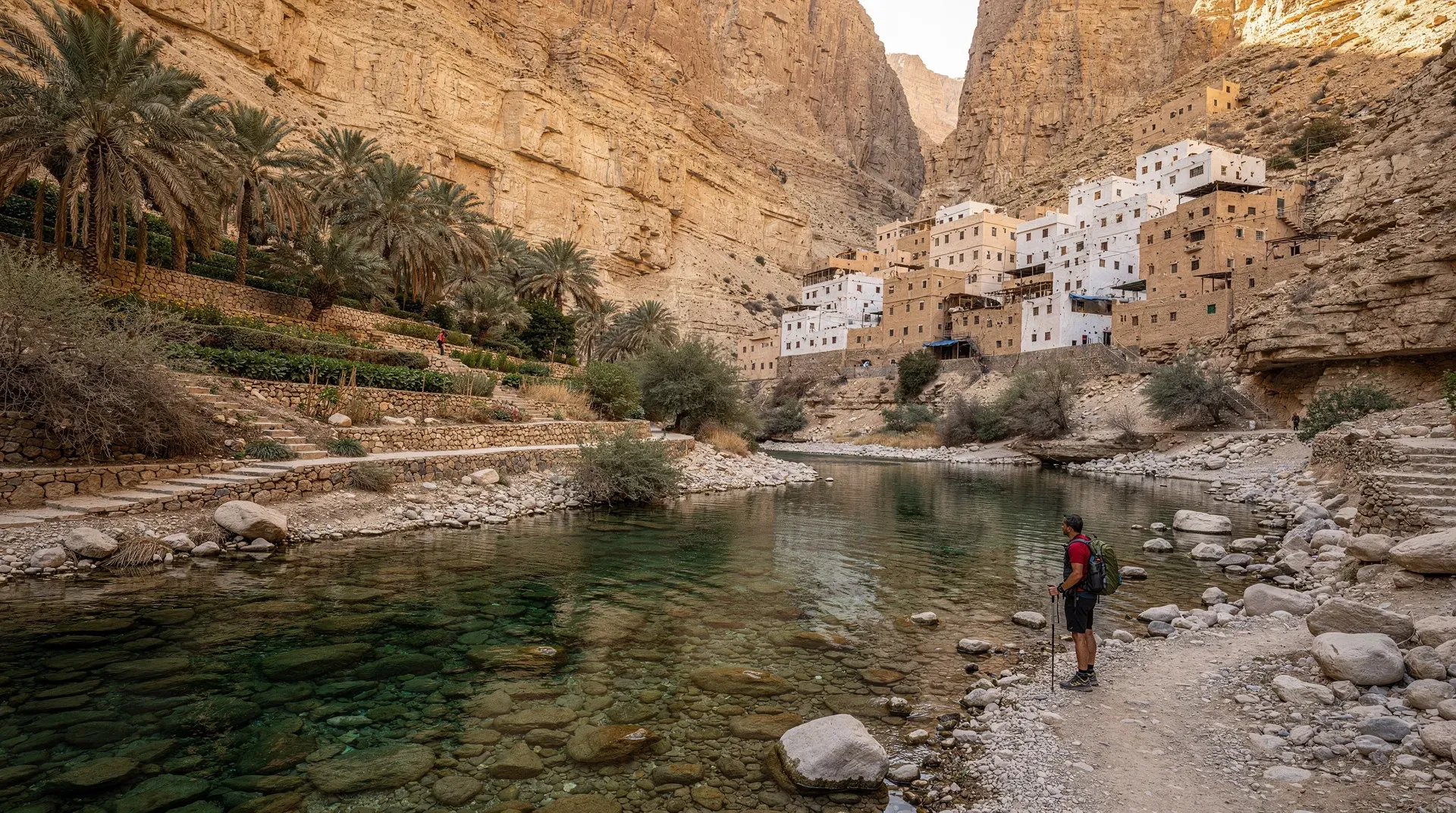
There is a moment, just after you descend the stone steps and catch your first glimpse of turquoise water threading through a corridor of date palms, when Wadi Tiwi Oman stops you in your tracks. This is not the arid desert Oman that postcards sell. This is a lush, green canyon oasis wedged into the Eastern Hajar Mountains. Waterfalls tumble into emerald pools and narrow gorges open into scenes that feel ancient, almost unchanged.
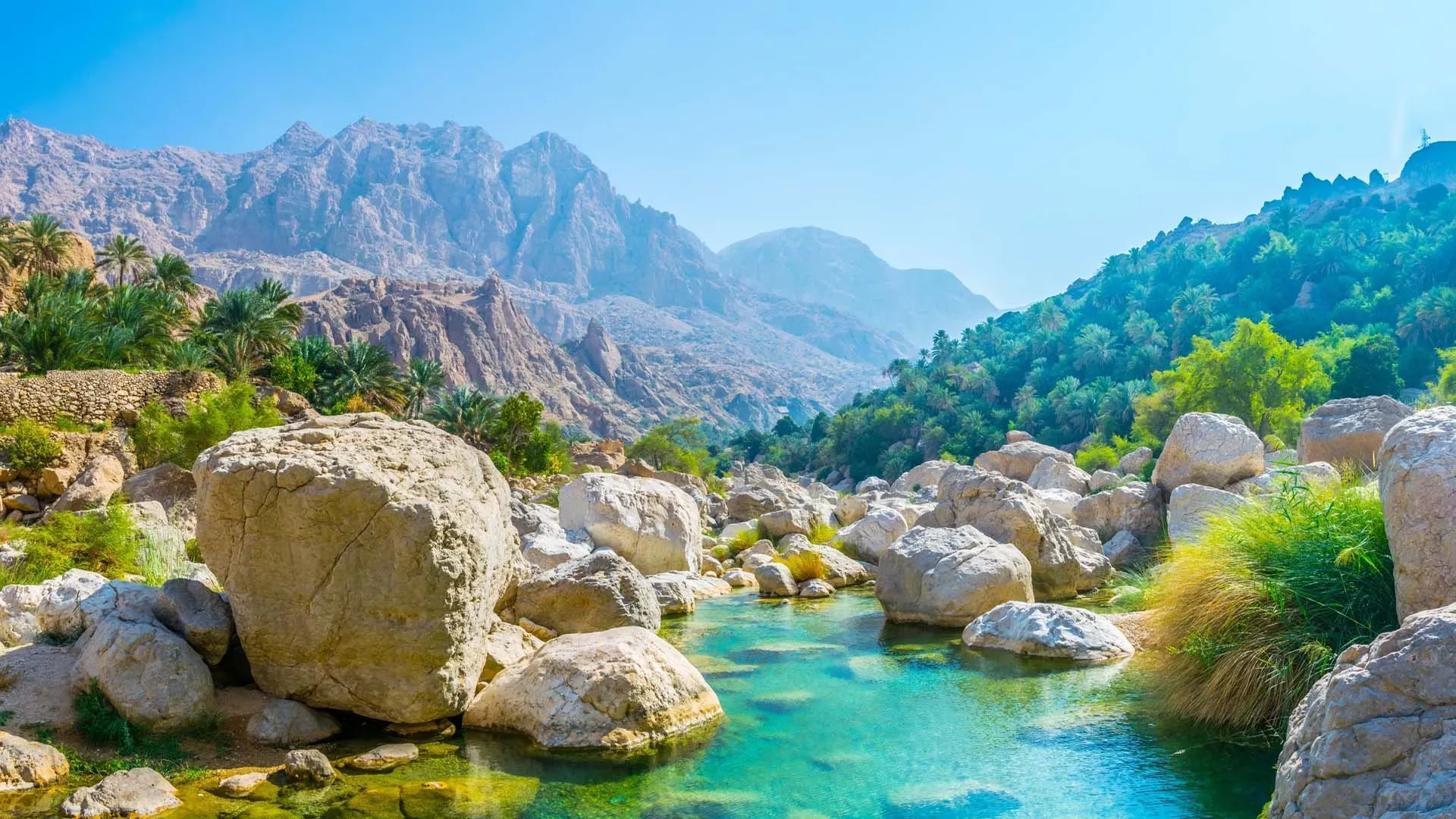
Wadi Tiwi Oman sits less than 30 minutes by car from its far more famous neighbour Wadi Shab. Where Shab draws crowds and tour buses, Tiwi offers something rarer: the feeling of stumbling onto a place that hasn't been polished into a tourist product yet. The wadi takes its name from the coastal village of Tiwi, but the real draw lies upstream, where countless farms growing mango, banana, and date palms blanket the canyon floor in a shade of green that looks improbable against the stark rocky walls. As the wadi climbs towards Mibam village, the scenery only gets more dramatic, ending at a deep pool tucked into the canyon that genuinely feels like it belongs to no one but the mountains.
None of this comes easy, and that's kind of the point. The drive is narrow, the rocks are slippery, and not everything is signposted. But if you make the journey anyway, Wadi Tiwi Oman sticks with you.
Things to do in Wadi Tiwi
This is not a place of museums, cafes, or curated viewpoints. The entire experience is the wadi itself, a linear adventure that unfolds as you move deeper into the canyon.
The Wadi Tiwi waterfall and entrance pools
For most visitors, the first payoff comes quickly. From the final parking area, it's a short walk of around 200 to 300 metres to a set of well maintained steps. Look for the blue gate and the brown tourist sign. They lead straight down into the wadi. At the bottom, a small but beautiful waterfall pours into a series of shallow, crystal clear pools, framed by rock walls and palm fronds. The water is cool, impossibly clear, and in the scorching Omani heat, it feels like exactly what you needed.
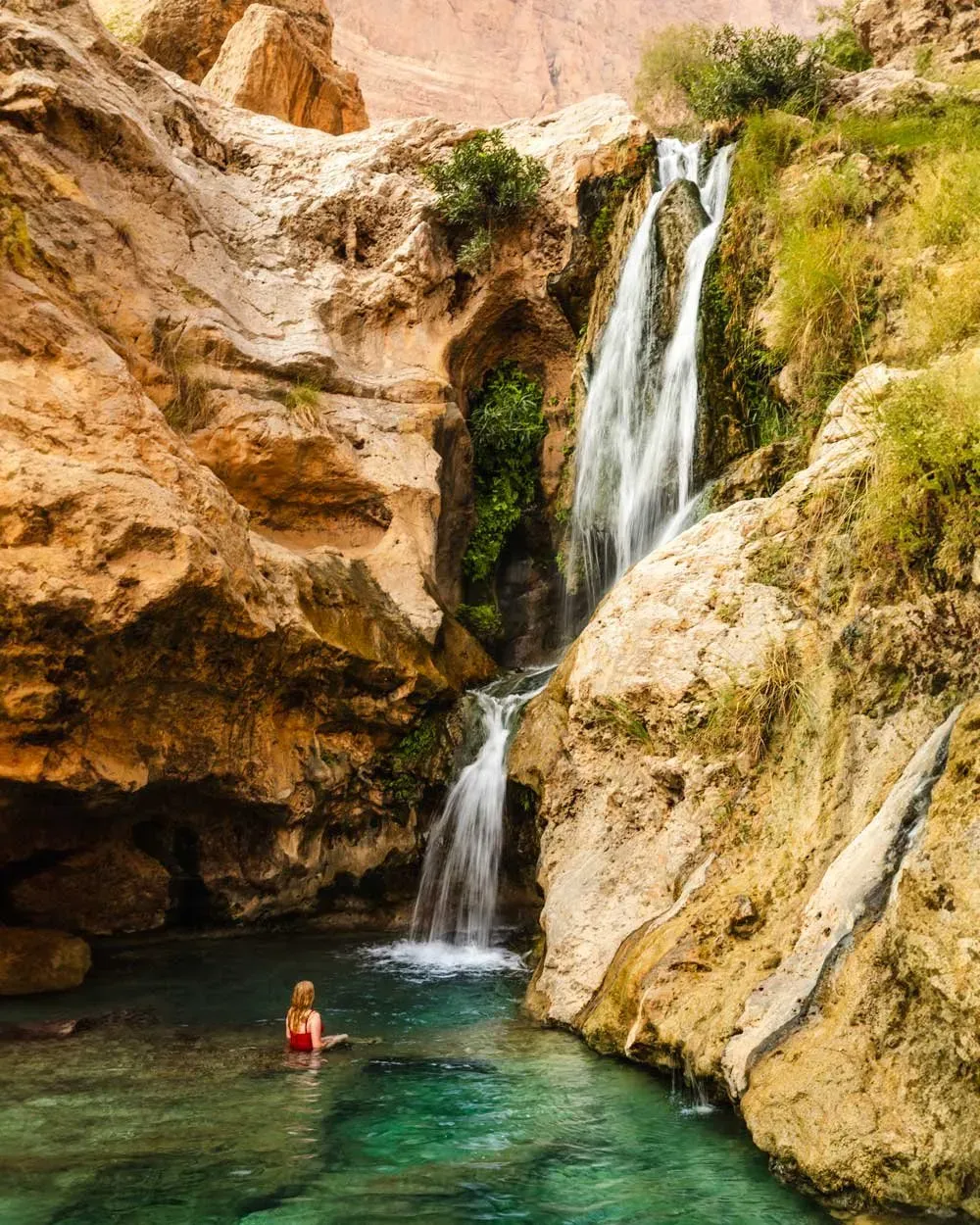
This area alone is worth the trip. Families with younger children, even as young as four or six, find these entrance pools manageable and fun. There's enough adventure here without the demands of the deeper canyon. The waterfall area is accessible, photogenic, and perfect for a refreshing dip when the heat is brutal.
Going deeper: pools, rappelling, and canyon scrambling
For those who want more, Wadi Tiwi keeps delivering. Beyond the entrance waterfall, the canyon tightens and the adventure shifts up a gear. Reaching the deeper pools requires a short rappel: a controlled descent down a rock face using a thick rope or chain fixed in place. The technique is straightforward. Go down backwards, plant your feet against the rock, and let the rope take your weight. Anyone with a modest level of fitness and a willingness to get wet can manage it.
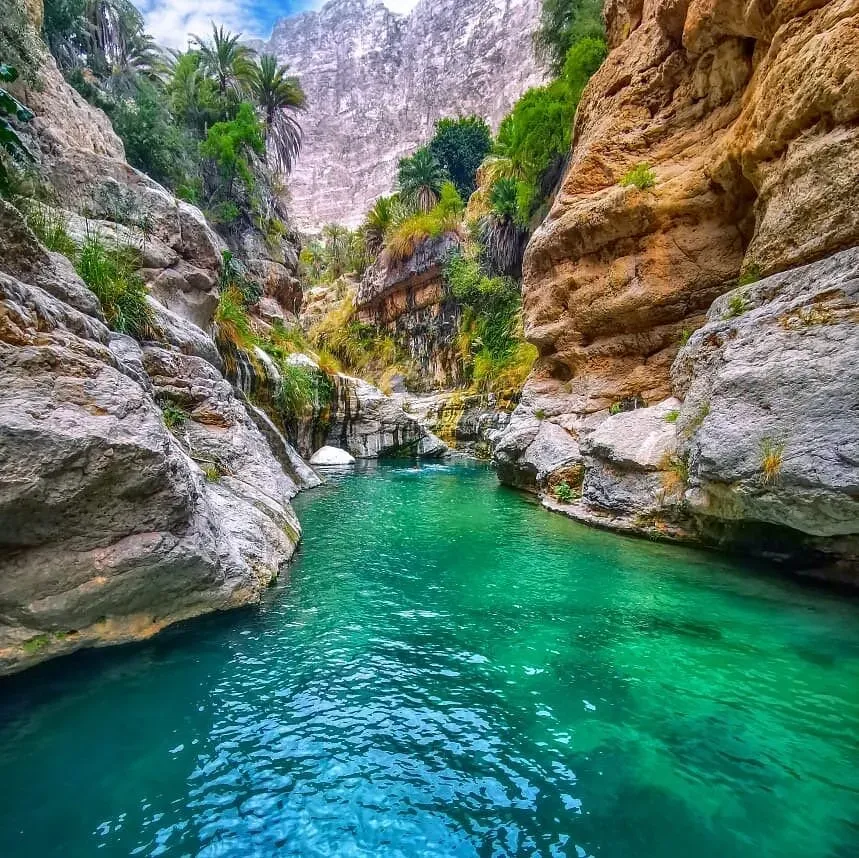
From there, the journey turns physical. You swim across deep turquoise pools, scramble over boulders, slide down smooth rock chutes, and occasionally jump from heights of five to seven metres into the water below. Five additional pools wait beyond the first two, each one more secluded than the last. The route back up means picking your way along the left side of the canyon, heading uphill towards the village visible above. There's some route-finding and rock scrambling involved, but nothing technically demanding.
The entire experience, from the short approach hike to the final swim, typically takes around two hours. It's enough time to feel fully immersed in the canyon without being an all-day commitment. This is exactly why many travellers combine Wadi Tiwi with a visit to Wadi Shab in a single day.
Your Wadi Tiwi travel guide: getting there
How to get to Wadi Tiwi
Wadi Tiwi lies along the coastal road roughly 250 kilometres south of Muscat and about 40 kilometres north of Sur, in Oman's Ash Sharqiyah Region. The turn-off from the main highway is well marked, and just after taking the deviation you'll find restroom facilities. Use them. Once you leave the highway behind, there are no toilets for the next three hours, and certainly none down in the wadi itself.
From the turn-off, the drive into the canyon takes about 20 minutes along a road that climbs steadily into the mountains. This is where things get interesting, because the road is genuinely narrow. In places, it accommodates only a single vehicle between rock walls on one side and sheer drop-offs on the other. Surfaces vary, and conditions change with the weather.
Do you need a 4x4? Opinions split sharply on this one. On dry days, a standard saloon car like a Toyota Yaris can reach the uppermost parking area without trouble. But most people who know the wadi well recommend a four-wheel drive. The roads are steep, the margins are tight, and a larger 4x4 can feel cumbersome in the narrowest sections. But the ground clearance and traction are reassuring. If you're driving a rental saloon and the roads are wet, the smart decision is to park earlier and walk the remaining distance.
Navigation adds another headache. Google Maps has led more than one visitor astray, directing them onto the wrong route entirely. That mistake can cost an entire day. The reliable approach is to search for the "Wadi Tiwi parking" location and ignore any locals in vehicles who try to wave you off course before you reach it. Once parked at the very last parking area before the village, it's only a 15-minute walk to the wadi entrance.
Local guides: helpful or hassle?
Few topics around Wadi Tiwi generate as much debate as the role of local guides. The reality on the ground is messy.
On one hand, you don't strictly need a guide. From the parking area, the path to the entrance waterfall is clear: follow the road to its end, find the blue gate and brown tourist sign, and descend the stairs on the left. For visitors comfortable with independent navigation and a bit of rock scrambling, doing it yourself is entirely feasible. Some find the persistent offers of guiding services at the parking area frustrating, particularly when prices seem to shift with each conversation. The atmosphere around parking can feel less welcoming than at other Omani wadis, with occasional attempts to charge for what should be public parking.
On the other hand, a good local guide changes everything. Several guides from Tiwi village and the surrounding area (names like Mohammed, Hamood, Mohamed, and Sami come up repeatedly) know every turn of the canyon, every safe foothold on slippery rock, and the precise timing to avoid crowds even on busy weekends. They can show teenagers exactly where to jump safely from five to seven metres, guide you down the rope rappel with confidence, and navigate routes that aren't always obvious. For solo travellers, families with children, or anyone uneasy about route-finding in a canyon with no signage, a guide is worth every rial. It also channels money directly into the local community, which genuinely matters in a village where tourism income makes a difference.
If you decide to hire a guide, arrange one in advance through WhatsApp or Instagram rather than negotiating on the spot at the parking area. The difference in experience (and often in price) is significant.
Practical tips for visiting Wadi Tiwi
Let's talk about what to bring and how to prepare, because Wadi Tiwi won't cut you any slack if you show up unprepared.
Water shoes are non-negotiable. The rocks throughout the wadi, submerged and dry alike, are notoriously slippery. Foot injuries from falls are a real risk. Sturdy water shoes with good grip make the difference between a confident scramble and a painful slip. Standard flip-flops are worse than useless here.
Dress modestly. The wadi passes through a living village, and local families live and work in the area. Rash guards, leggings, or a t-shirt worn over swimwear show respect for the community whose home you're visiting. Changing facilities are limited to the area near the viaduct. There's nothing once you descend into the wadi itself, so arrive already dressed for the water.
Bring everything you need and take everything out. There are no shops, no cafes, and no facilities once you leave the highway. Pack water, snacks, and sun protection. For lunch before or after your wadi visit, Mubarak Juma Mubarak Al Araimi in the area comes recommended. It's quick, good, and convenient.
Assess your group honestly. The entrance pools suit families with young children, but the deeper canyon is a different proposition. Slippery surfaces, the rope rappel, and the need for confident swimming mean the full experience is best suited to children aged ten and above, or younger kids who are genuinely adventurous and unfazed by heights and cold water. The terrain can also be challenging for elderly visitors, though a guide makes the tougher sections far more manageable.
Respect the atmosphere. While most visits to Wadi Tiwi are overwhelmingly positive, not everyone has the same experience. Some travellers find the access genuinely difficult, the local reception less warm than at other Omani wadis, and the overall vibe less polished. Arriving with the right expectations (this is a working village in a remote canyon, not a curated tourist attraction) makes all the difference.
Best time to visit Wadi Tiwi
The best time to visit Wadi Tiwi runs from October to April, when temperatures in Oman drop to levels that make outdoor exploration genuinely enjoyable. During these months, the canyon feels like a natural air-conditioned refuge. Warm enough to swim comfortably, cool enough to hike without wilting.
Outside these months, the Omani summer is punishing. By late morning, the heat can make even the short walk from the car to the wadi feel oppressive. Some visitors simply drive through the canyon without stopping, soaking in the scenery from an air-conditioned car rather than venturing out on foot.
Weekends (Friday and Saturday in Oman) draw more visitors, and the wadi can feel busy by local standards. A well timed visit with a guide who knows the rhythm of the place can still find you quiet moments, even on the busiest days.
Planning your Wadi Tiwi itinerary
Wadi Tiwi works well as either a standalone half-day adventure or as half of a two-wadi day paired with Wadi Shab. The two are less than 30 minutes apart by car, yet each offers a distinct experience. Shab delivers the famous cave waterfall at the end of a longer hike and swim. Tiwi is more compact, greener, and feels more intimate.
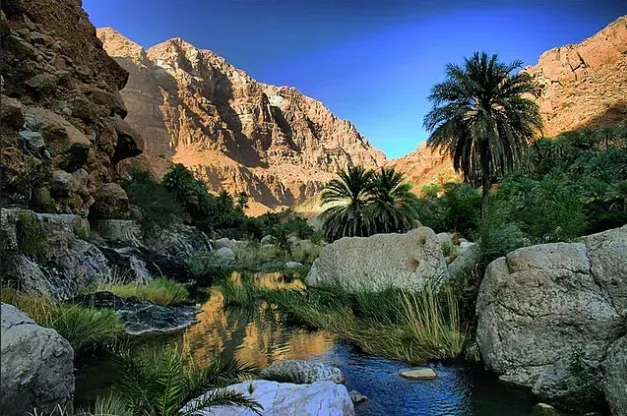
A well run itinerary hits one wadi in the morning and the other after lunch, with timing that avoids the worst of both the crowds and the heat. Local guides who know both locations can handle the logistics, getting you into the water at each wadi during the quieter windows. For those staying in Sur, both wadis are an easy drive away. The return journey along the coastal road at sunset (mountains glowing gold on one side, the Gulf of Oman on the other) is a hell of a way to end the day.
Travellers short on time can focus solely on Tiwi and still leave satisfied. At two hours door-to-door, it packs a lot of beauty into a relatively brief window. The wadi itself is not large. This is not a place for all-day loitering. But the compact size works in its favour: everything worth seeing is within reach.
Final thoughts
Wadi Tiwi sits in an odd spot among Oman's wadis. It's not as famous as Wadi Shab, not as remote as some of the interior canyons, and not as straightforward as either. But for travellers who make the effort (who navigate the narrow roads, handle the slippery rocks, and engage with the place on its own terms) it delivers something rare: a canyon oasis that still feels like a discovery.
The water is impossibly clear, the waterfall is the real deal, and the lush plantations lining the valley floor give Wadi Tiwi Oman a character distinct from any other wadi in the region. It's a place shaped as much by the people who farm its slopes as by the water that carved its course. Approach it with respect for the terrain, for the community, and for the fact that the best experiences here come to those who arrive prepared. Do that, and Wadi Tiwi will probably be the part of Oman you end up thinking about longest.