Aira Force: Ullswater's 70ft Waterfall Walk
A 70ft waterfall thunders through a moss-lined gorge above Ullswater, crossed by a stone footbridge. Here's how to walk the trail, park without the stress, and find the quieter upper cascades most people skip.
What makes Aira Force special
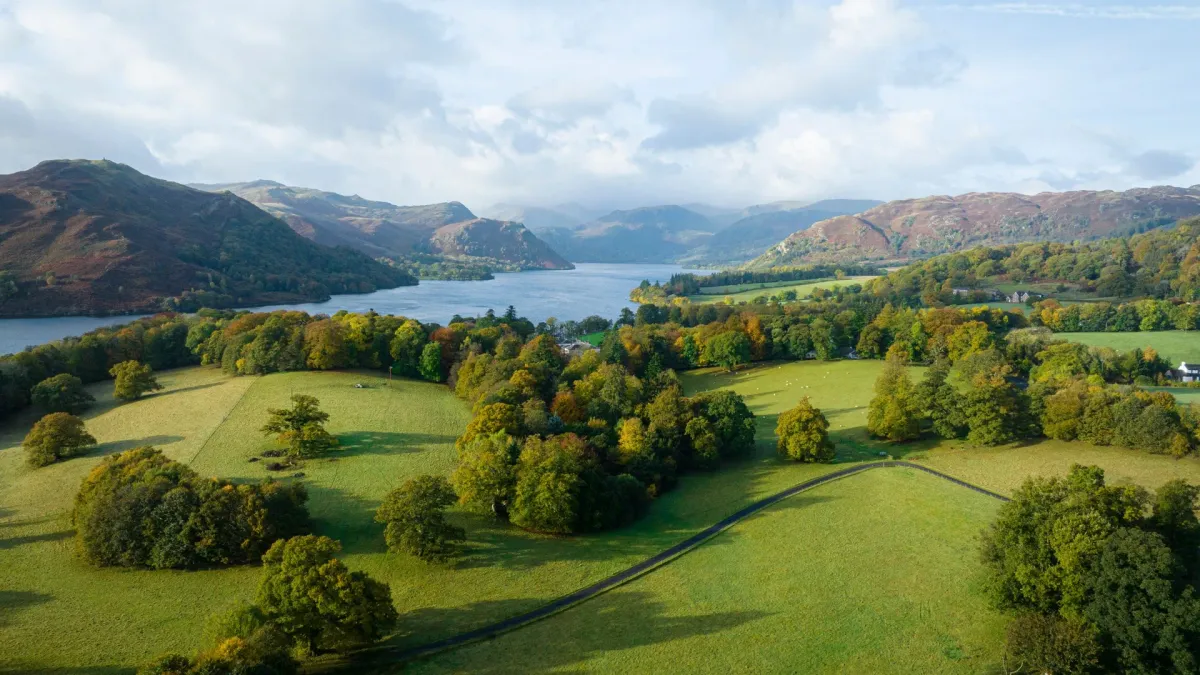
Tucked into ancient woodland on the shores of Ullswater, Aira Force is one of those Lake District waterfalls that stops you mid-stride. The 70-foot cascade thunders through a narrow, moss-lined gorge, crossed by a stone footbridge that looks lifted from a fairy tale. You round a corner and just stand there, not really caring how predictable that reaction might be.
The setting does a lot of the work. Old oaks and specimen trees throw dappled shade across the trail, and every clearing opens up another view of Ullswater catching the light. Then there are the falls themselves, the fern-covered rock faces, bubbling side streams, and the distant profile of Gowbarrow Fell. Even during dry spells the water runs harder than you would expect, and on a warm day the cool mist coming off the gorge feels like a small gift.
The National Trust has put real work into the site. Trails are clearly marked, newer walkways give you decent viewing angles, and the platforms put you close enough to feel the spray but far enough back to frame a decent photo.
Exploring Aira Force: waterfall walk and things to do
The classic Aira Force walk follows a 1.7-mile loop that packs in more than the distance suggests. From the main National Trust car park, the waterfall is a 20 to 30 minute stroll. Short enough to feel accessible, long enough that the sound of rushing water builds properly through the trees.
Starting the trail
Most people take the path to the left of the entrance. It climbs gently alongside the river through the woods, on ground that is well maintained but uneven. You will move between packed earth and rock, with stone steps appearing at regular intervals. Anyone steady on their feet will manage it, but if mobility is an issue, several sections will be tough. Some steps are steep and the path narrows in places.
Sturdy footwear is not optional. The trail gets slippery after rain, and the rocky bits need shoes with proper grip. You will see people attempting this in flip flops or wellies. They struggle. Do not be one of them.
The Aira Force waterfall and stone bridges
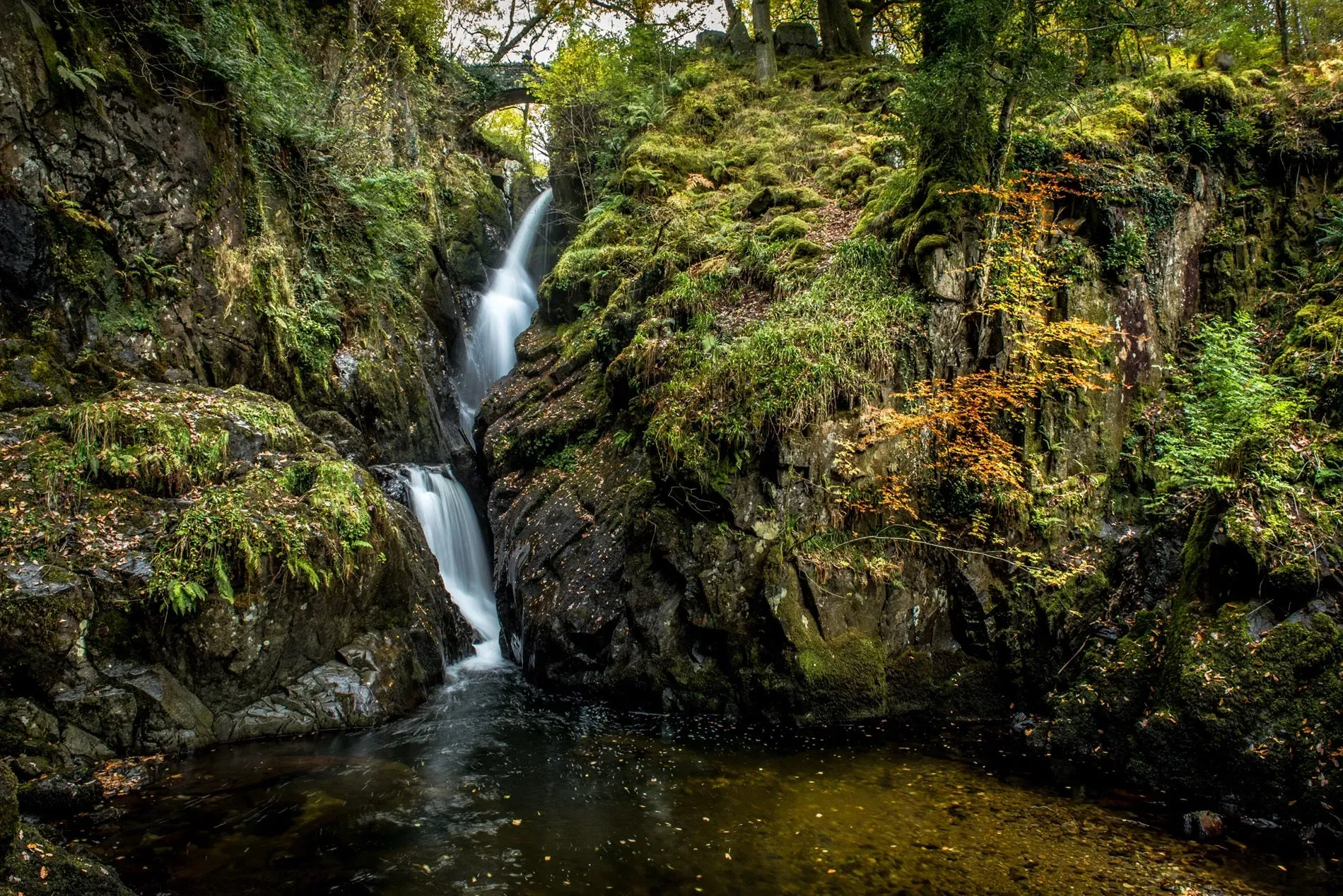
Then the trees part and there it is. Aira Force in full voice, dropping 70 feet into a dark, moss-coated gorge. A stone footbridge arches right over the top of the cascade, and a viewing platform at the base puts you face to face with the falling water. Both angles matter. The bridge gives you the drama of looking straight down into the chasm. The platform puts you at eye level with the full force of the drop.
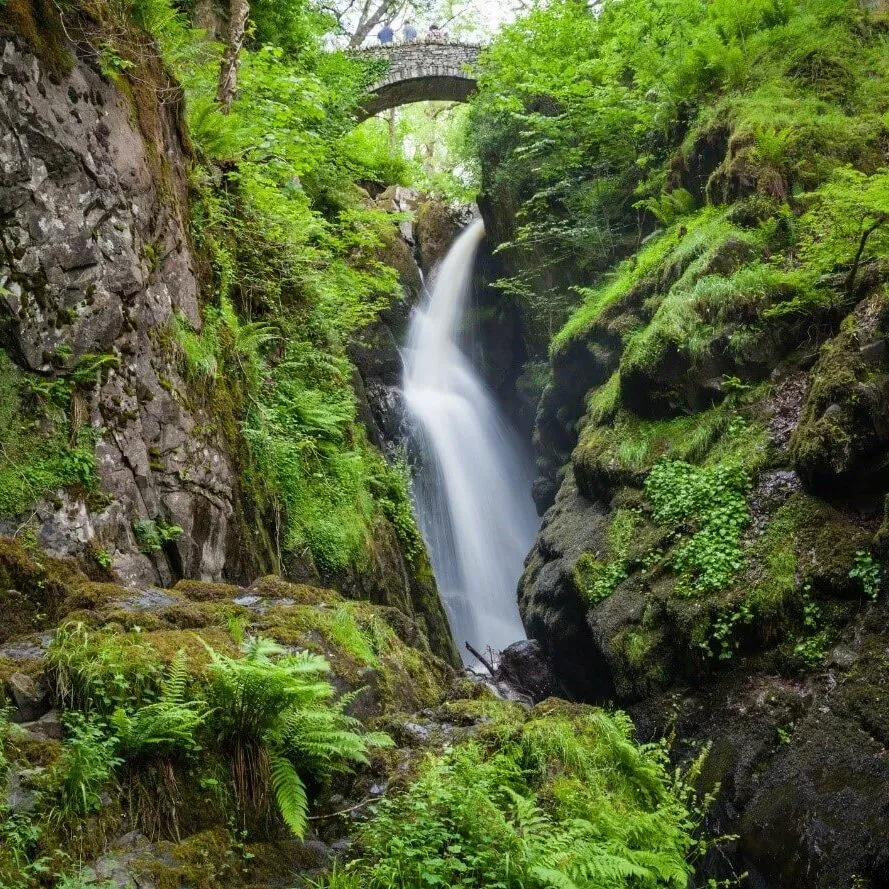
For photographers, the bridge is hard to get wrong. The composition (ancient stone arch, white water, deep green moss) barely needs help. But do not stop at the first viewpoint. Moving between the different positions reveals completely different characters of the same waterfall, each worth a few frames. On a sunny day, with light filtering through the canopy, the whole scene takes on an almost luminous quality.
High Cascades: the wilder half of the experience
Here is what most first-timers miss: the main falls are only half of it. Keep going past Aira Force and you reach High Cascades, and this upper section is where things get properly interesting. The path narrows, the woods grow wilder, and the river tumbles through rapids and smaller falls that feel more intimate and less manicured than the main attraction below.
Be warned: the upper trail is rocky, uneven, and genuinely treacherous after rain. Going up is the smarter approach. Descending this section on tired legs is asking for a twisted ankle. But it is worth it. The woodland up here feels properly old and untouched, the air cooler, the light softer. It is the kind of spot where the only sounds are rushing water and birdsong.
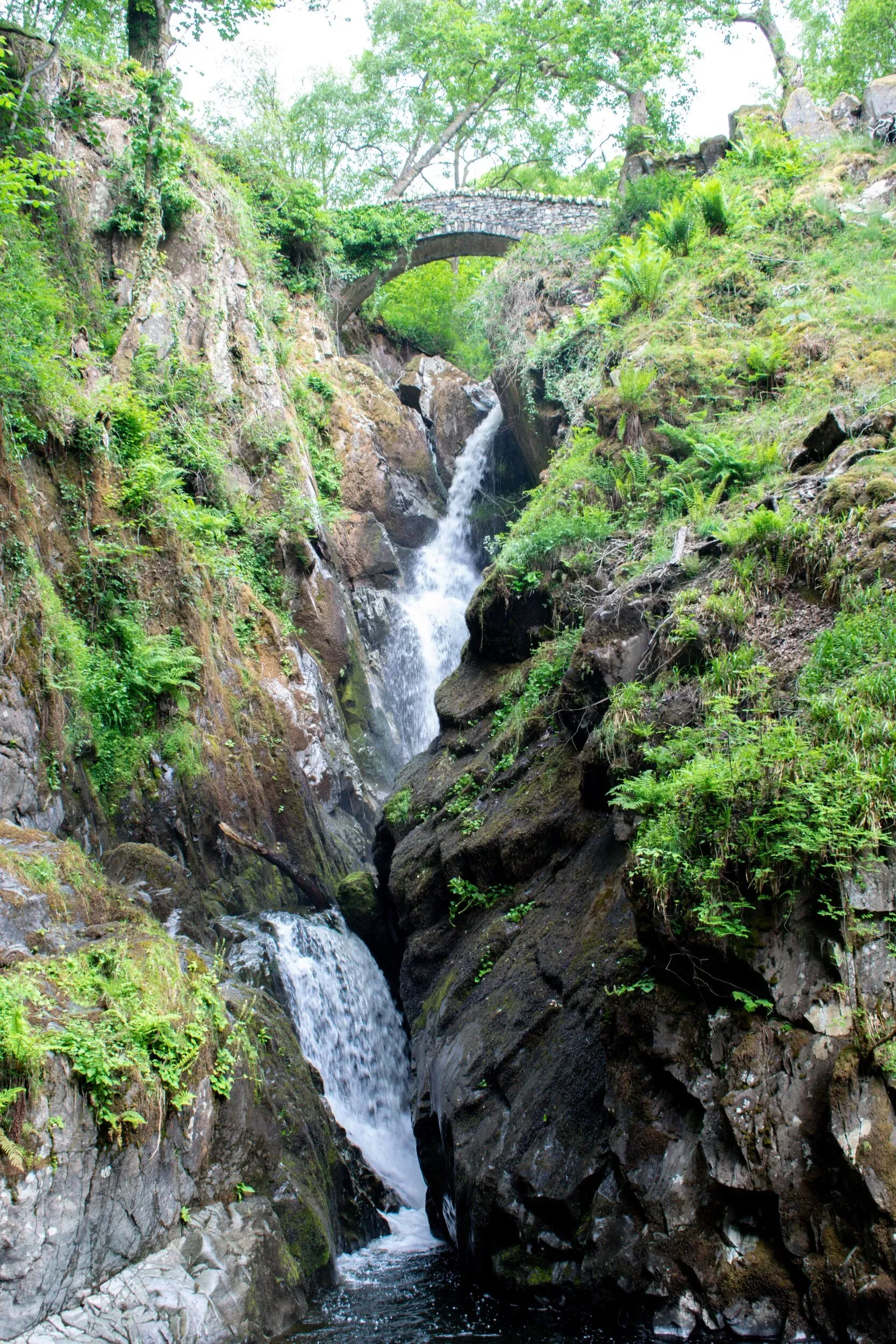
From High Cascades, the loop crosses to the opposite side of the river and descends back towards the main falls. This return leg gives you a completely different perspective on the valley. A lot of regulars prefer the west bank for its broader views of the cascades. The full circuit from the main car park (up the left-hand path, through High Cascades, back down the opposite bank) takes about two hours at a steady pace and never feels repetitive.
Extending to Gowbarrow Fell
If you still have energy, the trail continues all the way to the summit of Gowbarrow Fell. At roughly 480 metres, the climb adds proper elevation but you get wide views over Ullswater and the surrounding fells in return. The round trip (up the falls, to the summit, along the ridge, then back down to rejoin the waterfall loop at the cascades) turns a short woodland walk into a solid half-day Lakeland outing.
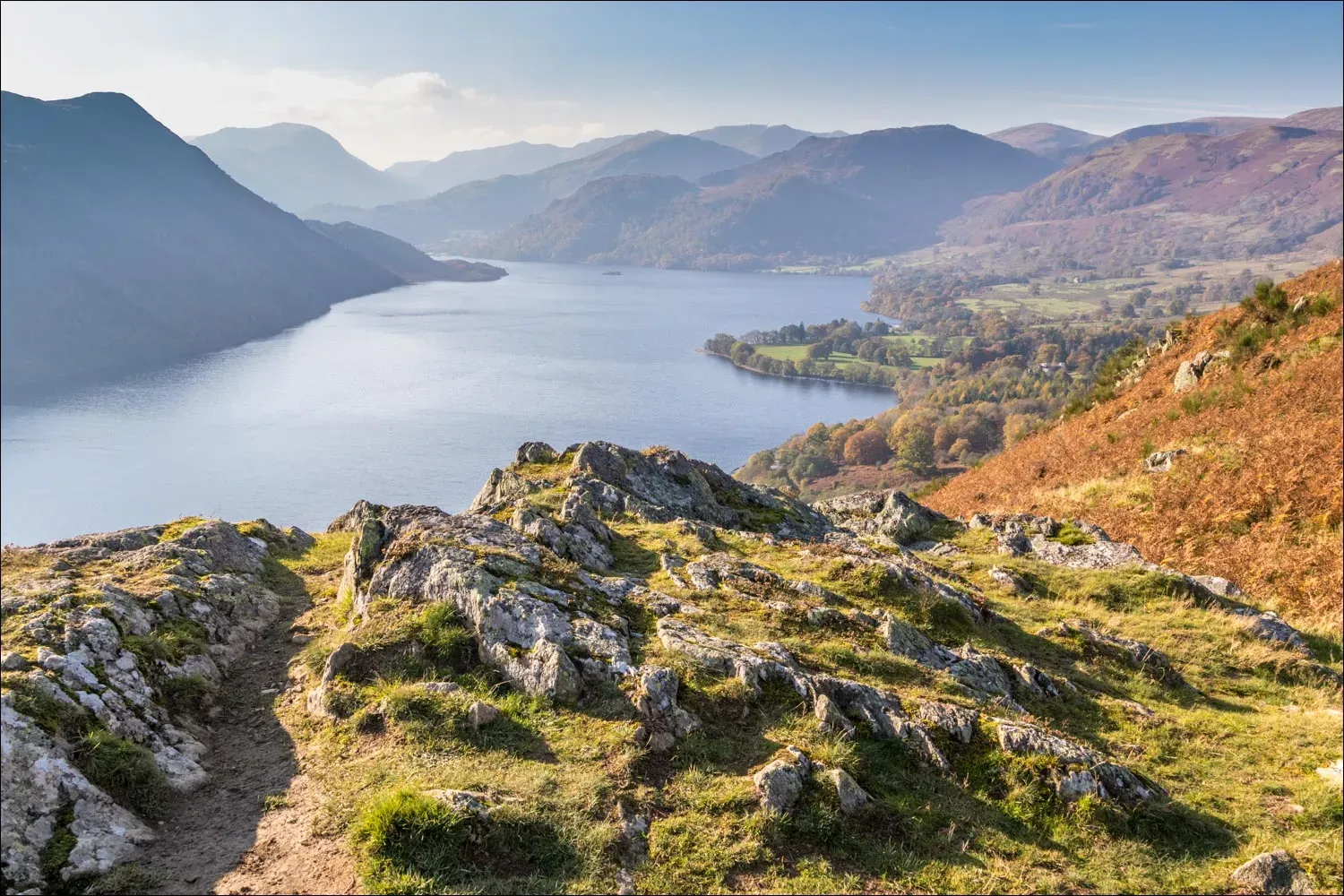
The higher you climb, the more things shift. Crowds thin out noticeably above the falls. There is a funny thing people notice on the ascent: everyone gets friendlier the further up you go. Maybe it is the endorphins, maybe it is just the self-selecting nature of summit hikers. Either way, the mood lifts with the altitude. From the top, the Aira Force valley spreads out below and Ullswater gleams beyond. Another approach is to walk in from The Royal Hotel at Dockray. That route takes about an hour and three quarters at a relaxed pace and adds a different angle to the day.
Aira Force with kids
Families with young children will find Aira Force more doable than expected. The main trail is uneven in places but straightforward enough that a steady three-year-old can handle most of the steps with some help. The full loop takes about an hour and a half at kid pace, leaving time to linger at viewpoints, poke around in the shallows, and break for snacks. The trick is letting them explore, switching viewing positions to keep things fresh, and saving the High Cascades extension for another visit if little legs are giving out. The tree canopy also makes this a forgiving walk on warmer days.
Practical tips for visiting Aira Force in the Lake District
Do you have to pay for Aira Force?
Access to the trails is free. There is no admission charge. What you pay for is parking. The National Trust runs the main car park, and a four-hour ticket costs £8.50. That stings a bit since the core loop rarely takes more than two hours, but the money goes towards maintaining the trails, viewing platforms, and facilities. Payment is through the Just Park app or cash if you have the right coins. A two-hour ticket covers a straightforward visit to the falls and back with time for a coffee. That is plenty if you are not going up to High Cascades or Gowbarrow Fell.
Parking and avoiding the crowds
Parking is the biggest headache at Aira Force. The main car park fills up fast, especially during peak season, on sunny weekends, and during school holidays. Once it is full, you will be waiting. Three car parks serve the site, so if the first is rammed, try the next one along. There is also a tiny layby near the top that fits only a couple of cars and gives you the shortest possible walk to the waterfall if you are quick enough to grab a spot.
The real insider move is the High Cascades car park. Head past the main entrance going southwest and turn right onto the A5091. About a mile up the road, a medium-sized car park appears on the left. From here, cross the road and pick up the path to High Cascades, then follow the trail downhill through the upper rapids and eventually to Aira Force itself. Starting from the top changes everything. You get the wild upper section first, then the grand finale of the main falls, then a short final stretch to the bottom car park where toilets and the cafe are waiting. If you have two vehicles, leaving one at each end makes for a perfect one-way route.
Timing matters enormously. Arrive early, before 9:30am if possible, or try late afternoon. After 3pm, the car parks start to clear and the whole site breathes easier. Weekdays are noticeably calmer than weekends. If you do get shut out, nearby Glenridding makes a decent diversion while you wait for spaces to open. One last thing: mark exactly where you parked. The car parks are spread out and it is easy to lose your bearings after the walk, which leads to an unintentionally longer ramble than you planned.
What to bring
Sturdy walking shoes with proper grip are the number one requirement. The terrain is uneven throughout, rocky in sections, and slippery after rain. You need a reasonable level of fitness to cover the full area comfortably. Bring a towel. There are small pools at the top where you can cool off with a dip, and plenty of spots to sit, soak tired feet, and have a picnic beside the water.
Check the weather before setting out. The Lake District is famous for delivering four seasons in a day, and conditions can shift fast. Dress in layers, carry a waterproof no matter what the forecast says, and be ready for anything from warm sunshine to sudden downpours. Even when temperatures hit the mid-20s, the tree canopy provides welcome shade along much of the route.
Aira Force itinerary
For a well-paced visit that covers the best of Aira Force without rushing, aim for this rough plan: park by 9am, take the left-hand trail to the main falls (30 minutes), spend 20 minutes exploring the viewing platforms and bridge from different angles, then push on to High Cascades (another 25 minutes of steady climbing). Loop back via the west bank for fresh perspectives, then arrive at the cafe for a well-earned tea and slice of cake around the two-hour mark. The cafe cakes are indulgent, though the prices lean premium. If you are adding Gowbarrow Fell, budget an extra 90 minutes and set off by 8am to beat the crowds on the summit approach.
Facilities and the cafe
The National Trust cafe near the main car park serves hot drinks and cakes. It is a welcome sight after the walk. Toilets are at the bottom car park. The cafe can get busy, and the site is popular with dog owners, so expect to share the paths and the cafe area with plenty of four-legged company. Service at the cafe can be hit or miss, but the setting and the post-walk glow usually make up for any front-of-house wobbles.
Best time to visit Aira Force
Aira Force works in every season, but autumn (September through November) is when it is at its best. The woodland turns gold, amber, and russet, and the waterfall framed by fiery foliage is hard to beat. Crowds also thin out after the summer peak, so autumn gives you the best mix of atmosphere and breathing room.
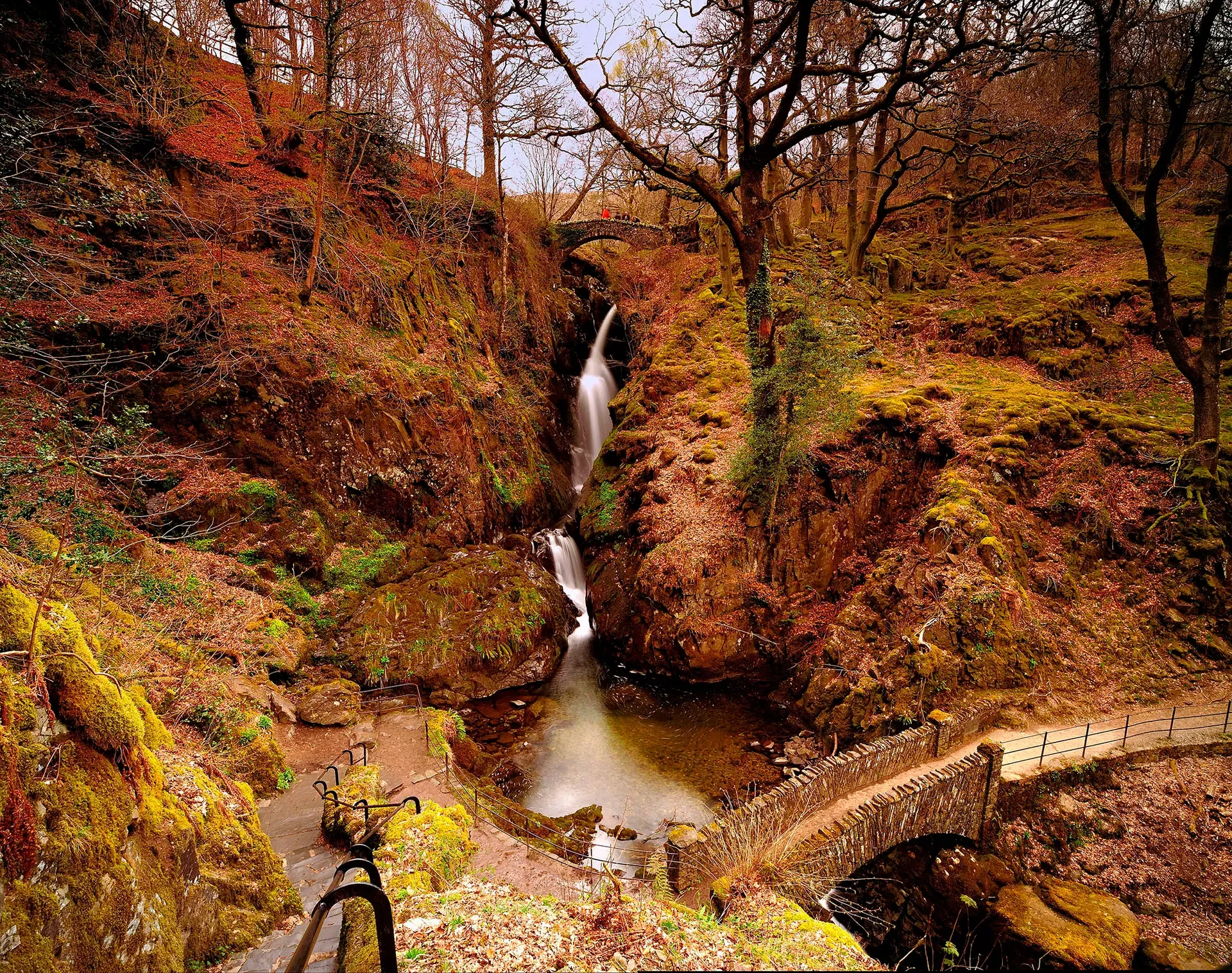
Spring has its own appeal. Visit in early May and you will catch bluebells and hawthorn in bloom, with fresh green bursting from every branch and the fells waking up under strengthening sun. The colours are softer than autumn's blaze but no less beautiful, and the longer daylight hours give you more walking time. The specimen trees lower down look particularly good in spring light.
Summer (May through August) gives you the driest trails. The rocky sections become far less slippery, and warm days turn the wooded paths into cool, shaded escapes. The downside is crowds. This is peak season, and on a hot July Saturday the car parks fill by mid-morning and the viewing platforms turn into social hubs. If summer is your only option, aim for a weekday and get there early.
Winter is the wildcard. The waterfall runs fast and loud after rain, and on the rare occasion of snow the whole valley looks otherworldly. But the paths become properly hazardous. Icy steps, slick rocks, and poor visibility on the fell tops demand experience and caution.
Even after a dry month, the falls keep flowing respectably. The tree canopy provides welcome shade when temperatures climb into the mid-20s. The one thing that stays true across all seasons: Lake District weather is unpredictable. Check the forecast, dress for change, and do not let a bit of rain put you off. Some of the best Aira Force experiences happen under moody skies, with mist clinging to the treetops and the waterfall in full, roaring voice.
Final thoughts
Aira Force gives you exactly what you want from a Lake District waterfall: drama, beauty, and enough variety to make repeat visits worthwhile. The main falls are the obvious draw, but the upper cascades, the old woodland, and the Ullswater views from Gowbarrow Fell make it more than a quick photo stop. Multiple routes mean you can come back several times and have a different walk each visit. No two days on this trail feel quite the same.
It gets busy. The car park situation can be annoying. The cafe might underwhelm. But none of that really sticks once you are on the trail. Go early, wear proper shoes, push past the main falls to see what is beyond, and you will get why people keep coming back. It is one of those places that sounds overhyped until you are actually standing there, looking down into that moss-lined gorge, and then it makes perfect sense.