Ulaan Tsutgalan Waterfall Mongolia: What to Really Expect
No-nonsense guide to Ulaan Tsutgalan Waterfall in Mongolia's Orkhon Valley: when to go, how to descend the canyon, and whether the detour earns its keep.
I didn't know what to expect from Ulaan Tsutgalan Waterfall. You drive across the Mongolian steppe for what feels like hours, the landscape unchanging, and then the ground just stops. A basalt canyon opens up beneath you, and there it is: a 20-metre cascade thundering into a narrow gorge. The waterfall is the result of volcanic activity and tectonic shifts that ripped the earth apart here in the Orkhon Valley roughly 20,000 years ago. Locals call it the Orkhon Waterfall. In summer, when snowmelt swells the river, the flow peaks and the place fills up with domestic tourists and a handful of foreigners who made the trek out from Ulaanbaatar.
What makes Ulaan Tsutgalan Waterfall Mongolia worth the trip
It is not just the waterfall itself. It is everything around it: the way the steppe hides the canyon until you are practically on top of it, the weird quiet broken by rushing water and goats, the feeling that you have stumbled onto something you were not supposed to find. A friend who visited described it as "Ghibli-like," and honestly, that tracks. The place has a strange, cinematic stillness.
From the canyon rim you get the wide shot: water dropping into a dark gorge lined with basalt columns. It is a good view. But the lower vantage point is where it gets real. You climb down into the canyon, and suddenly you are at river level with the waterfall roaring overhead and mist hitting your face. That water, by the way, eventually makes its way to Lake Baikal in Siberia. I find that oddly satisfying, standing at the edge of a Mongolian river that will end up in Russia.
The area around the falls feels largely untouched. No gift shops, no handrails, no interpretive signs. Just the waterfall, the river, and livestock wandering around. For me, that lack of development was most of the appeal. You arrive in the valley and it feels like you have the place to yourself, even when you do not.
Ulaan Tsutgalan Waterfall travel guide: what to actually expect
Getting to Ulaan Tsutgalan Waterfall
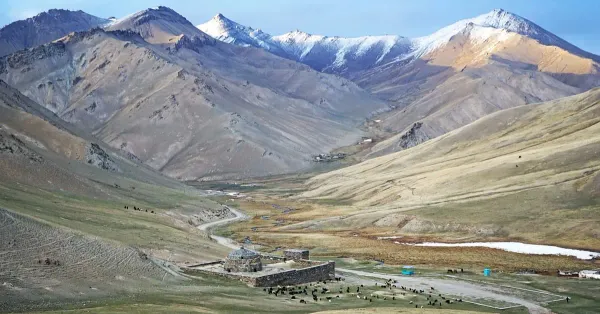
The journey is half the experience. You cross miles of open steppe with the Khangai Mountains sitting on the horizon. Cars stop at a parking area about a kilometre from the waterfall, a rule meant to protect the site. From there you walk or take a horse across grassland until the canyon suddenly appears under your feet. Riders I met all said the same thing: the approach alone was worth the trip. If you are already exploring the Uvurkhangai Aimag, skipping the waterfall would be a mistake.
The canyon descent
The view from the top is solid, but going down changes everything. There are two ways to reach the river. The first follows a rocky path along the canyon wall. If you have decent shoes and reasonable fitness, you will be fine. The second route cuts through a vertical crack in the cliff face and is genuinely tough. It demands good shoes, physical preparation, and steady nerves. Do not take kids, elderly relatives, or anyone who is not fit down this way. When in doubt, ask a local guide to point you to the easier path.
At the bottom, the payoff hits immediately. Standing next to the river, the falling water generates its own breeze, a kind of natural air conditioning on a hot day. The canyon walls close in around you and frame the cascade. Walking along the riverbank you will find smaller pools and quiet spots to sit. I could have stayed down there for hours.
Things to do at Ulaan Tsutgalan Waterfall
There is more going on here than just looking at the waterfall. A zip line runs across the canyon, which is a ridiculous and fun way to see the whole thing from above. At the base, the plunge pool is deep enough to swim in, though "bracingly cold" undersells it. Even in midsummer the water is a shock. But on a hot day, after the climb down, it is one of the most refreshing swims I have had anywhere. The cold hits, you gasp, and then it feels incredible.
Horse riding is everywhere here. The ger camps around the area can set you up with a ride, and some routes take you to smaller waterfalls upstream that most visitors never see. Combining a horseback ride with the canyon scenery made for a genuinely great afternoon. However you arrive, give yourself a couple of hours to roam. The canyon rim, the descent, the riverbank, and the steppe beyond all deserve unhurried time.
Locals also call it the Red Waterfall because of the iron-rich basalt that stains the rock a reddish colour. The contrast between the red cliff, the white water, and the green steppe is genuinely striking. If you take photos, you will fill a memory card here. The geology is fascinating, the colours are vivid, and the sense of isolation gives the whole area a raw, unpolished feel that I personally prefer over manicured tourist sites.
Where to stay near Ulaan Tsutgalan Waterfall
Several ger camps sit within easy reach of the waterfall, and they are the obvious choice for accommodation. Some are close enough that you can hear the waterfall from your bed at night. Staying overnight changes the experience entirely. The day trippers leave, the evening light turns the canyon gold, and the mornings arrive crisp and quiet. Mongolian weather being what it is, you might also get hit with a sudden rainstorm and wind, but that is part of the deal.
If you have your own gear, camping outside the fenced areas is fine and the local community does not mind. Green Tsutgalan, about a kilometre to the west, offers another decent camping or picnic spot with its own quiet charm. I woke up one morning to fine weather after a night under the stars, the valley opening up in front of me with horses grazing nearby. That kind of morning sticks with you.
Best time to visit Ulaan Tsutgalan Waterfall
The waterfall runs strongest from June through August, when snowmelt and seasonal rain feed the Orkhon River. Within that window, late July to early August is the sweet spot: maximum flow, greenest steppe, and warm enough weather for swimming.
Summer days can get hot and dry, but the canyon offers natural shade and the waterfall's spray cools the air. That said, Mongolian weather does not care about your plans. An evening can flip from calm to rain and wind in minutes, then clear into a perfect morning. Bring layers and a waterproof shell regardless of the forecast. Autumn visits are possible too, though the waterfall's flow drops off as the season progresses.
Planning your Ulaan Tsutgalan Waterfall visit
The waterfall works best as a half-day stop within a larger Orkhon Valley trip. Most people base themselves at a nearby ger camp, hit the falls in the morning or late afternoon when the light is good, and spend two to three hours hiking the rim, descending into the canyon, swimming, and maybe doing the zip line.
For a fuller day, add a horse ride to the smaller cascades upstream. It is a half-day excursion that reveals corners of the valley most visitors miss. If you have even more time, the area can serve as a base for wider trekking across the Orkhon Valley, which is one of Mongolia's most important cultural landscapes. Tour operators frequently include Ulaan Tsutgalan on their central Mongolia routes, and during peak season the site can feel surprisingly busy, especially with domestic visitors. Even so, it remains the anchor attraction of the region for good reason.
Practical tips for visiting Ulaan Tsutgalan Waterfall
Your footwear dictates your experience here. The descent into the canyon is rocky and uneven. Sturdy shoes with good grip are non-negotiable, especially if you try the steeper route through the cliff fracture. Bring swimwear and a towel. The water is cold but the swim is worth it. Pack layers because Mongolian weather changes fast and the canyon can be significantly cooler than the open steppe above. If you want to attempt the more challenging descent, hire a local guide. They know the safest way down and can point out things you would otherwise walk right past.
The waterfall draws a sizeable number of domestic tourists, especially in peak summer. Arriving early morning or later in the afternoon dodges the busiest periods. Also, calibrate your expectations. This is not Niagara. It is a raw, wild waterfall set in an ancient volcanic canyon on the Mongolian steppe. Its appeal is in the setting, the journey, and the stillness of the valley, not in sheer water volume.
Is Ulaan Tsutgalan Waterfall worth it?
For most travellers, yes. People regularly describe it as one of the most beautiful spots in Mongolia, and I would not argue. The canyon, the cascade, the chance to swim and ride horses, the deep quiet of the valley: it all adds up to something that stays with you.
A few visitors come away unimpressed, and I get that. If you are expecting something massive, the waterfall itself is modest. The site gets crowded with tour groups at peak times, and if you are making a long detour just for this, you might question the decision. But if you arrive with time, descend into the canyon, walk the riverbank, ride a horse to the hidden falls upstream, and maybe sleep in a ger under the stars, Ulaan Tsutgalan delivers more than a photo op. It is a genuine immersion in one of Mongolia's wildest and most beautiful landscapes, and I have not found anything quite like it.
Final thoughts
Ulaan Tsutgalan Waterfall catches you off guard. You cross the endless steppe, the landscape barely changes, and then you are standing at the edge of a basalt canyon with water thundering into the gorge below. The air is fresh in a way that almost hurts, the water is shockingly cold, and when the wind drops and the livestock settle, the silence is total. Getting there takes effort. For me, that is what made it feel earned. If you are willing to venture beyond Ulaanbaatar, this waterfall and the valley around it are worth every kilometre.