Tsingy de Bemaraha Madagascar: How to Survive the Stone Forest
Tsingy de Bemaraha isn't your typical national park. It's a stone forest of razor sharp limestone where you clip into climbing cables, cross swaying suspension bridges, and spot lemurs in one of the wildest corners of Madagascar.
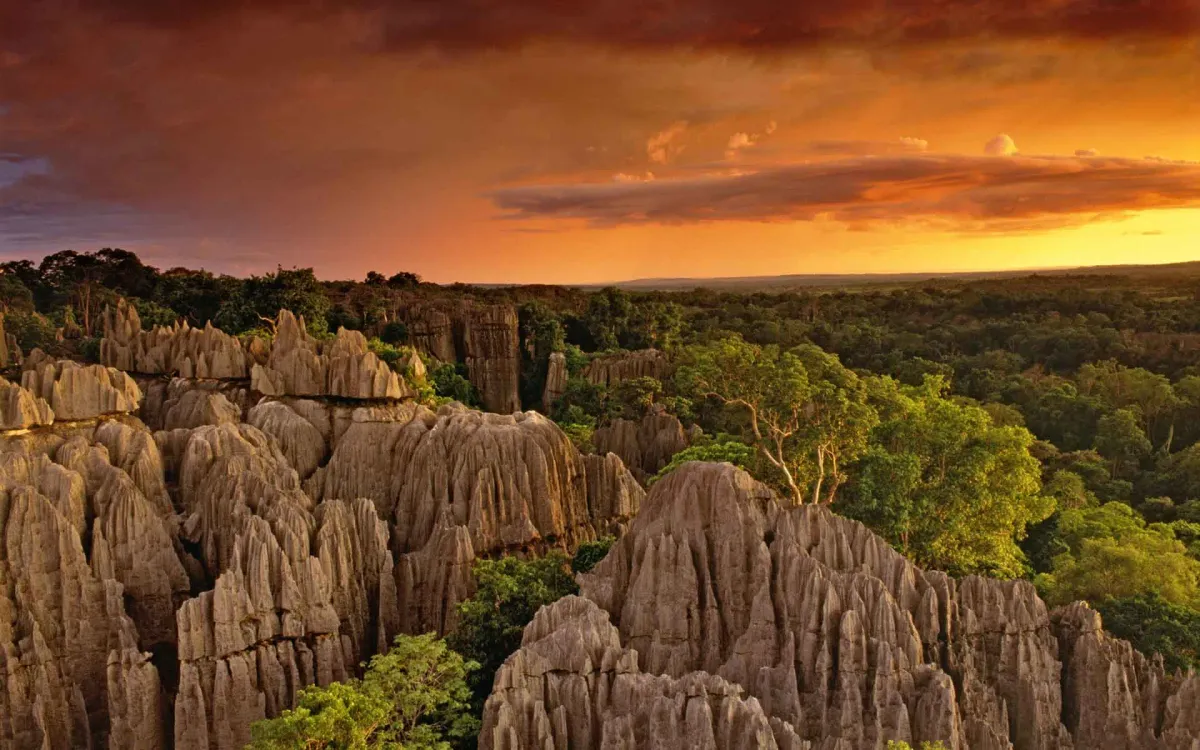
What hits you first at Tsingy de Bemaraha, Madagascar
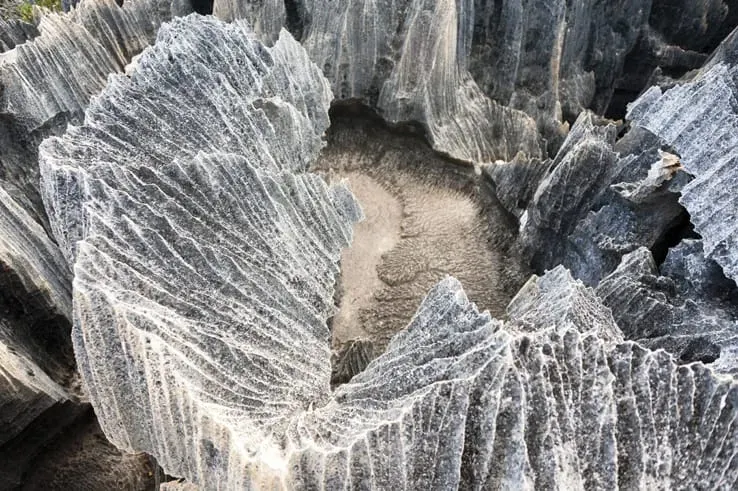
I don't know what I expected Tsingy de Bemaraha in Madagascar to look like. Whatever it was, the reality blew past it. This UNESCO site in the west of the country is built around limestone karst carved into a forest of stone spires, some rising 100 metres. The rock is sharp enough to cut skin. To move through it, you clip into steel cables, climb ladders bolted into the cliffs, and cross suspension bridges that sway over canyons deep enough to make your stomach drop. Somewhere between the scrambling and the bridge crossings, you will probably stop, look around, and realize you are seeing something that does not exist anywhere else on Earth.
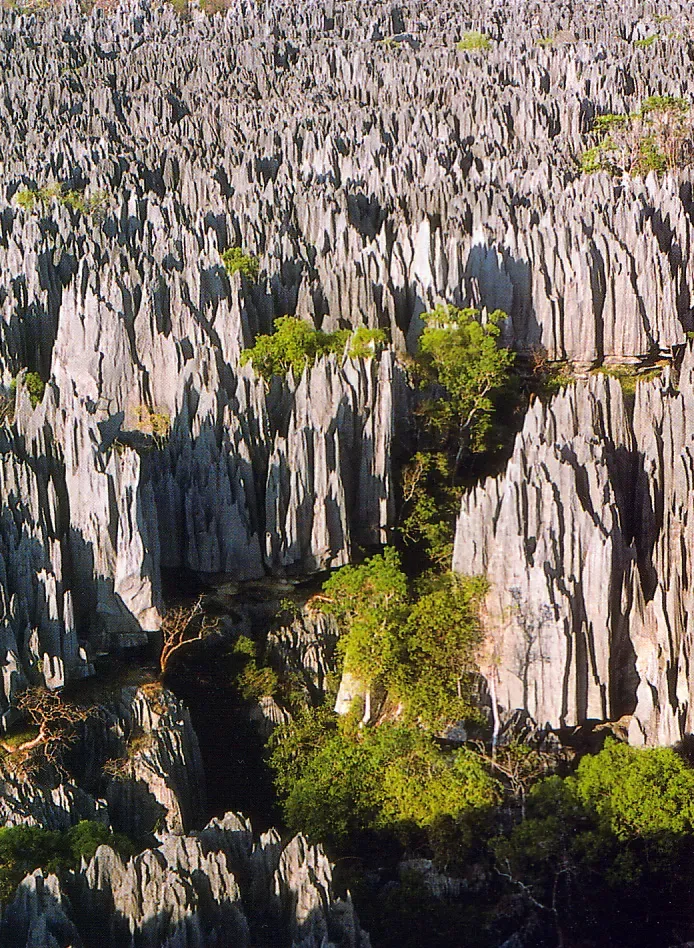
What is Tsingy de Bemaraha known for?
The name tells you most of it. Tsingy translates to "walking on tiptoes" or, as one local guide put it, "tip-toeing bare feet on pointy edges." That is what the ancestors of the region did to get across this terrain. The park is famous for its karst limestone pinnacles, sculpted over millennia into a maze of sharp spires, deep canyons, hidden caves, and natural bridges. There is nothing quite like it anywhere on the African continent. The landscape feels prehistoric and untouched. A heavy stillness hangs over it, broken only by lemur calls echoing through the ravines.
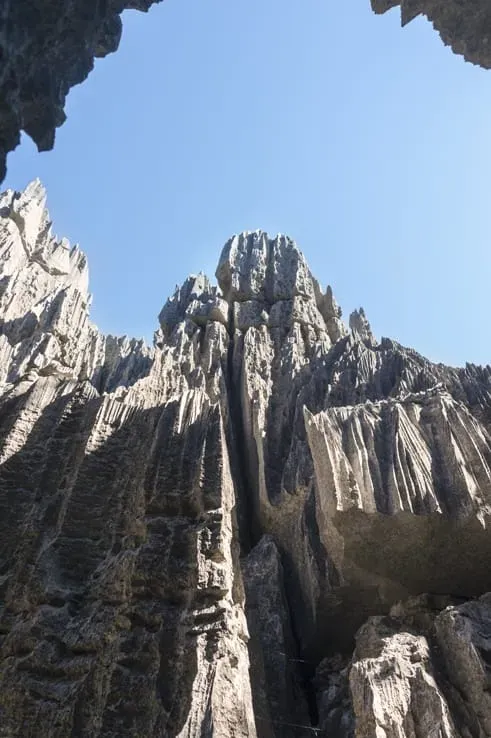
Things to do in Tsingy de Bemaraha National Park
The Great Tsingy: the main event
The reason most travellers put up with the punishing journey to reach this corner of Madagascar is the Grand Tsingy circuit. This is not a normal hike. From the moment you reach the parking area, you are strapped into a climbing harness and handed over to one of the park's guides. What follows is a four to five hour obstacle course through terrain that makes you question whether someone designed it as a challenge course or whether nature just has a dark sense of humour.
The route winds through dense jungle before emerging onto the limestone massif itself. Metal cables, ladders, footholds carved into the rock, and via ferrata style routes guide you up, over, and through the pinnacles. You clip onto cables, scramble over jagged rock, squeeze through narrow tunnels, and crawl through short caves. One moment you are scaling a near vertical rock face. The next you are crossing a high suspension bridge dangling over a canyon with the forest floor far below. It is thrilling, occasionally hair raising, and deeply satisfying.
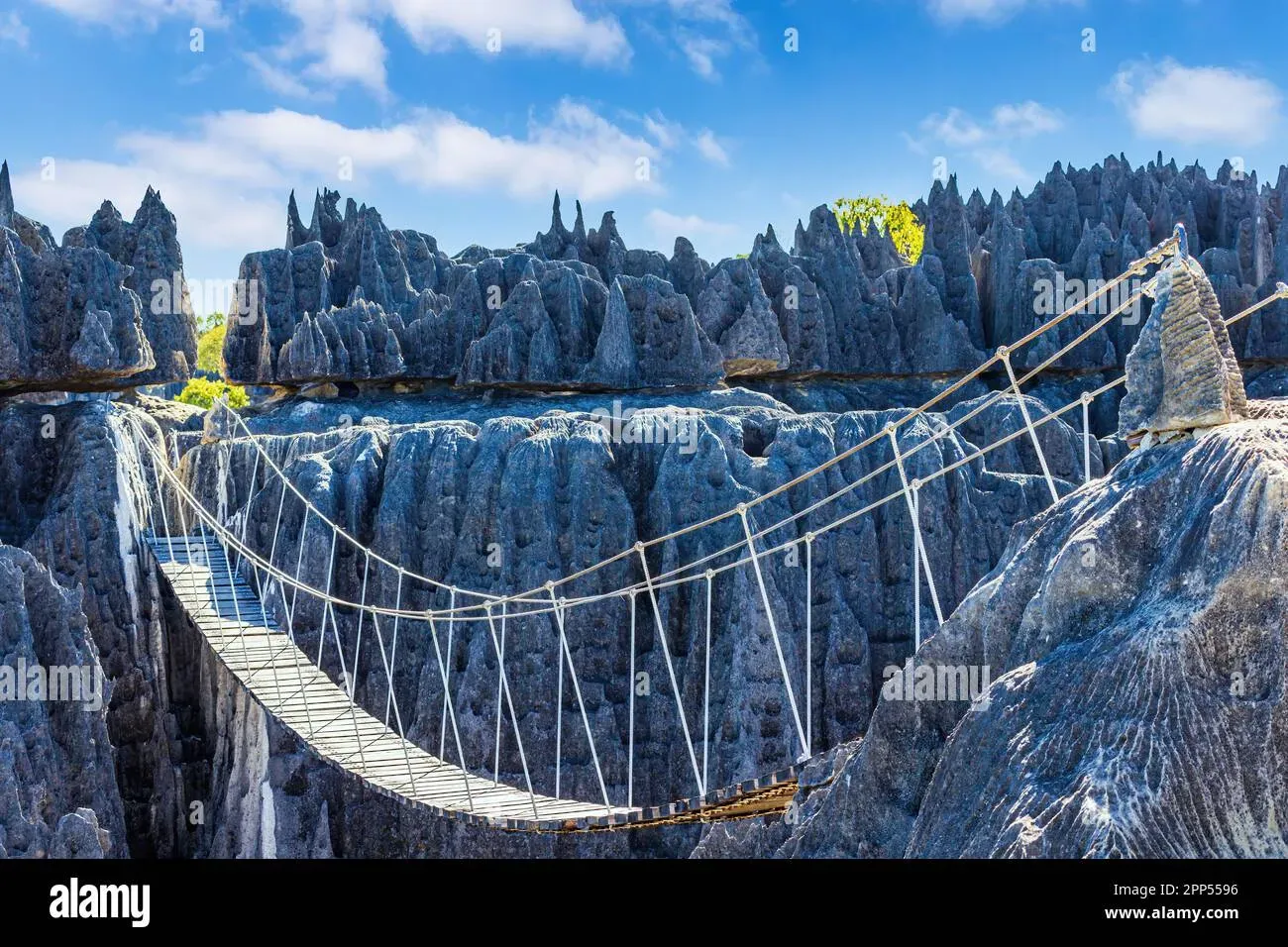
The park officially rates the Grand Tsingy loop as a three to four hour hike. In practice, anyone reasonably fit can complete the route in about an hour of steady movement. But that would miss the whole point. The real magic is in pausing at viewpoints, watching lemurs leap between the pinnacles, and just staring at a landscape that defies any easy description. The climb to the viewpoints is harder than most newcomers expect. You need sure footing and a head for heights. The rocks are genuinely sharp. Scrapes and bruises come with the territory. Good walking shoes or boots, plus gloves for gripping the rough limestone, are not optional.
The Little Tsingy: a worthy warm up
The Petit Tsingy offers a shorter, gentler taste of the stone forest and you should tackle it before the Grand Tsingy. The formations here are no less impressive. Razor sharp pinnacles in miniature, clustered together like a petrified forest. But the routes are less demanding and give you an excellent introduction to the terrain. Doing the Small Tsingy first lets you get a feel for the rock, builds confidence, and makes you appreciate just how much wilder the Grand Tsingy actually is.
Wildlife encounters
Tsingy de Bemaraha is not just about geology. The park holds 11 species of lemurs, plus geckos, iguanas, colourful birds, and the elusive fossa. The guides, many of whom speak excellent English, are good at spotting wildlife tucked among the rocks and trees. During daylight treks, it is common to see several lemur species, including bamboo lemurs, moving through the canopy.
For the fullest wildlife experience, arrive early and sign up for the night safari. After dark, the forest transforms completely. One well planned day can yield sightings of up to six lemur species, crocodiles, jumping rats, a kaleidoscope of birds, and, on clear nights, the Milky Way sprawled across an unpolluted sky. It is the kind of day that reminds you why you bother travelling in the first place.
Other highlights
Beyond the two main circuits, the park has a few surprises. A Tarzan rope hangs at one point along the route. Swing if you feel bold. A kayak ride on the river gives a completely different angle on the landscape. And the caves, cool and shadowy, offer a welcome break from the midday heat and carry a stillness that feels almost church like.
How to get to Tsingy de Bemaraha, Madagascar
There is no sugar coating it. Reaching Tsingy de Bemaraha is an expedition. The journey starts in Morondava, a coastal town on Madagascar's west coast. From there, it is roughly 200 kilometres to the village of Bekopaka, the gateway to the park. That drive takes around eight hours along dirt roads full of potholes, mud patches, and two river crossings. A 4x4 is mandatory. There is simply no other way to do this route.
Most travellers overnight in Bekopaka and head to the park the following morning. Even from your hotel, expect another 1.5 hour drive before you reach the park entrance. The standard approach is a two day tour from Morondava, which typically costs around Ar 620,000 plus accommodation. Bring your own food and water, and factor in the cost of a driver.
The roads are, frankly, among the worst in Madagascar. But every jarring kilometre builds the anticipation for what waits at the end.
How to visit Tsingy de Bemaraha: practical tips
Guides, fees, and what to watch out for
As with all national parks in Madagascar, you cannot enter Tsingy de Bemaraha without a guide. The park's official guides are generally knowledgeable, professional, and safety conscious. Many speak fluent English. Standout guides praised by experienced visitors include Edila (nicknamed EL), Max, and Cl and Justin, all of whom have built reputations for expertise and infectious enthusiasm. If you are arranging a private tour from Morondava, guide Gibert Ramorasata also comes highly recommended.
Fees, however, are steep. Expect to pay roughly Ar 275,000 (around USD 70) for two people, covering guide fees, entrance, and taxes. This makes it the most expensive national park in Madagascar. A more recent breakdown puts the per person cost at Ar 160,000 for the guide plus Ar 5,000 in taxes. Note: the park fee can be paid by card, but guides and taxes must be settled in cash. Come prepared with sufficient Ariary.
A word of caution. Not every interaction at the park office runs smoothly. There are documented cases of visitors being charged for two guides but receiving only one, with refunds flatly refused and staff offering shifting explanations or outright denial. Groups that have willingly agreed to share a guide after initially booking separately have found themselves unable to recover the extra payment. If this happens to you, resolve it before the trek begins. Once you are on the trail, you have no leverage. The vast majority of experiences at Tsingy are overwhelmingly positive, but a little vigilance at the ticket office goes a long way.
What to bring
Sturdy walking boots or hiking shoes with good grip are essential. The limestone is sharp enough to tear through flimsy footwear. Gloves are strongly recommended for gripping rough rock and metal cables. Bring plenty of water, snacks, sun protection, and a head torch if you plan on the night safari. A reasonable level of fitness and basic agility is required. The four to five hour Grand Tsingy loop demands scrambling, squeezing, and climbing, though no technical mountaineering skills are needed. Anyone with a serious fear of heights should think carefully. The routes involve steep ascents, sheer drops, and suspension bridges with long views straight down.
Crowds and timing
Crowds can be a problem. The narrow, jagged trails do not lend themselves to large groups, and bottlenecks form easily, particularly during peak season when visitors queue for selfies at the best viewpoints. Some travellers report spending as much time waiting in line as actually walking. Visiting in the shoulder months, such as November, dramatically reduces crowd levels and transforms the experience. Start early in the morning for the quietest trails and the best wildlife sightings.
Best time to visit Tsingy de Bemaraha
The park is only accessible during the dry season, from April to November. Outside this window, the dirt roads become impassable and the park effectively closes. Within this window, conditions vary. The middle months, June through September, offer the most reliable weather but also draw the largest crowds. October and November see fewer visitors while still delivering excellent conditions. November in particular offers quiet trails and comfortable temperatures. The off peak timing also means guides have more flexibility and the overall pace feels more relaxed.
If you are considering alternatives, the Tsingy of Ankarana Special Reserve in northern Madagascar offers similar limestone formations with fewer crowds and lower costs. It is not a replacement for Bemaraha. The scale is different. But for travellers short on time or patience for the gruelling 200 kilometre dirt road odyssey, Ankarana is a compelling option.
Is Tsingy de Bemaraha worth it?
Tsingy de Bemaraha National Park is not for everyone. It demands time, money, physical effort, and a willingness to endure one of the bumpiest road journeys Madagascar has to offer. But if you go, the payoff is real. This is a place where geology, wildlife, and raw adventure collide. The views from the top are hard to describe without resorting to words that feel inadequate. The guides, at their best, bring the landscape alive with stories of indigenous Malagasy tribes and the ancestors who tiptoed barefoot across these stones. And the feeling of finishing the circuit, scratched, bruised, exhausted, and grinning, is its own reward.
I get why every traveller who makes the journey says the same thing: do not skip it.