Skazka Canyon Kyrgyzstan: Red Rock, Real Magic
Red sandstone hoodoos, dragon-back ridges and wind-carved spires. Skazka Canyon Kyrgyzstan sits just off the road circling Issyk-Kul and looks like Mars.
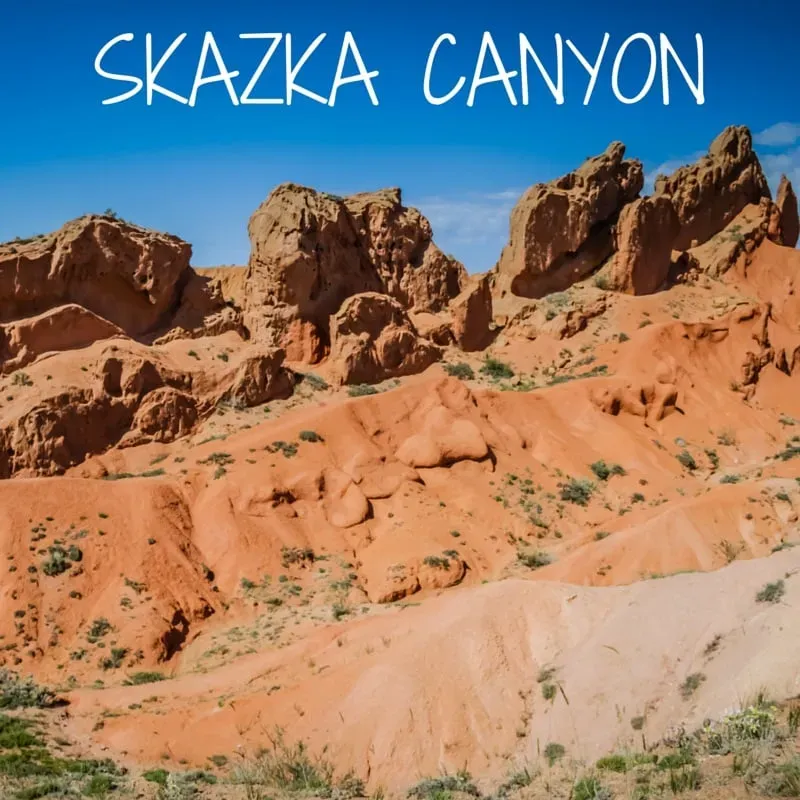
On the southern shore of Issyk-Kul Lake, where the Tian Shan mountains meet the sky, the scenery looks borrowed from another planet. Skazka Canyon Kyrgyzstan (Fairy Tale Canyon in English) is a maze of red-orange sandstone hoodoos, dragon-back ridges and wind-carved spires. Just a few hundred metres off the main road, this compact canyon gives you a Mars-like experience without the rocket fare.
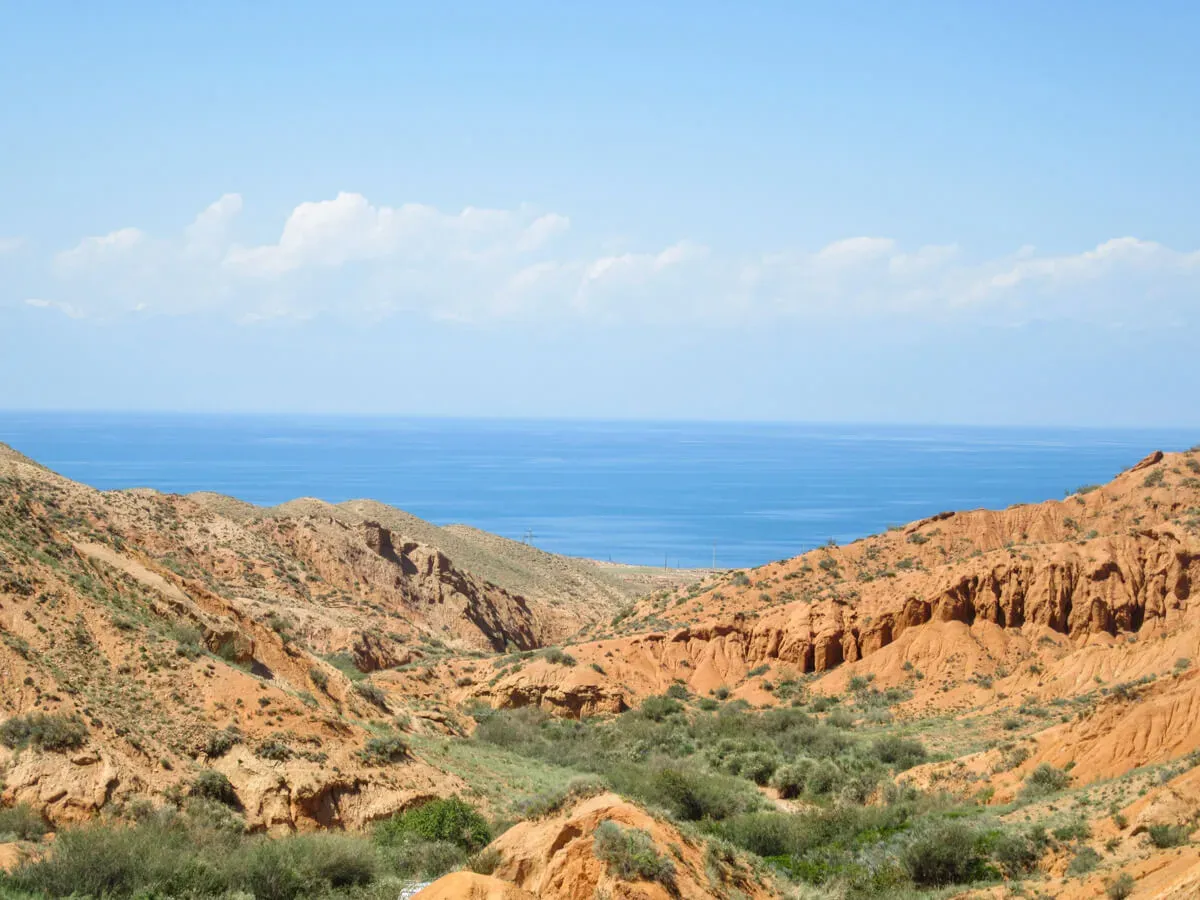
What makes Skazka Canyon special
The moment you step into Skazka Canyon Kyrgyzstan, the name clicks. Water, wind and sun have spent millennia sculpting the sandstone into shapes that don't seem possible. Dragon ridges ripple across the horizon. Camel humps, elephant profiles, and formations that look like castles, towers, even China's Great Wall emerge around every corner. New colours and contours keep appearing, and the whole place feels genuinely strange. I've heard more than one visitor say they felt like they'd landed on Mars. Standing there among the rust-coloured terrain under that big Central Asian sky, I got it.
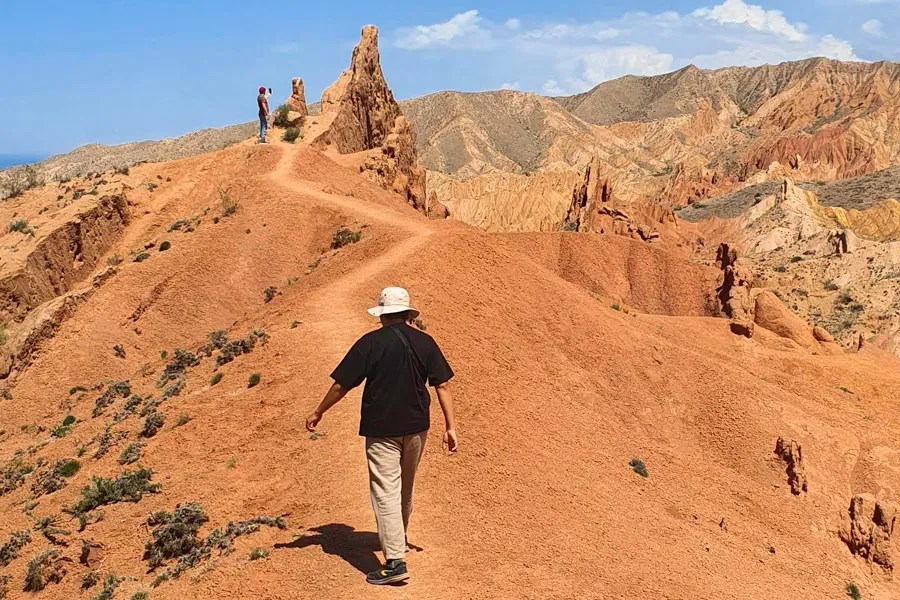
The canyon's accessibility is what makes it unusual. Remote desert terrain usually demands days of trekking. Skazka sits four kilometres from Tosor village, just off the main road circling Issyk-Kul. You get a ridiculous amount of scenery for very little walking: a short stroll drops you into a maze of fiery-coloured rock that shifts and transforms with every step.
The colours grab you first. On a sunny day, the rocks glow with reds, oranges and yellows that look almost fake. And here's a local tip: rain makes Skazka better, not worse. Wet weather pulls the mineral pigments to the surface, deepening every hue. Some of the best photographs ever taken here were shot under moody, rain-washed skies.
A Skazka Canyon day trip: what to expect
Where it is and how to get there
Skazka Canyon is on the southern shore of Issyk-Kul Lake, about four kilometres inland from the small village of Tosor. If you're looping the lake, it's an easy and worthwhile stop. The canyon entrance is a few hundred metres off the main highway, though the last stretch is a bumpy dirt road that kicks up dust in dry weather and turns slick after rain.
Most visitors come from two directions. People staying in Tosor can walk or take a quick ride to the trailhead. From Bokonbaev, the larger town to the west, a local taxi costs around 2,000 som for a round trip. That usually includes waiting time at the canyon and a bonus photo stop at the lakeshore. Negotiate the full package before setting off. The drivers are used to the arrangement.
You have two options for starting. Park outside and walk the roughly two-kilometre approach, or drive straight inside and begin exploring from the heart of the formations. Either way, the effort is minimal. This isn't an expedition. It's an afternoon adventure.
What to do in Skazka Canyon
Don't expect a prescribed route. There's a map near the entrance marking some named features like the dragon's back and the castle formations, but honestly, the best approach is to wander without a plan. The canyon is compact enough that you won't get catastrophically lost, yet every ridge turns up something unexpected.
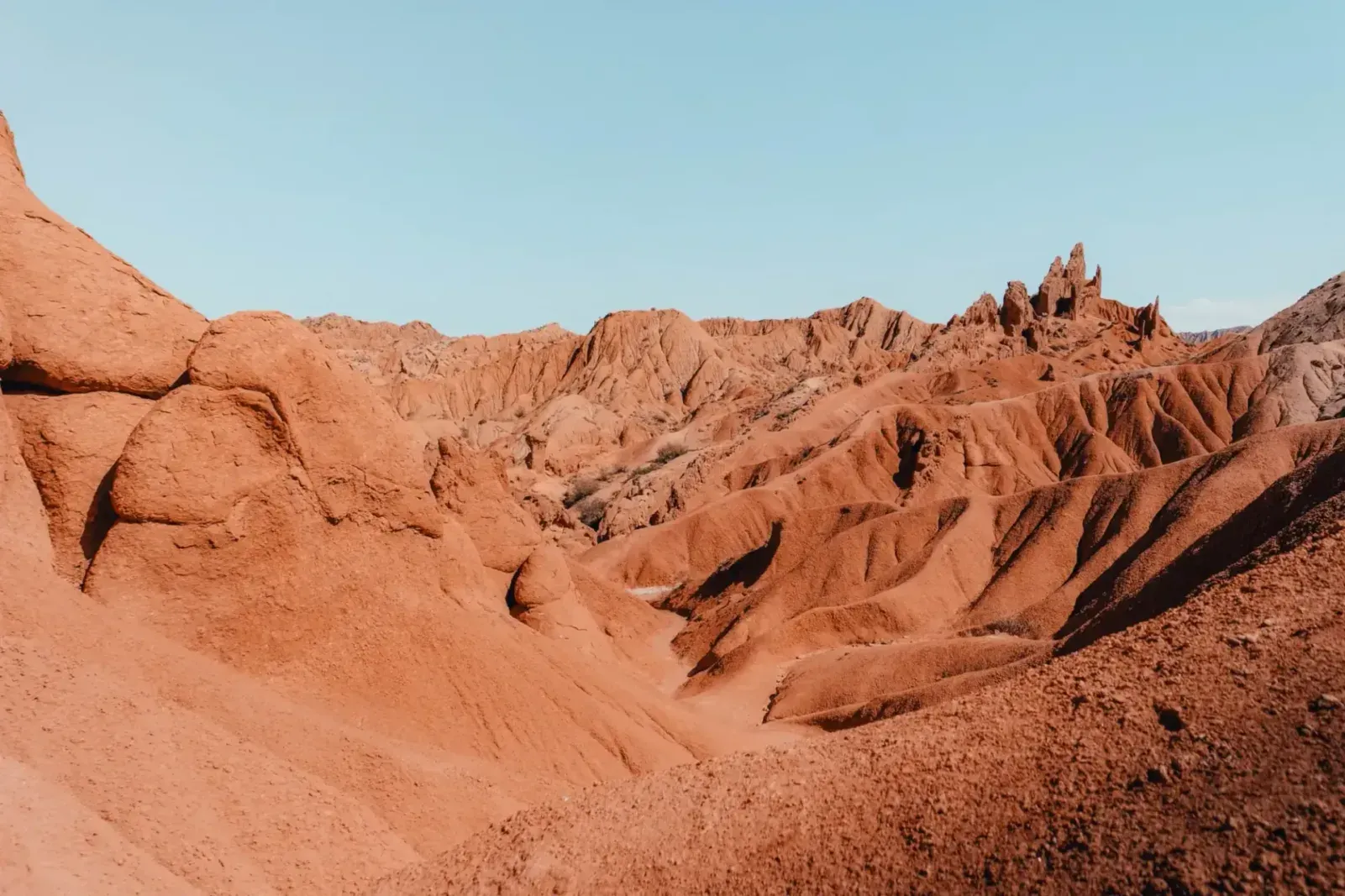
Scramble up the sandy slopes and the views keep expanding. From the higher points, you can trace the full sweep of the canyon against the shimmering expanse of Issyk-Kul. The loop trail that winds back toward the highway is a good route for first-timers. It covers the most dramatic section without requiring navigation skills.
Go deeper and the crowds thin out fast. The further you walk, the fewer people you share the ridgelines with. It becomes easier to frame a photograph without someone's 51st Instagram pose in the background. Early mornings and late afternoons give you that golden hour light that makes the rocks look like they're glowing from within. The temperatures are also far kinder than the punishing midday sun.
At the entrance, a small souvenir stall sells magnets and textiles, and a modest shop has basic supplies. During summer months, you might catch demonstrations of traditional hunting with berkuts (golden eagles) and taigans (the local sighthound breed) near the entrance. It's an unexpected cultural bonus that works well alongside the natural spectacle.
Trails, terrain and safety
The canyon is laced with small tracks threading through the rock maze, but none are formally marked. The paths are visible enough to follow, though first-time visitors should stay alert. The labyrinthine layout means it's possible to lose your bearings, especially if you wander off the main routes.
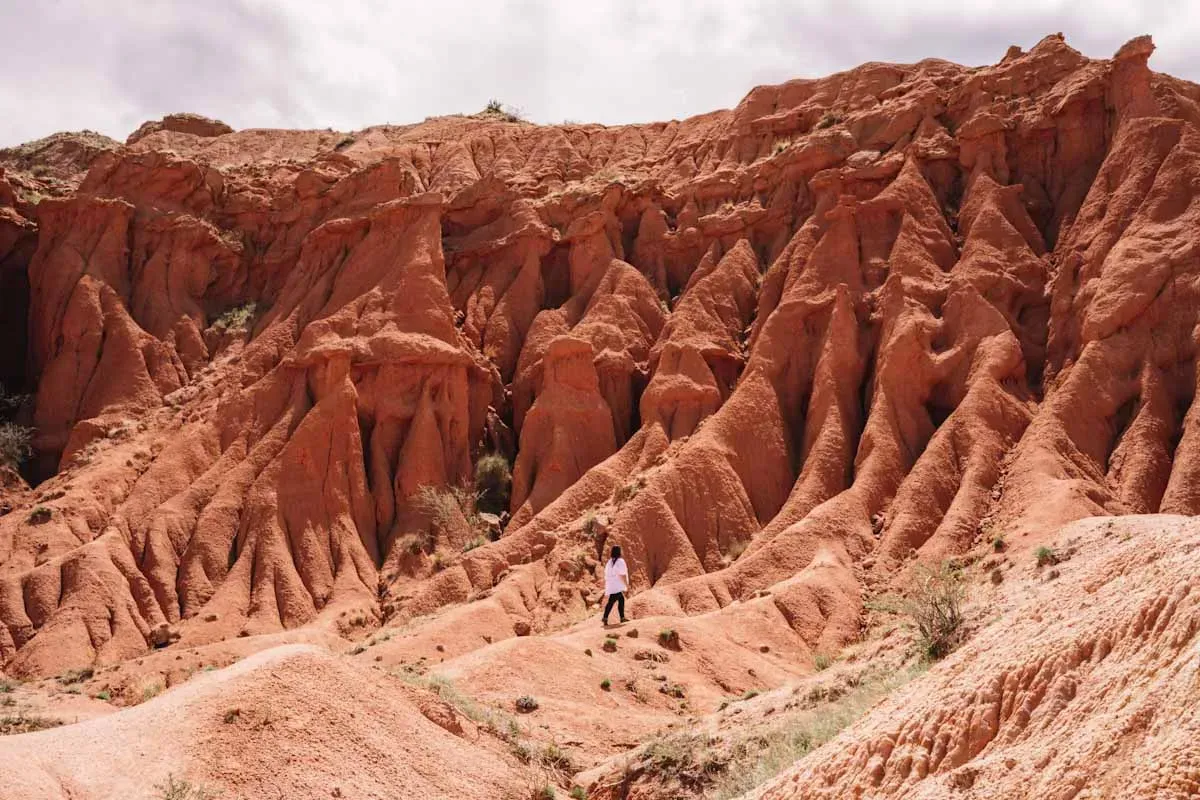
Here's the thing everyone who visits will tell you: wear proper trekking shoes. The ground is loose sand and crumbly rock that gets treacherously slippery on slopes. You will see people attempting the trails in flip-flops. Don't be one of them. Footwear with serious grip is non-negotiable, and hiking sticks help enormously on the steeper sections.
Safety infrastructure basically doesn't exist. No barriers, no guardrails, nothing along the trail edges. Walking out onto the tip of a sandy rock peak for a photo is genuinely dangerous, however tempting it looks. The sandstone can crumble without warning, and the drops are real. Take the terrain seriously.
The trails aren't long. You can explore the canyon in anywhere from two hours to half a day, depending on your pace and curiosity. For a thorough visit with time to climb, photograph and just sit with the views, give yourself at least four hours.
Best time to visit Skazka Canyon
The comfortable window runs from April through October. Within that stretch, timing matters a lot.
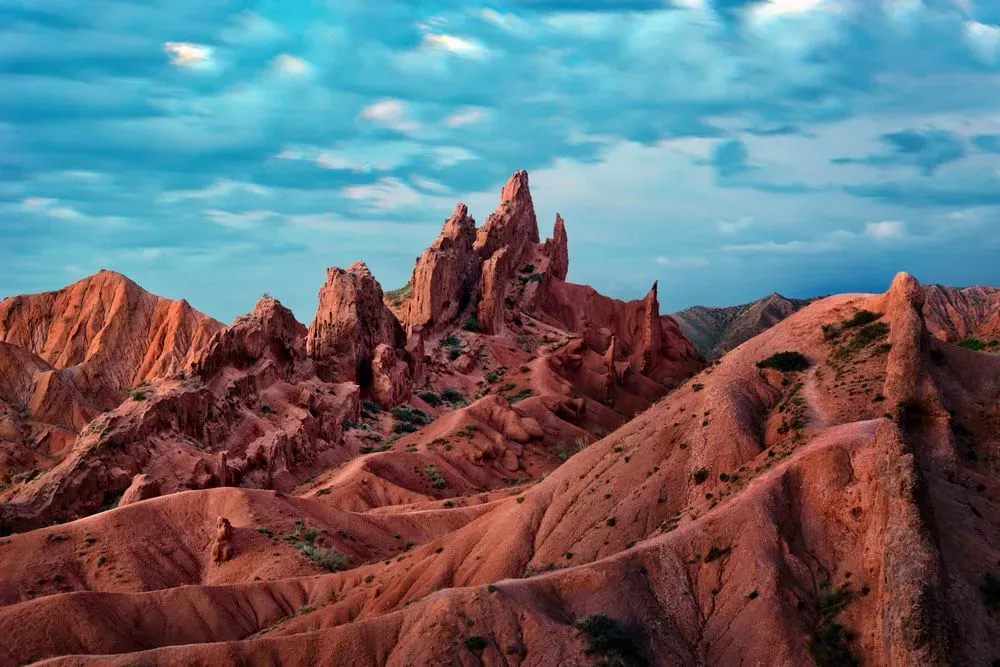
Summer brings the most reliable weather but also the harshest conditions on the ground. There is no shade anywhere in the canyon. The sun pounds the red rock with an intensity that makes midday hiking genuinely uncomfortable, even dangerous without enough water. Morning and evening visits are far better during the hotter months. They also happen to coincide with the golden hours that produce the canyon's best photographs.
Spring and autumn offer cooler temperatures ideal for longer explorations. The canyon sees fewer visitors during these shoulder seasons, and the softer light gives the formations a different character. Winter visits are possible (and sometimes there's no entrance fee during the off-season), but the cold and potential for icy trails makes it less forgiving.
Rain is a paradox. Wet conditions make the colours dramatically richer and the photography more atmospheric. But the sandy soil turns to slick mud that turns every slope into a hazard. If you visit during or after rain, trekking poles go from nice-to-have to essential. The ground is slippery by nature due to the soil composition, even when dry.
Weekends draw bigger crowds, especially during peak season. For solitude and unobstructed views, go on a weekday and set out as early as you can manage.
Practical tips for visiting Skazka Canyon
A ranger usually collects 50 som per person at the entrance. You might not be charged during winter when visitor numbers drop.
Bring trekking shoes with aggressive tread, at least a litre of water per person, sunscreen and a hat. The sun is relentless and there is zero coverage once you're among the rocks. Hiking sticks help enormously on the loose, steep sections.
The trails are unmarked. The main routes are intuitive, but the maze-like layout can disorient first-timers. A guide helps if you're unfamiliar with the terrain, though independent exploration works fine if you stay aware of your surroundings and keep your bearings relative to the road and the lake.
Try pairing your canyon visit with eagle hunting demonstrations near the entrance when they're available. If you're taking a taxi from Bokonbaev, coordinate a lakeshore photo stop as part of the deal to make the most of your journey along the southern shore.
There's a small shop and souvenir stall at the trailhead. Don't expect much beyond the basics. Bring everything you need for a few hours of hiking in exposed terrain.
Is Skazka Canyon Kyrgyzstan worth it?
Yes. Skazka Canyon is one of those rare places that looks edited even when you're standing right in it. The colours, the shapes, the silence broken only by wind. It's the kind of place that stays with you long after you've dusted the red sand off your boots.
It's not large, and it doesn't demand days of your time. That's precisely its strength. In a country defined by epic treks and remote mountain passes, Skazka delivers world-class scenery on a half-day timescale, a stone's throw from one of the largest alpine lakes on Earth. Whether you're circling Issyk-Kul on a road trip or basing yourself in Tosor for a slower exploration of the southern shore, this canyon deserves a spot on your itinerary. The entrance fee is negligible, the views are immense, and the experience, like the best fairy tales, feels a little bit like magic.