Ongi Monastery Mongolia: Haunting Gobi Desert Ruins
The crumbling ruins of Ongi Monastery Mongolia lie scattered across the Gobi steppe, a devastating monument to the 1937 Soviet purges. Essential viewing for anyone drawn to Mongolia's deeper, more difficult history.
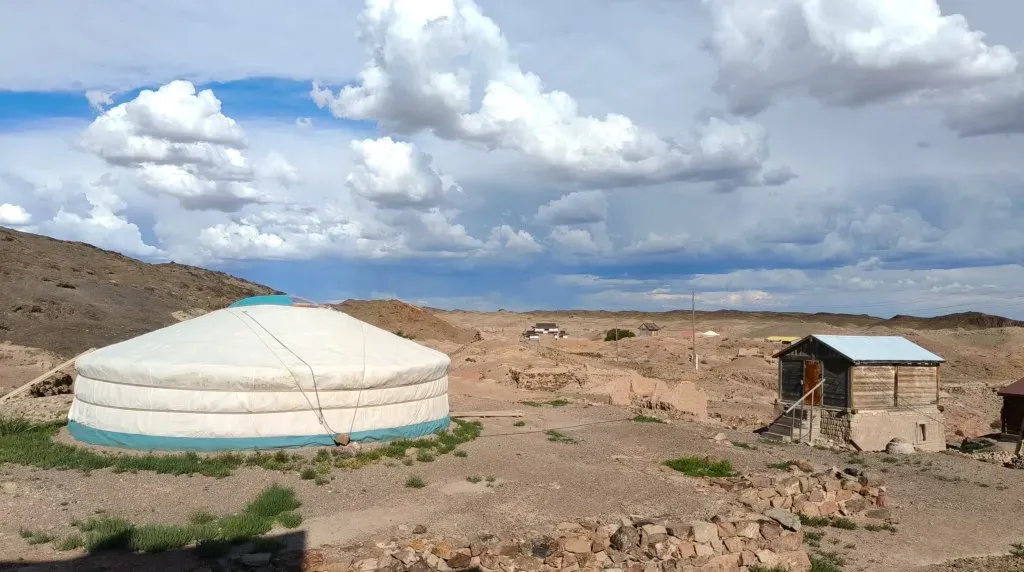
Scattered across a remote stretch of the Gobi steppe, the crumbling walls and toppled stupas of Ongi Monastery Mongolia tell a story equal parts magnificent and devastating. Once one of the largest Buddhist monastic complexes in the country (home to over a thousand monks who studied, meditated, and worshipped within its sprawling temples), Ongi Monastery is now a haunting memorial to the Soviet-backed anti-religious purges of the late 1930s. What remains today is not a polished tourist attraction but something far more powerful: a windswept ruin where history feels raw, immediate, and personal.
The tragic history of Ongi Monastery Mongolia
Ongi Monastery history: From Buddhist center to Soviet target
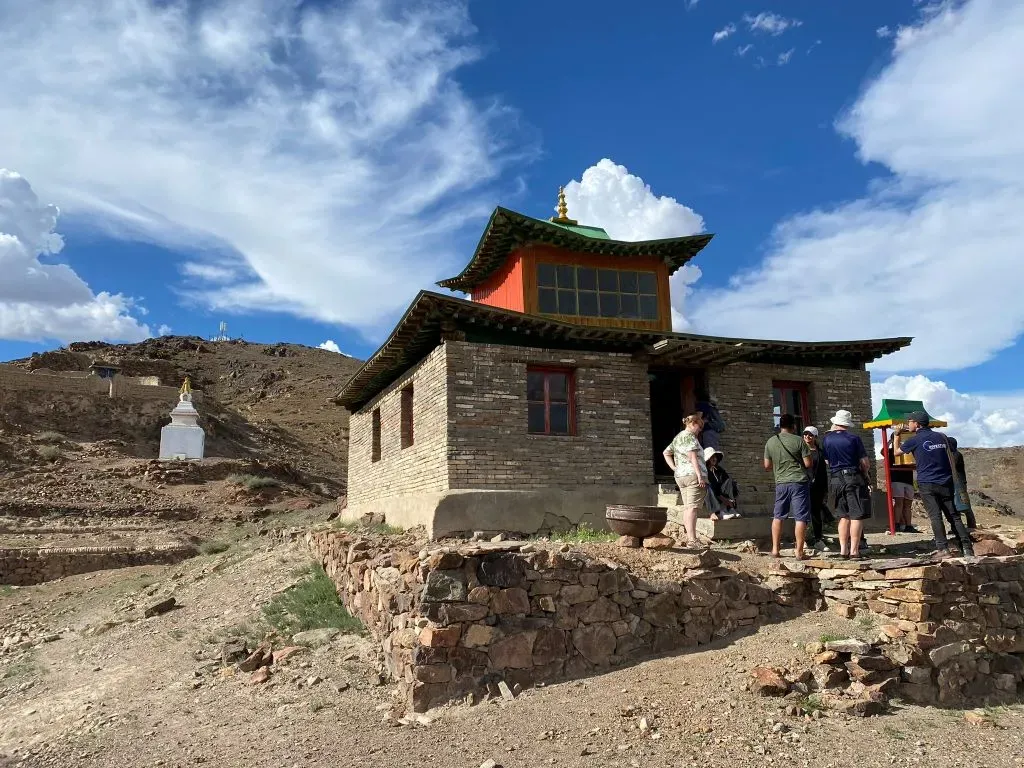
Before the darkness of Soviet repression descended, Ongi Monastery was a thriving spiritual hub. Over a thousand monks lived, studied, and meditated here, making it one of Mongolia's most significant centers of Buddhist learning. That world came to a violent end in 1937, when Russian soldiers swept through the complex as part of the communist purges. The destruction was systematic and brutal: they tore down buildings, destroyed sacred artifacts, and murdered hundreds of monks. Those who were not killed faced torture and persecution. The monastery and the community it supported were gutted.
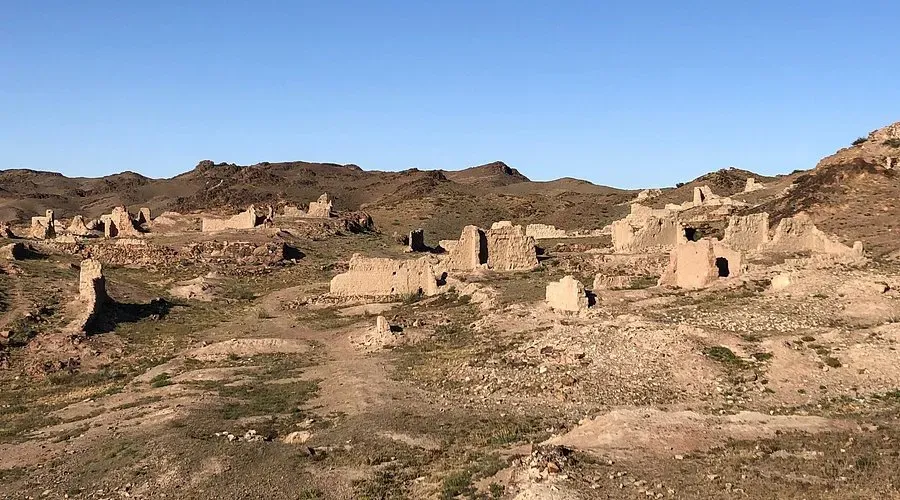
Walking through the ruins today, the scale of what was lost becomes painfully clear. Collapsed stone walls lie scattered across the hillside: the bones of temples, dormitories, and prayer halls that once hummed with monastic life. It is, in many ways, not a conventionally beautiful site in the traditional sense, but that is precisely the point. The power of Ongi Monastery lies in what it represents: evidence of the cultural and spiritual wreckage wrought by Soviet rule, and the resilience of Mongolian Buddhism in its aftermath.
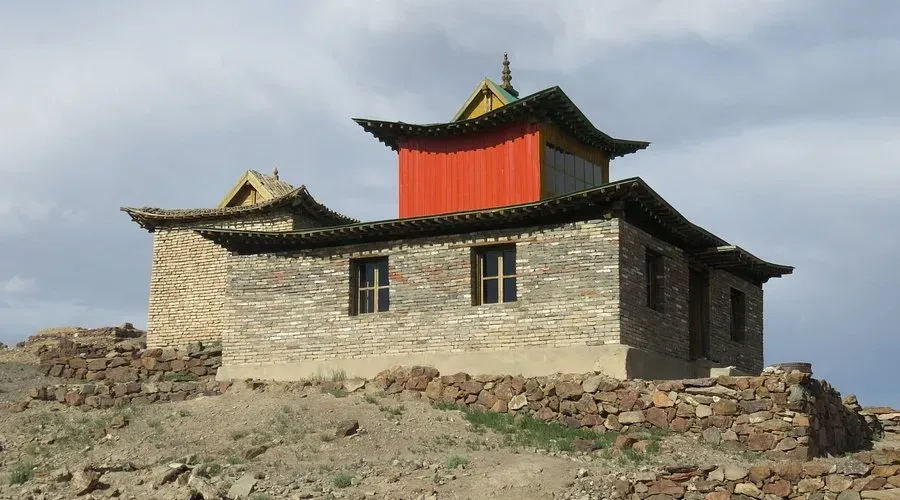
A renovation effort is underway, though progress is slow given the sheer extent of the damage. The monastery will never be what it once was, but the work being done means future generations will have something tangible to connect with, a physical reminder of both the grandeur and the tragedy.
Visiting Ongi Monastery: The journey across the Gobi
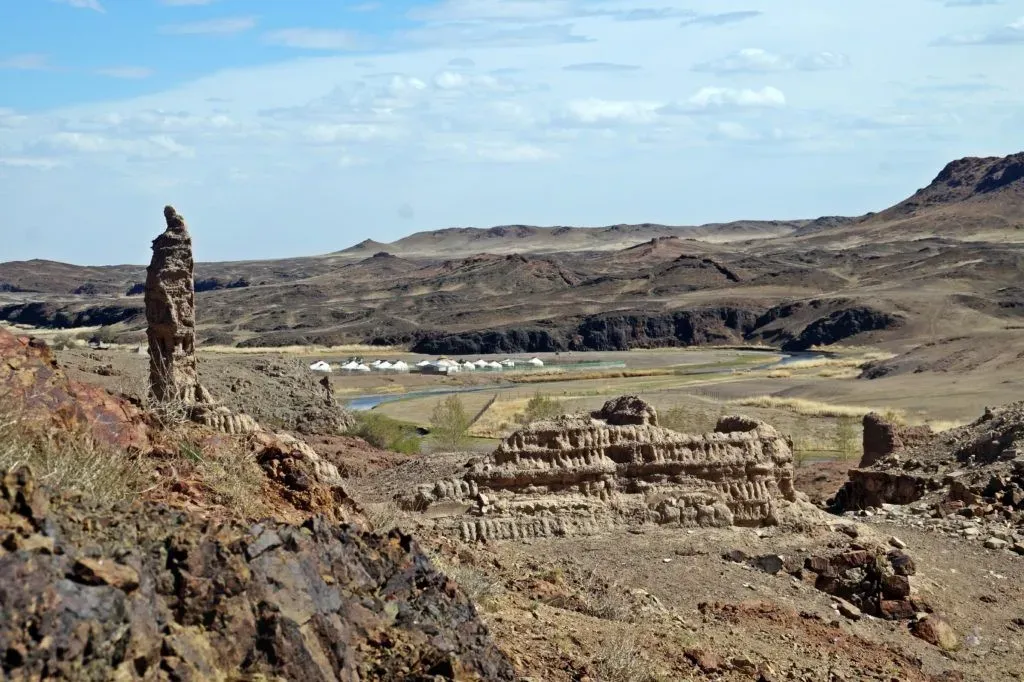
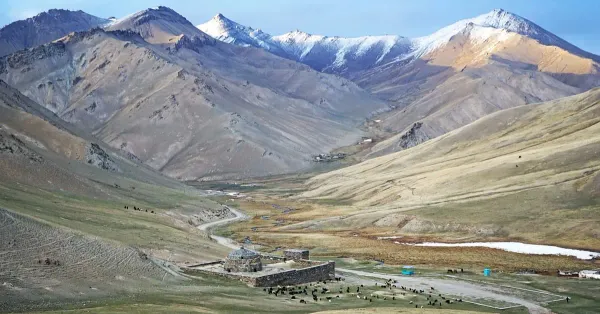
Getting to Ongi Monastery is an experience in itself. The road cuts through a dramatic mosaic of landscapes, across mountains, through open plains, and down into river valleys, before finally delivering you to the ruins. It is not an easy drive, and the remote location means you will feel the full weight of the Gobi's isolation long before you arrive. But that remoteness is part of what makes the monastery so compelling. The landscape around the site is genuinely striking, with the Ongi River valley carving through arid steppe and distant mountains framing the horizon in every direction.
The journey filters out casual tourists. Those who make it here tend to arrive with intention: history enthusiasts, cultural travelers, and anyone drawn to Mongolia's deeper, more difficult stories.
Ongi Monastery things to do: Ruins, stupas, and hilltop views
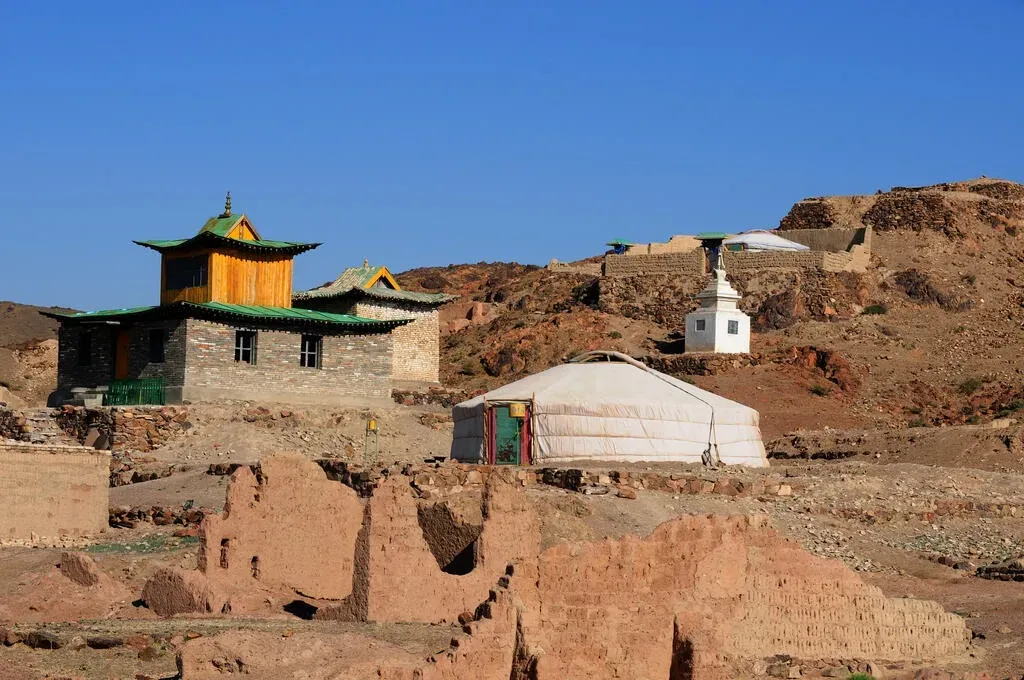
Walking among the Ongi Monastery ruins
There is no grand visitor center, no polished interpretive signage. What you get at Ongi Monastery is the ruins themselves: raw, unfiltered, and genuinely moving. Not many buildings remain intact, and those that do are under active renovation. But that scarcity is precisely what makes exploring the site so affecting. Every collapsed wall, every scattered stone, tells a piece of the story.
The ruins are free to visit, and you are largely left to wander at your own pace. Two buildings on the site do require a guide to enter, so if you want the fullest possible experience, arranging for one ahead of time is wise. A professional guide who knows the history intimately transforms the visit. The complex's story goes far deeper than what the physical remains alone can tell you.
Climbing to the hilltop statue
The climb up the mountain to the statue overlooking the monastery grounds is worth every step. The ascent is not particularly long, but the Gobi sun and altitude can make it feel tougher than expected. At the top, the panorama is extraordinary: the ruins spread out below in the valley, the Ongi River threading through the steppe, and mountains stretching to the horizon in every direction.
From this vantage point, it is easier to imagine what Ongi Monastery must have looked like in its prime. A vast complex of temples and dormitories sheltering over a thousand monks, filled with prayer, study, and the rhythms of daily monastic life. The contrast between that vision and the scattered ruins below is gutting.
The museum and active temple
A small museum on the grounds provides valuable context for the ruins, displaying artifacts and information about the monastery's history. That said, the museum is not always open. Its hours can be unpredictable, and it is worth preparing for the possibility that it may be closed on the day of your visit. When it is open, the exhibits add rich depth to what you see outside, helping bridge the gap between the scattered stones and the living community they once supported.
The site is maintained by a local family, whose kindness and dedication are well known to those who make the journey here. Their presence adds a deeply human dimension to the visit. This is not an abandoned ruin but a place that is actively cared for, and treating it, and them, with respect is essential.
Sunset over the ruins
While more famous monasteries in Mongolia may have more intact architecture, Ongi Monastery has one undeniable advantage: it is a spectacular place to watch the sunset. As the Gobi light turns golden and then crimson, the ruins take on an almost otherworldly quality. The stone walls glow warm, long shadows stretch across the steppe, and the silence is total except for the wind. It is a quiet, contemplative end to the day, and a moment that lingers long after you leave.
Ongi Monastery travel guide: Practical tips for your visit
Entry to the monastery grounds is free, making it one of Mongolia's most accessible heritage sites. Only two buildings require a guide to enter. The rest of the site is open for self-guided wandering. That said, visiting with a professional guide who knows the history transforms the experience. The story of what happened here runs deep, and a knowledgeable guide brings the ruins to life in a way that solitary exploration simply cannot match.
The small museum provides useful context but its hours are unpredictable, so treat it as a bonus rather than a certainty. Focus your expectations on the outdoor ruins and the sweeping Gobi landscape instead. And know that this is not a theme park ruin. It is a site of real cultural and spiritual trauma. The family that maintains the monastery is welcoming, but approach the entire experience with the gravity it deserves.
Pack water and sun protection. The Gobi sun is unforgiving and there is little shade among the ruins. Wear sturdy footwear for the hike up to the hilltop statue; the terrain is uneven and rocky and flip-flops will not cut it. Plan carefully for the journey itself. The road to Ongi Monastery is difficult, crossing varied terrain through remote countryside. A reliable vehicle and a driver who knows the route are essential. This is not a place you stumble upon accidentally.
Best time to visit Ongi Monastery
The optimal window for visiting Ongi Monastery runs from June through August, when temperatures across the Gobi are warmest and the weather is most stable. Summer days can be hot, but the dry desert air keeps conditions manageable, and the long daylight hours give you ample time to explore the ruins and make the climb to the hilltop statue.
Outside these months, the Gobi becomes considerably more challenging. Spring brings strong winds and dust storms. Autumn cools rapidly, and by winter, temperatures plummet well below freezing, making the already difficult access road treacherous or impassable. If Ongi Monastery is on your itinerary, plan for a summer visit and aim to arrive in the late afternoon. The ruins at sunset are unforgettable, and the golden-hour light transforms the entire valley.
Why visit Ongi Monastery?
Ongi Monastery does not compete with Mongolia's more visually intact religious sites. Erdene Zuu and Amarbayasgalant have more standing architecture. What Ongi offers is something different: a raw, unfiltered encounter with one of the twentieth century's great cultural tragedies. It is an important place for Mongolian Buddhism, historically connected to the broader network of monasteries that once defined the country's spiritual geography, and it carries a weight that more polished sites cannot replicate.
The historical atmosphere is palpable. Even among those who acknowledge there is not a great deal to look at in the conventional sense, the sentiment is overwhelmingly positive. The ruins inspire reflection. The landscape captivates. And for those who take the time to understand what happened here, the lives lost and knowledge erased, Ongi Monastery becomes one of the most meaningful stops in all of Mongolia.
I genuinely don't know how to feel about a place like this. It is beautiful and awful at the same time. The setting, the kindness of the caretakers, the silence of the steppe at golden hour, it all combines into something far greater than the sum of its scattered stones. Many who visit find themselves wanting to return. That impulse says everything about the quiet pull of this place.