Mount Karangetang, Indonesia: Hike an Active Volcano
Mount Karangetang on Indonesia's Siau Island rarely stops erupting. At night, the twin craters glow with fresh lava, and almost nobody is there to see it.
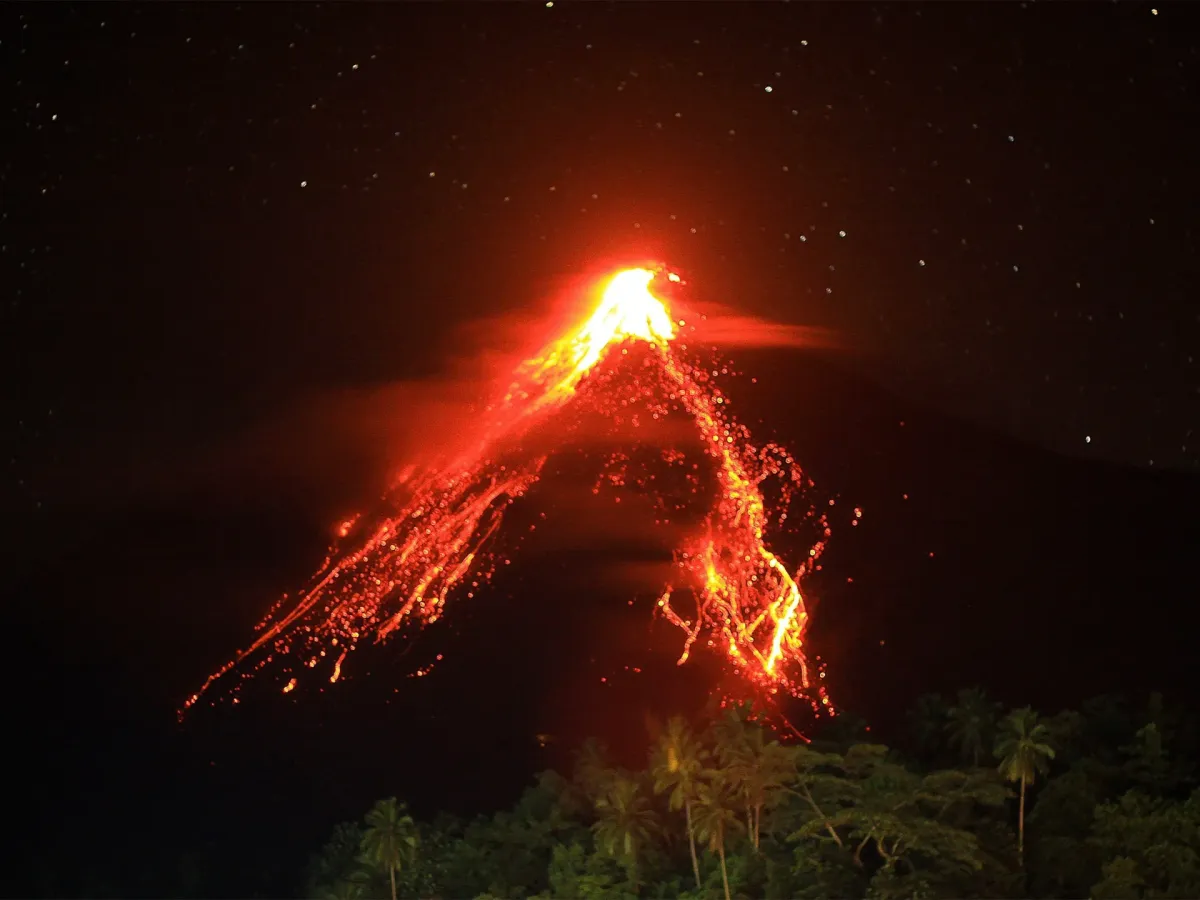
At 1,827 meters, Mount Karangetang Indonesia rises above Siau Island in North Sulawesi, and it basically never stops erupting. Locals call it Api Siau. Its twin craters rarely go more than a few hours without pushing smoke, ash, or glowing lava into the tropical sky. If you have already done Bali and Komodo and want something that feels properly uncharted, this corner of the Sitaro archipelago is worth the effort.
What makes the Mount Karangetang volcano so special
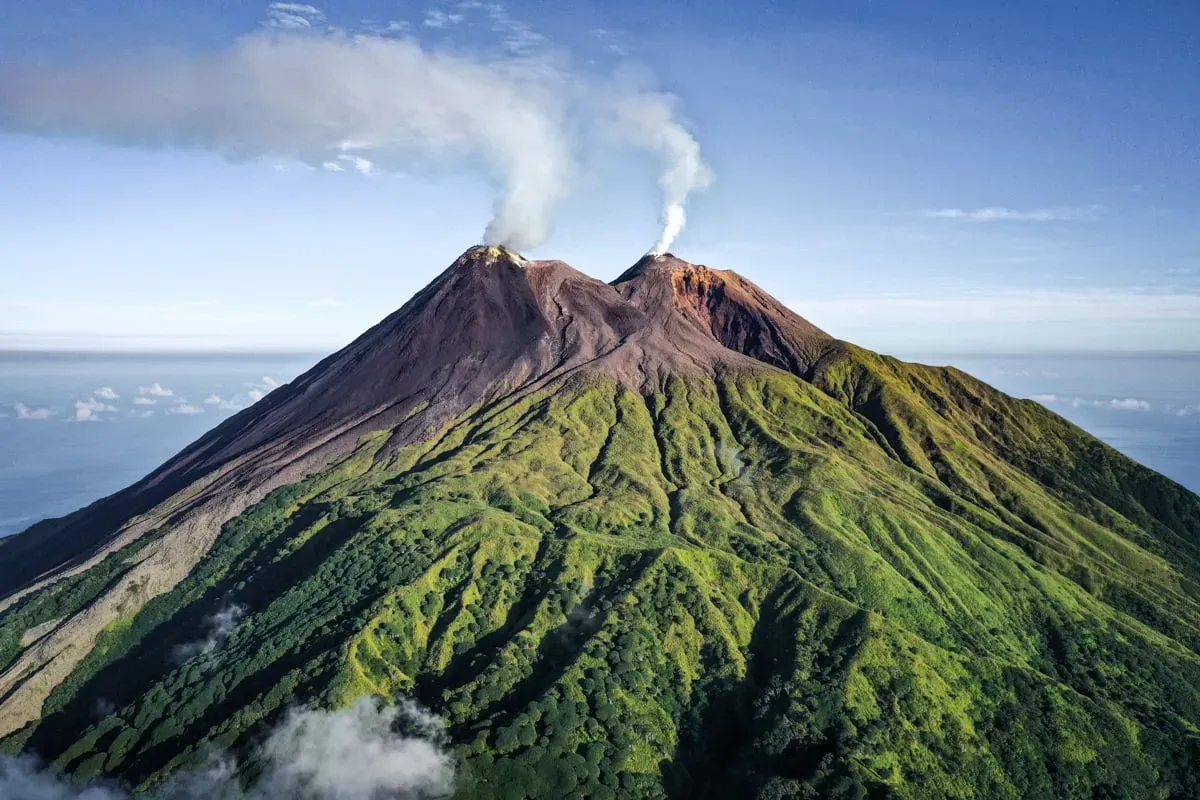
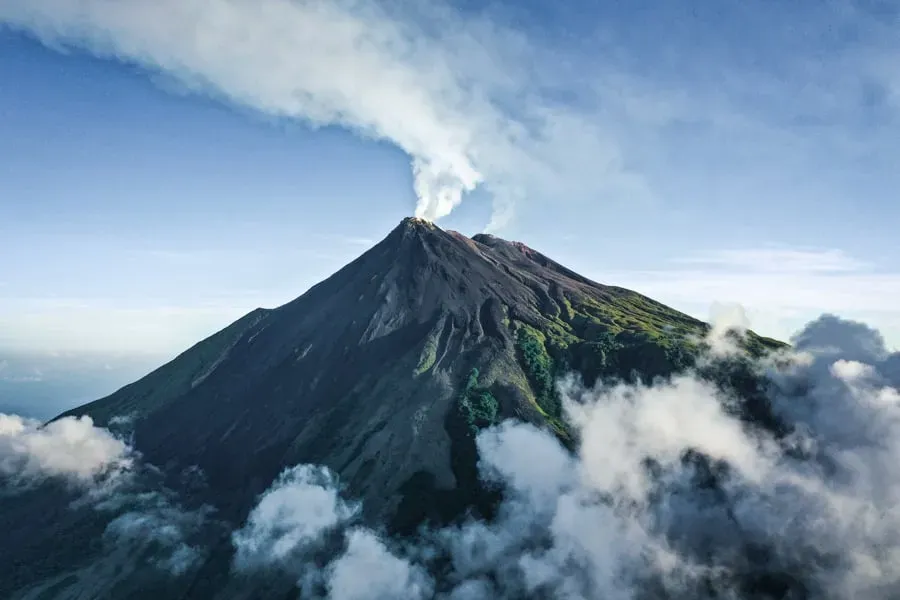
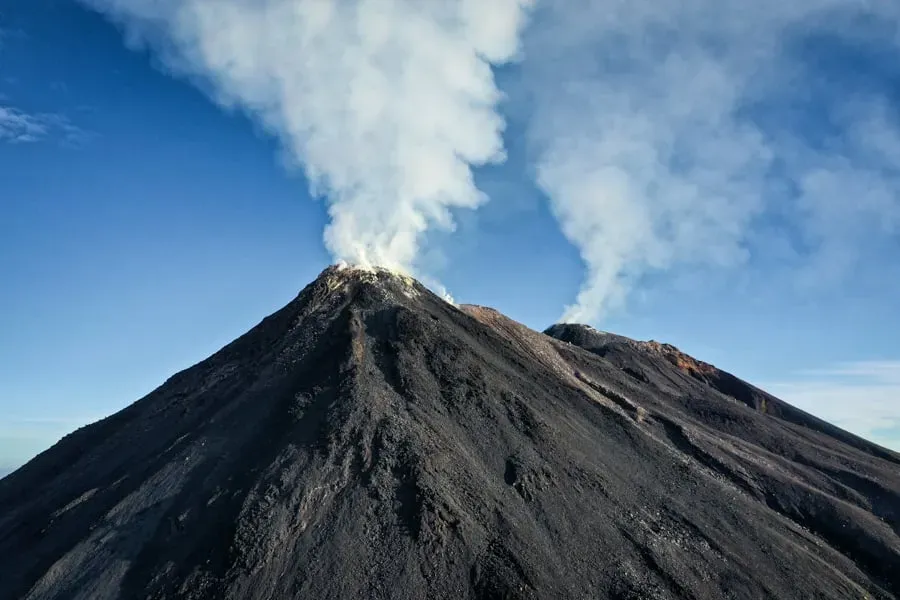
The Mount Karangetang volcano grabs your attention the moment it appears on the horizon. Its silhouette is textbook: a near-perfect cone, the kind a kid would draw if you asked them what a volcano looks like. That symmetry is not just nice to look at. It tells you the mountain is restless. Karangetang ranks among the most active volcanoes on the planet, and it has no interest in being dormant. Lava flows, ash plumes, and rock bombs are not occasional events here. They are the mountain's default state.
The twin craters at the summit are where all the action happens. Both vents smoke continuously. On any given night, at least one is likely spitting molten rock into the darkness. What sets Karangetang apart from Indonesia's more famous volcanoes is the mix of relentless activity and real isolation. There are no tour buses, no souvenir stalls, no crowds. You are just there, on a remote island, with a mountain that could erupt at any moment. It feels personal in a way that more popular sites rarely do.
The Mount Karangetang hike experience
Where is Karangetang located?
Mount Karangetang rises from Siau Island, part of the Sitaro Islands Regency in North Sulawesi, Indonesia. You do not stumble upon this place by accident. The nearest town, Tahuna, is the gateway to the broader Sangihe and Sitaro island chain. Indonesians themselves talk about this region with real pride. Getting to Siau means a deliberate journey across the Celebes Sea, and that remoteness is exactly what keeps the island the way it is.
Approaching the twin craters
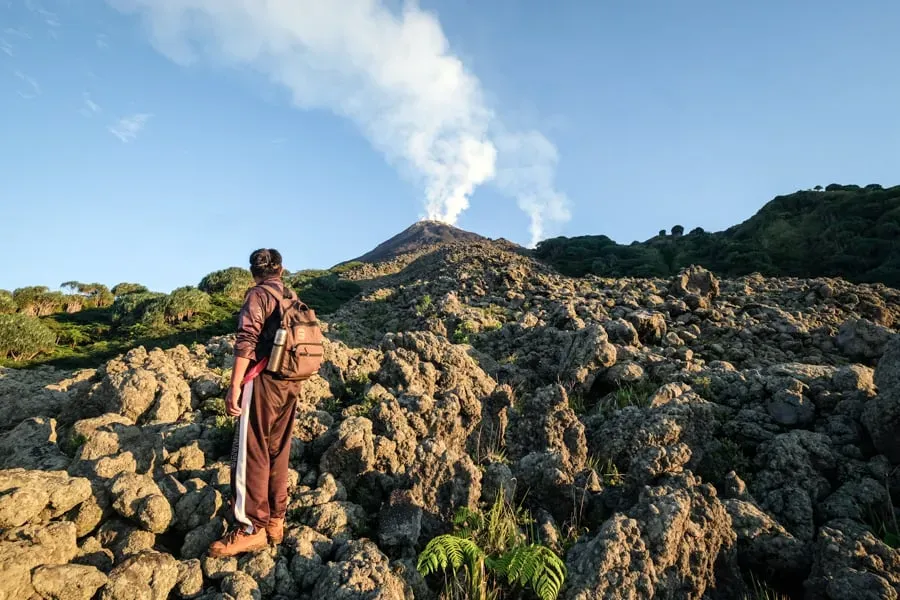
The hike up Mount Karangetang tests your heat tolerance as much as your fitness. The elevation does not save you from the tropical climate. Temperatures stay high the whole way up. Cool is not a word that applies here. Local guides lead the route up the volcano's evenly sloped flanks, navigating terrain that shifts with every fresh eruption. The mountain's shape may be textbook, but the path to the summit changes constantly.
As you climb, the vegetation thins and the ground beneath your feet shifts from tropical greenery to volcanic scree. The smoking craters grow larger on the horizon with every step, their steady plume a constant companion. From the upper slopes, the view stretches across the island to the sea beyond. Lush green meets brilliant blue, and you are standing on ground that could, at any moment, make it very clear who is in charge.
Nightfall: when the volcano comes alive
Daylight on Karangetang is striking, but the mountain really shows itself after dark. Once the sun drops below the horizon, the craters turn into something else entirely. Glowing lava becomes visible against the black sky. Streams of molten rock trace orange-red lines down the slopes, broken up by the occasional burst of rock bombs arcing through the air. This is not subtle. The volcano has never stopped emitting lava, and after sunset, every fresh pulse writes itself in fire across the darkness.
The smartest move is timing your ascent to catch the transition from day to night. You get the sweeping island views in daylight, then stick around for the primal sight of an active volcano doing what it does best after dark. The contrast sticks with you.
Mount Karangetang things to do beyond the crater
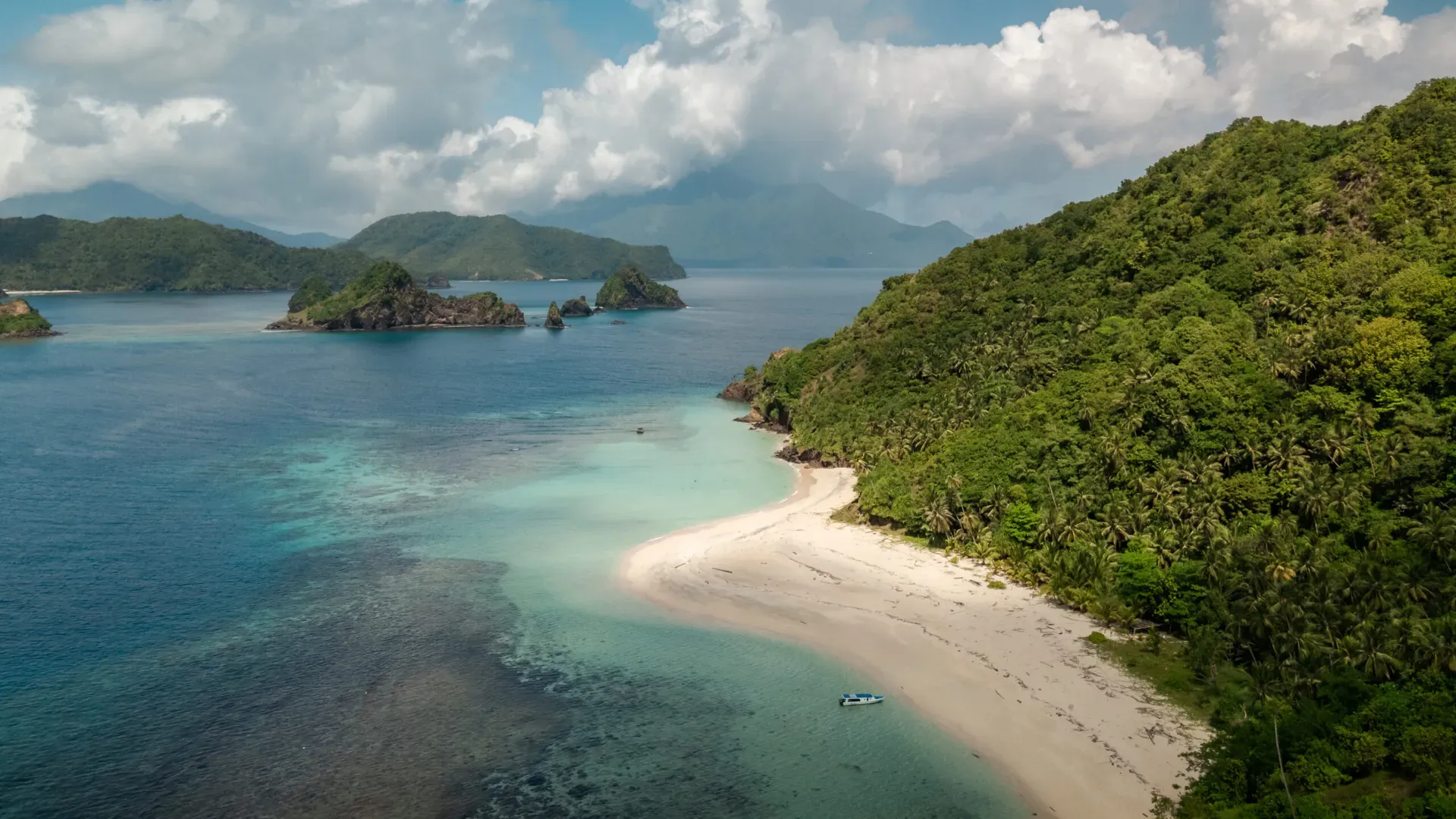
The volcano dominates the landscape, but Siau Island itself deserves your attention. The island is beautiful, largely untouched by mass tourism. White sand beaches line the coastline. Turquoise waters sit framed by palm trees with Karangetang's silhouette always looming in the distance. Smaller islands dot the surrounding seascape, part of the wider Sitaro archipelago, and there is plenty to explore if you have the time.
The contrast is what gets you: one moment you are on the flanks of a fire-breathing mountain, the next you are wading into calm, warm shallows with the volcano reflected perfectly in the water. I do not know many places that pair tropical paradise with raw geological violence this well.
Mount Karangetang travel guide: essential tips
The most obvious advice is also the most important: be extremely cautious near the crater zone and never approach active lava flows. Karangetang is not a dormant museum piece. It is a live volcano that can hurt you. Lava, rock bombs, and toxic gases are real hazards. Staying within safe zones as directed by your local guide is not optional.
The heat on the island does not let up, so bring lightweight clothing, plenty of water, and sun protection. Sturdy footwear with good grip makes a real difference on loose volcanic terrain. And please, keep the island clean. Pack out everything you bring in. Leave the slopes and beaches the way you found them. Siau stays unspoiled only if people make the effort.
Best time to visit Mount Karangetang
The dry season, from April through October, gives you the most reliable conditions for a Mount Karangetang trek. Clear skies during these months mean better daytime views and, more importantly, cloud-free nights for watching the lava. The wet season brings heavier cloud cover and slippery trails. The craters can disappear behind the weather, and the climb gets considerably harder. No matter when you go, expect heat. The tropical climate does not take a holiday, and temperatures stay high even at elevation.
Planning your Mount Karangetang itinerary
A decent Mount Karangetang itinerary needs at least two to three days on and around Siau Island. This gives you a buffer for weather. Cloud cover can make or break a summit attempt, and you want flexibility. It also leaves time to explore the coastline and nearby islets. Getting to Siau means ferry connections from North Sulawesi, so factor in travel days on both ends. Rushing misses the whole point. Part of what makes Karangetang special is how far out it is, and that demands slowing down and letting the island set the pace.
Final thoughts
Mount Karangetang is not for everyone, and that is exactly why it works. It sits far from Indonesia's well-worn tourist circuits, on an island most travelers could not place on a map, beneath a smoke plume that never goes away. But if you make the journey, you get one of the rawest volcanic experiences still out there: a perfectly shaped, relentlessly active mountain rising from a gorgeous tropical seascape, putting on a fire show against the night sky. The Sitaro islands, the white sand beaches, the warmth of the region. It all adds up to something that feels rare. Everything is here, in Indonesia, waiting for anyone willing to go the distance.