Montezuma Falls Tasmania: The Complete Hiker's Guide
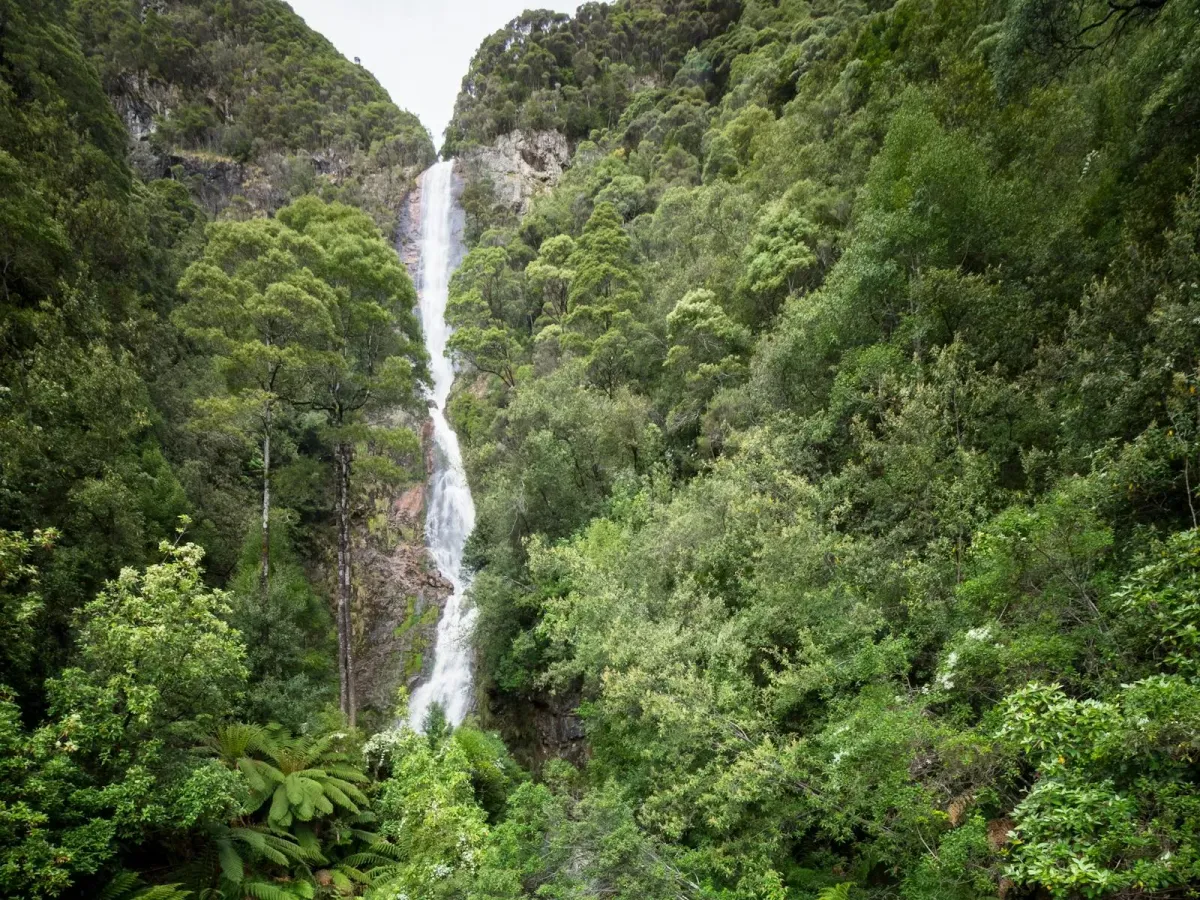
Montezuma Falls Tasmania hides a 104-metre waterfall at the end of an old mining tramway. The flat 10km rainforest walk through Southwest National Park is as good as the destination itself.
Why Montezuma Falls Tasmania deserves the journey
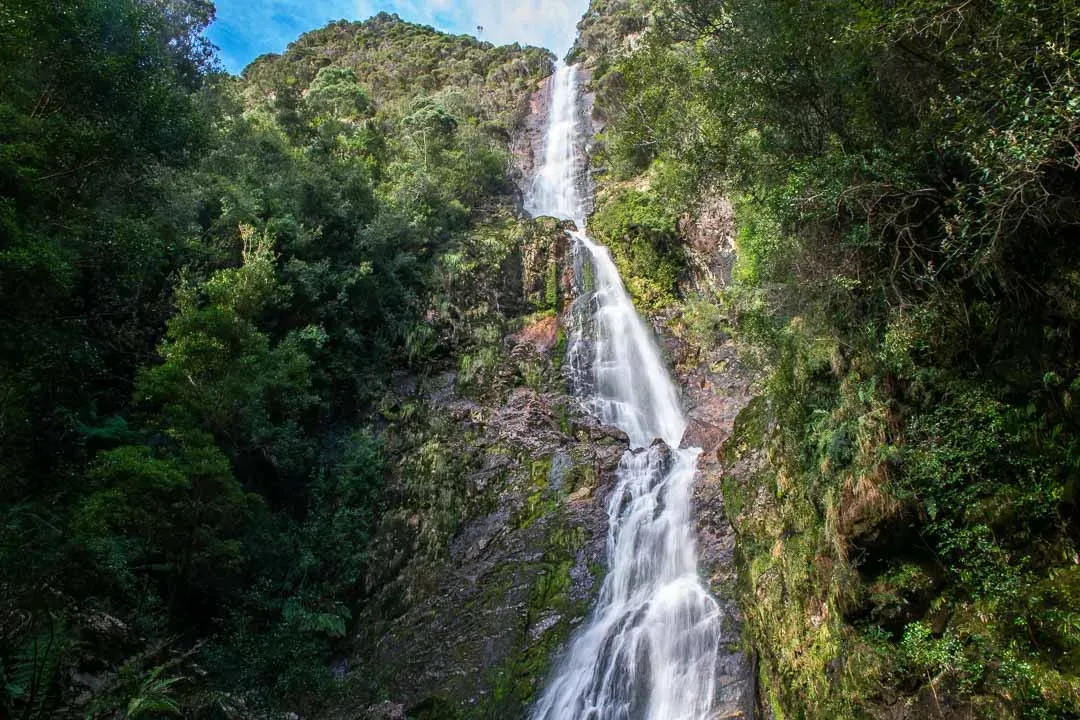
Montezuma Falls Tasmania sits in the Southwest National Park, a 104-metre waterfall at the end of an old mining tramway turned walking track. It's the tallest waterfall in the state. The trail follows the route that once carried trains beneath the falls themselves. The walk is flat, the rainforest is thick with moss, and compared to Tasmania's better known spots, you'll share the track with relatively few people.
The name comes from the Montezuma mining company that worked this valley. I didn't expect to find rusted rails and abandoned mine entrances alongside ferns and fungi, but there they are. That mix of a serious waterfall and industrial history makes the walk more interesting than your standard forest track.
The Montezuma Falls walk: a step by step guide
How to get to Montezuma Falls
Montezuma Falls sits within the Southwest National Park in western Tasmania. The drive to the car park is a winding, slow affair. Don't let that put you off. Every vehicle can make it, and the journey through Tasmania's wild landscape is part of the appeal. Once you arrive, a car park and a pit toilet mark the trailhead. Be warned: that toilet has a reputation for being memorably pungent.
How long is the Montezuma Falls walk?
The Montezuma Falls walk covers roughly 10 kilometres return, about 5 kilometres each way along the old tramway. Most hikers complete the round trip in around three hours, though that varies with your pace and how often you stop. Those who linger over the fungi, peer into abandoned mine shafts, or pause for a packed lunch at the falls should allow 3.5 to 4 hours. Some walkers report reaching the falls in as little as 75 minutes one way. Families and more leisurely ramblers will appreciate the extra time.
The path itself is mercifully flat. It's an old railway formation with no steep inclines and a wide, clear surface. But flat doesn't mean clean. Sections turn seriously muddy, especially after rain. Leave white shoes at home. Sturdy footwear with decent grip is non-negotiable. Seats are scattered along the route for anyone who needs a breather, and the wide track even accommodates mountain bikes if you'd rather ride than walk.
One detail that catches first-timers off guard: after heavy rain, small creeks can form across the trail where none usually exist. It's rarely dangerous, but it does add a splash of adventure to an otherwise gentle walk.
Montezuma Falls hike: highlights along the trail
The Montezuma Falls hike isn't just a corridor to a waterfall. The whole route hums with life and history. The old tramway cuttings are lined with mosses and liverworts, and after rain the forest floor erupts with fungi in astonishing variety. Walkers who take their time find colour and texture at every turn: tiny orange mushrooms, delicate white specimens, and all manner of forest-floor curiosities.
The sounds shift as you move deeper into the valley. Bird calls punctuate the air, water rushes alongside the track, and the temperature drops perceptibly as the canopy thickens. If you stop and listen, the rainforest orchestrates its own soundtrack.
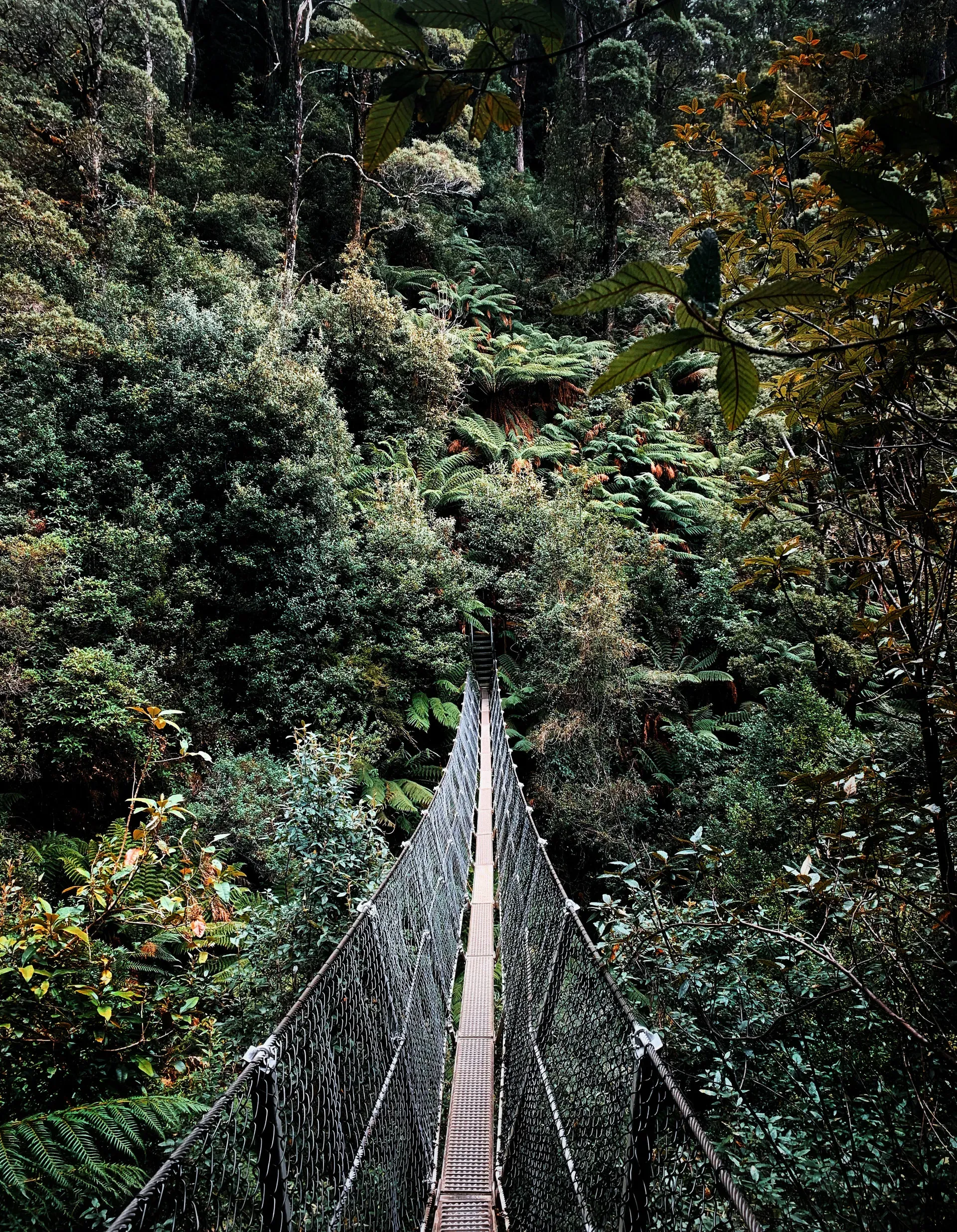
History buffs will find plenty to occupy them. Remnants of the old mining railway appear along the route. Rails, sleepers, and rusted artefacts turn up in the undergrowth. Keen-eyed walkers can even peer into one of the abandoned mine entrances. It's strange to imagine that the mining train once passed directly beneath Montezuma Falls itself. The original bridge collapsed long ago and has been replaced by the suspension bridge that now carries hikers across the gorge.
The suspension bridge
The suspension bridge is an experience in itself. Only one person wide, single file, one foot in front of the other. It sways gently over the gorge with the falls thundering ahead. For some it's exhilarating. For others, genuinely daunting. Either way, crossing it is a rite of passage on the Montezuma Falls walk. Note that the bridge has occasionally been closed for maintenance, so checking conditions before setting out is wise.
Interestingly, the best view of the falls isn't necessarily from the bridge. Many walkers find the dedicated viewing platform, or the rest area just beyond, offers a superior and less obstructed panorama. From here, you can take in the full 104-metre drop properly.
At the falls
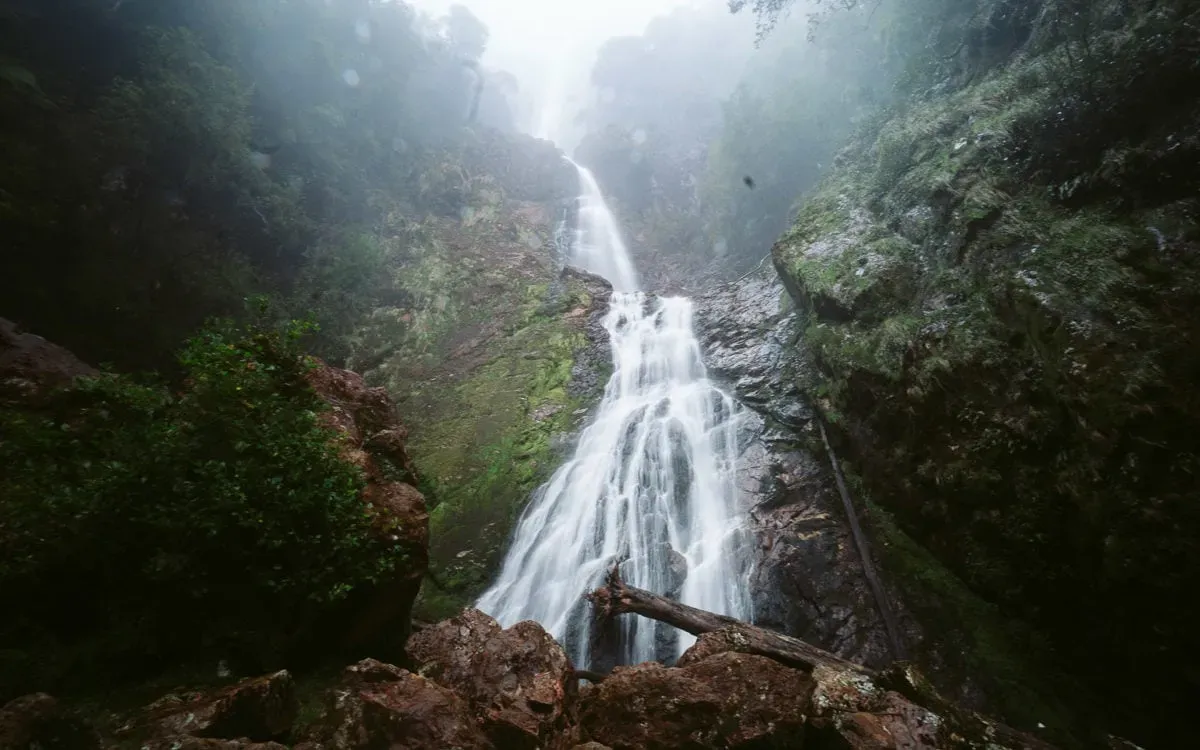
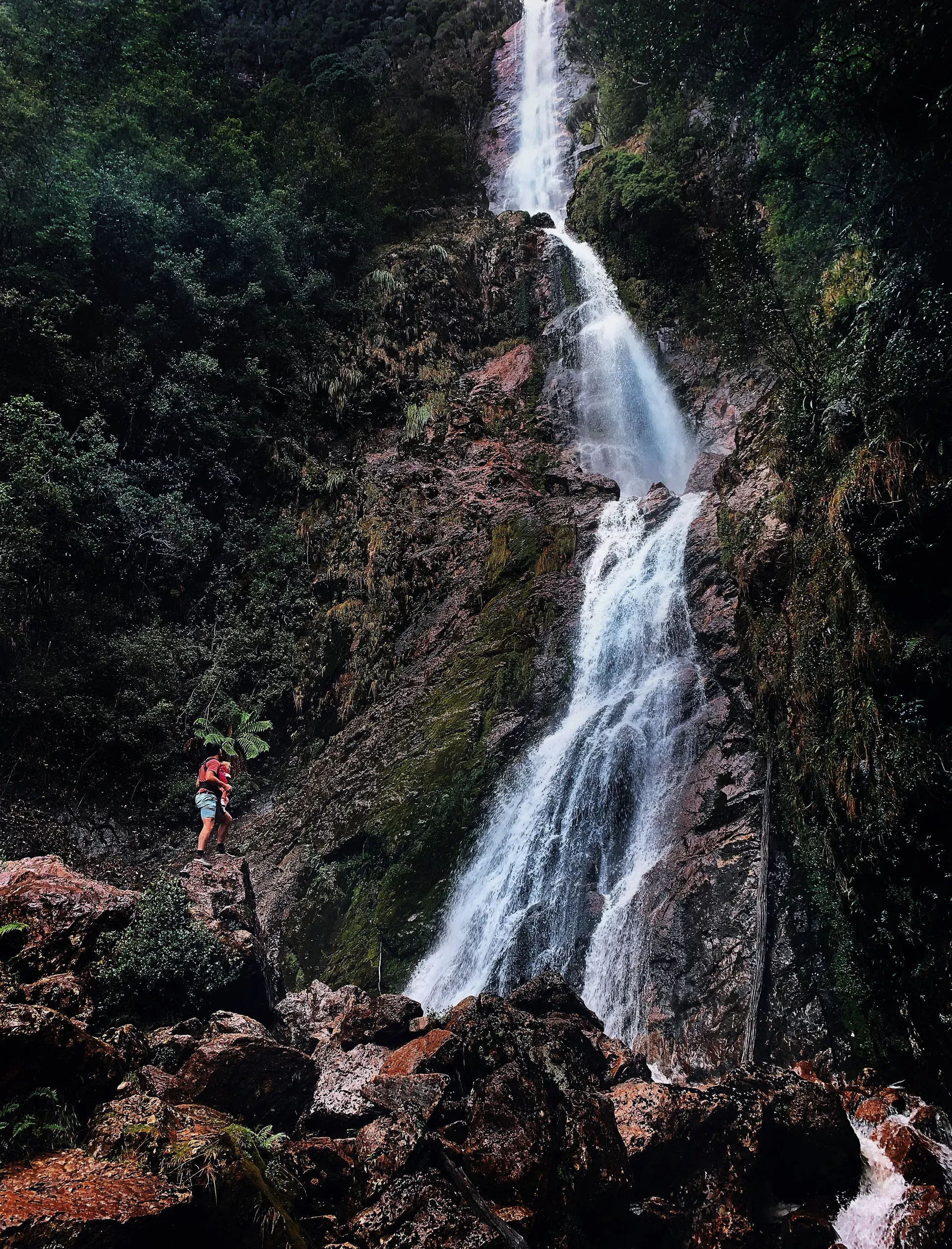
When you finally arrive, the payoff is big, especially if rain has fallen in the preceding days. A drenched forest means a swollen, dramatic waterfall, with mist rising to meet you. On drier stretches, the flow may be more modest, but the setting itself is so good that few walk away disappointed. For those who want to get closer, you can approach the base and feel the cool spray on your face.
There's a viewing area right at the foot of the cascade, and the changes in temperature and sound as you near the falls are striking. One moment you're in quiet temperate forest. The next you're standing before a roaring column of water framed by moss-covered cliffs.
Best time to visit Montezuma Falls
The window from November to April delivers Tasmania's most favourable hiking weather: warmer temperatures, longer daylight hours, and generally drier trails. That said, this is a west coast rainforest, and "dry" is a relative term. Mud persists year-round, and rain can sweep in at any moment. An early autumn visit offers a sweet spot. The summer crowds thin out, the fungi are at their most prolific, and the forest takes on a golden tinge without the chill of winter.
Oddly enough, the best conditions for the waterfall itself come immediately after heavy rain. Yes, the track will be sodden and you might face unexpected creek crossings, but the falls become immense. A roaring curtain of water that makes the muddy boots entirely worthwhile.
Montezuma Falls travel guide: essential tips
The track is flat but muddy in sections, so wear sturdy hiking shoes. White sneakers will not survive. After rain, expect wet conditions and plan accordingly. There are no facilities beyond the car park's drop toilet, so bring lunch, water, and take all rubbish home with you. Plan for at least three hours return, or four if you like to take photos and linger at the falls. Kids as young as eight and walkers into their sixties manage this track comfortably. It's a good family outing. Montezuma Falls is also one of Tasmania's dog-friendly waterfall walks, and mountain bikes are welcome on the wide former tramway. Check conditions before heading out, as the suspension bridge sometimes closes for maintenance.
Is Montezuma Falls worth visiting?
I'd say yes, without hesitation. The walk through the rainforest alone justifies the trip, even on days when the waterfall flow is modest. Catch Montezuma Falls Tasmania after heavy rain and the falls are genuinely powerful. The suspension bridge adds a bit of thrill, and the mining history along the track gives you something to think about beyond the scenery. It's free, uncrowded, and easy enough for most people. For anyone spending time on Tasmania's west coast, it's one of the better half-day outings you can do.
Final thoughts
Montezuma Falls Tasmania is one of those rare walks that works for almost everyone. It's flat enough for casual walkers, interesting enough for keen hikers, and the waterfall at the end is worth every muddy step. No entry fees, no timed tickets, no queues. Just a good track through proper temperate rainforest to a 104-metre waterfall. If you're exploring Tasmania's west coast, put it on your list.