Grutas de Nombre de Dios Chihuahua: An Honest Cave Guide
A 15-minute drive from downtown Chihuahua leads to Grutas de Nombre de Dios, where warm limestone caverns deliver stalactites, an underground river, and a stretch of total darkness you navigate by touch. All for the price of a street taco.
Chihuahua City draws visitors for Pancho Villa's history and its colonial architecture, not its natural scenery. So it catches people off guard when they learn that a fifteen-minute drive from downtown lands you at the entrance to Grutas de Nombre de Dios Chihuahua: one of northern Mexico's strangest and most rewarding cave systems. Tucked into arid hills that give no hint of what lies beneath, these limestone caverns remain overlooked by international tourists. That works in your favor.
What is Grutas de Nombre de Dios?
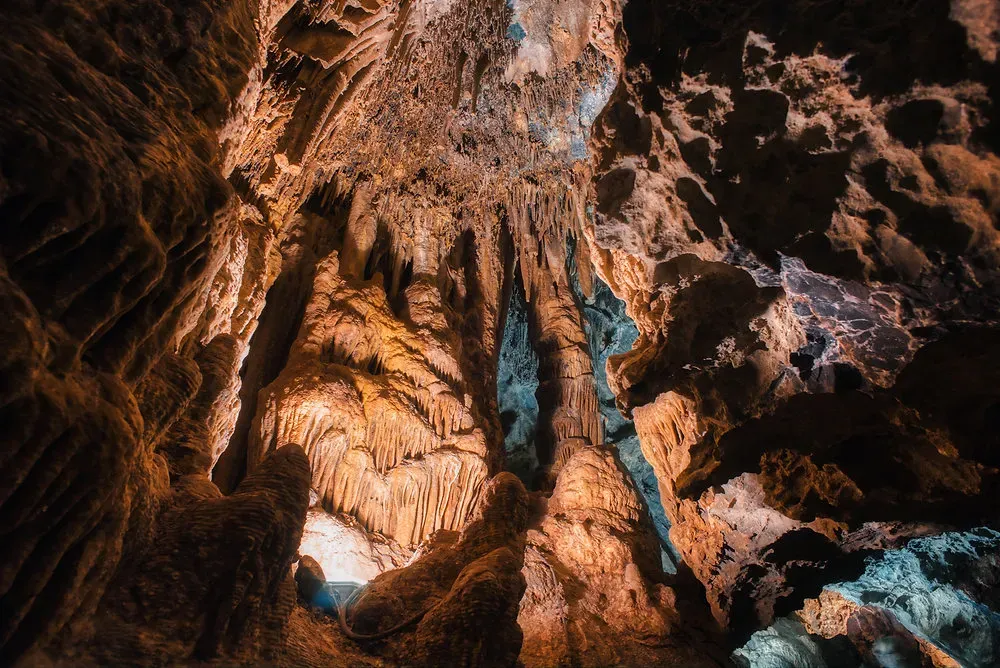
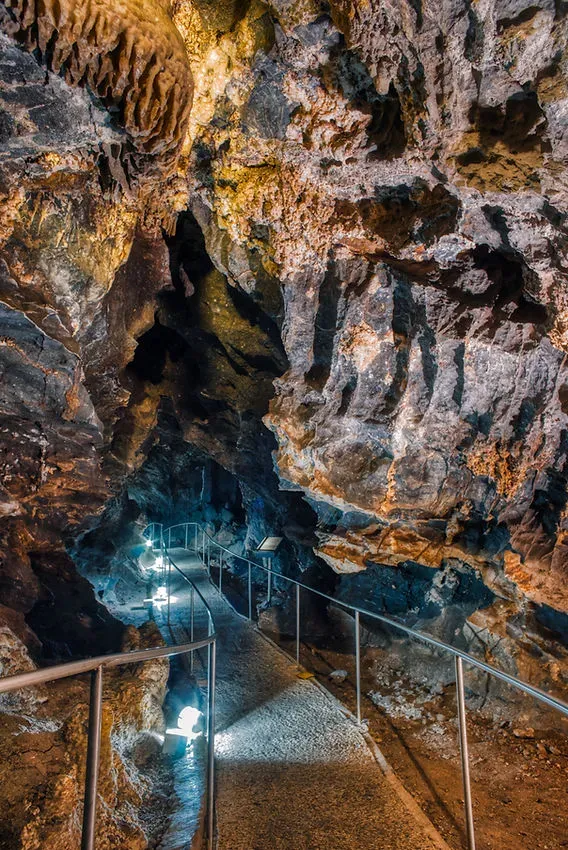
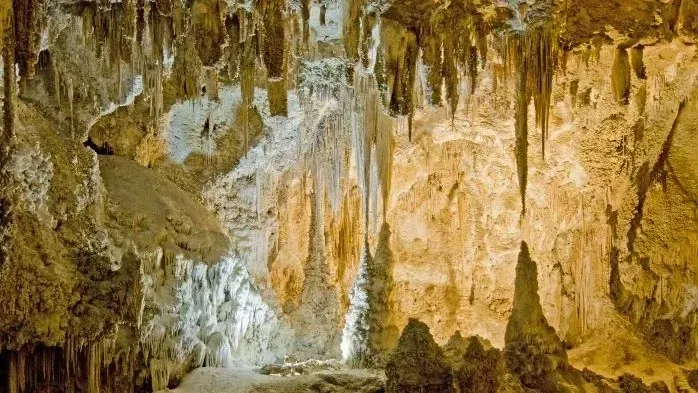
Grutas de Nombre de Dios (the Caves of the Name of God) is a limestone cave system carved over millennia by water eating through soluble rock. The caves sit in hills just outside Chihuahua City, a sharp departure from the desert scrub above. Inside, the temperature runs backwards: unlike the cold damp of most underground caves, these caverns are warm and humid all year. Stalactites hang from the ceilings of huge chambers, and stalagmites rise from the floor in shapes that look like they belong on another planet. An underground river winds through parts of the system, its echoes bouncing through the darkness. The site has paved walkways, handrails, guided tours, and a small visitor center, but it sits far enough off the international tourism radar that showing up still feels like you found something.
What makes Grutas de Nombre de Dios Chihuahua special?
Northern Mexico is not where most people go looking for caves. That is exactly what makes Grutas de Nombre de Dios Chihuahua worth the trip. The place gives you scale and intimacy at the same time. Huge chambers open up around every turn, their walls covered in aragonite formations that catch the light in sharp, crystalline detail. The conservation is obvious: paths are spotless, hard hats are mandatory, and the staff genuinely care about protecting what is down there.
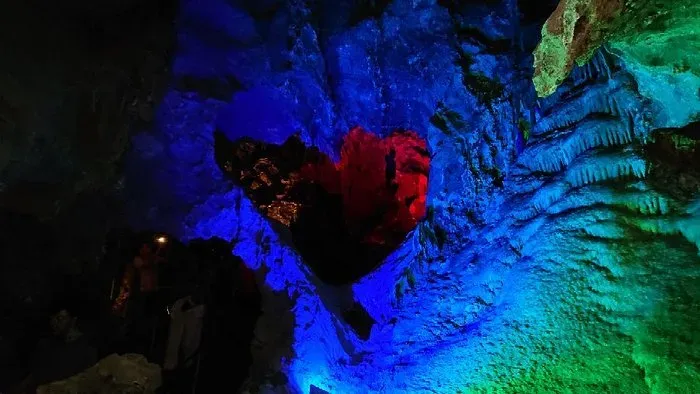
The tour winds through chambers where formations have names attached to them: one is said to look like Don Quixote's profile, another like a dinosaur frozen in stone. At one stop, a heart-shaped alcove doubles as a photo spot. Couples pose beneath the rock while the guide plays photographer. For plenty of visitors, these caves end up being the best part of a trip to Chihuahua, a city far better known for revolutionary history than for what sits under its outskirts. The gap between the dusty hills above and the weird, wonderful geology below is hard to wrap your head around.
The Grutas de Nombre de Dios experience
Getting to the caves
The drive from downtown Chihuahua takes about fifteen minutes on a paved road that climbs gently into the hills. There is plenty of free parking at the entrance, plus a modest visitor center with a cafe and snack bar. One warning you should take seriously: Google Maps sometimes suggests gravel road routes that you should absolutely ignore. Stick to the main paved road and follow the physical signs. Once you disregard the GPS, the route is simple. The gravel alternatives are unnecessary at best and dangerous at worst. The road stays paved all the way to the entrance.
If you do not have a car, tours are available through operators in downtown Chihuahua. Buses leave in the afternoon, usually around 3:00 PM, and return about two hours later with transportation both ways. It is an easy and cheap half-day add-on.
Inside the caverns
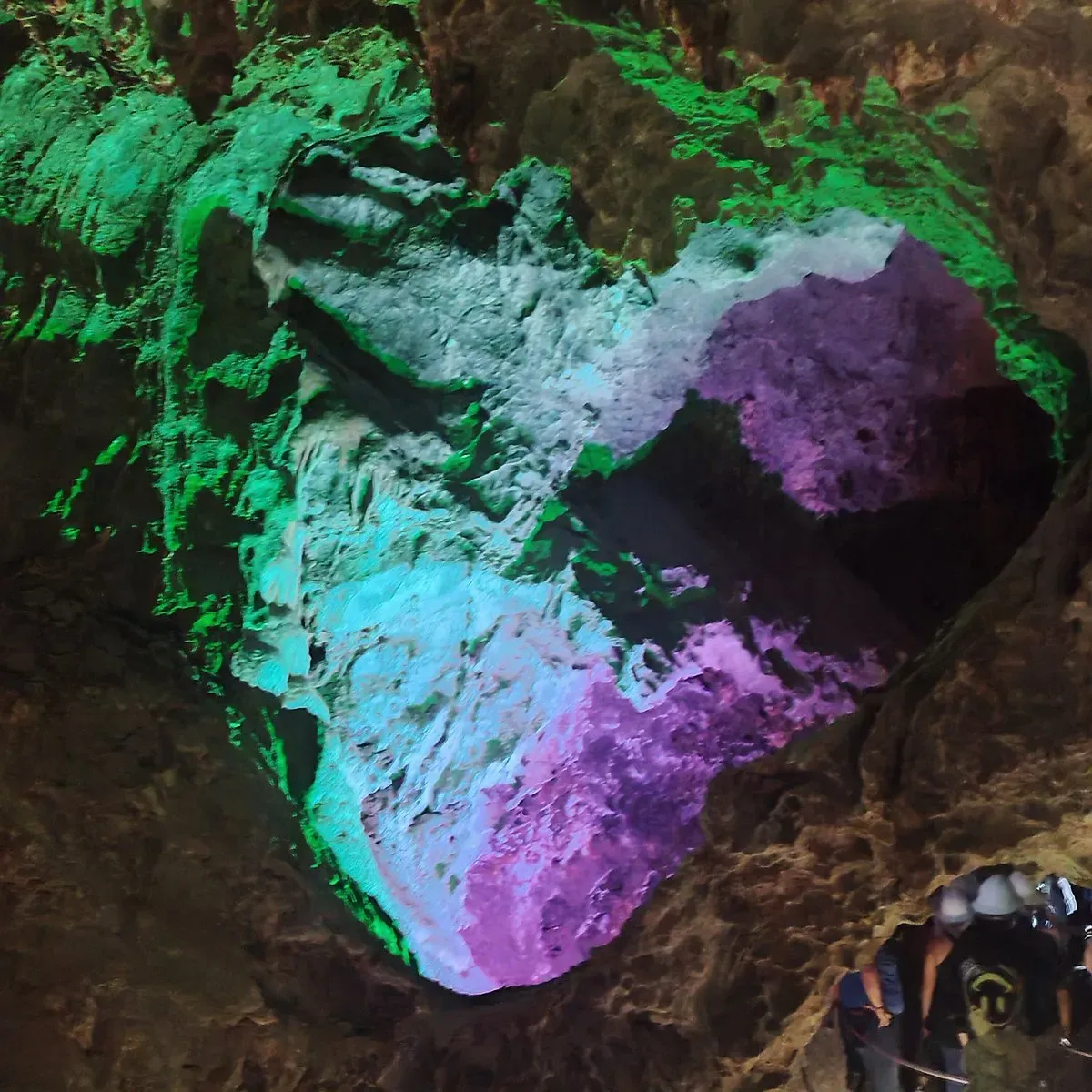
Stepping into the caves means stepping into a different climate and a different headspace. The temperature is warm and humid, which catches people off guard if they are expecting the usual cave chill. Long sleeves are a mistake. Wear light, breathable clothes. The tour follows a one-way route on concrete walkways with metal handrails, descending past tall walls of rock into the heart of the system. Colored lights bathe the formations in gold, blue, and purple. It is subtle enough to add drama without turning the place into a light show.
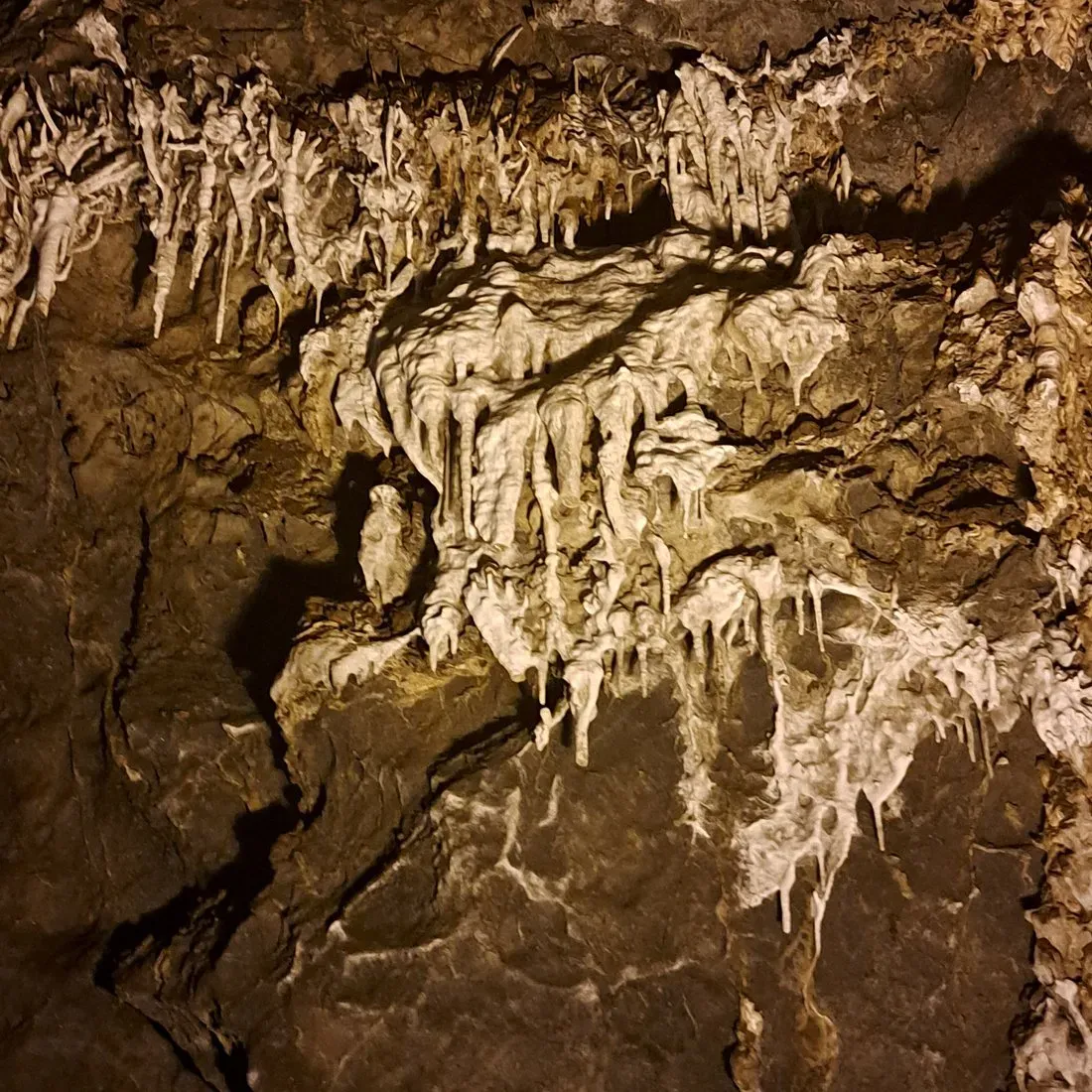
The scale keeps changing. One minute you are ducking through a tight passage, the next you are standing in a chamber big enough to swallow a cathedral. Stalactites and stalagmites crowd every surface. Some are thin as icicles, others thick as tree trunks. The aragonite formations steal the show: crystalline growths that catch the light and look almost too precise to be natural. A vein of silver in the rock is a nod to the mining history that shaped these hills.
The guided tour
Groups gather in the covered patio near the entrance, where a snack bar helps pass the wait. Tours leave every twenty-five to thirty minutes or so. Groups can sometimes hit thirty people during busy stretches. Before entering, everyone gets a hard hat and a disposable hair net to wear underneath. The hygiene is appreciated. The hard hats are mandatory, and for good reason: some ceilings are low.
The tour covers about 1.5 kilometers of pathways and runs just under an hour. The guides have real energy and sharp humor, and they know the geology inside out. The tours are conducted entirely in Spanish. This is fine for Spanish speakers but can be a hurdle for international visitors. Some guides speak a little English, but do not count on it. Even if you catch none of the words, the visuals carry things. Bring a translation app on your phone if you want to catch the details of the guide's stories.
The moment that sticks with most people comes in a section of total darkness. The guide kills all the lights. Everything goes black. The only way forward is by touch: hands on the rock wall, fingers on the rail. It is disorienting and a little unsettling, and it is the kind of thing you remember long after you walk back into the daylight.
At the end of the tour, a minibus shuttles everyone from the cave exit back to the main entrance. It is a relief after an hour on your feet. Drinks are for sale, and restrooms sit near both the start and finish.
Practical tips for visiting Grutas de Nombre de Dios Chihuahua
What to bring
A flashlight is the most useful thing you can bring. Much of the cave stays dark beyond the guide's spotlight and the fixed lighting. Your own light lets you scan the walls and ceiling at your own speed instead of only seeing what the guide points at. Good walking shoes with grip matter. The concrete paths are well maintained, but steep ramps, steps, and the occasional slick spot mean you want solid footing. No drinks are allowed inside, so hydrate before you go in. You can buy something at the end.
What to wear
Light, breathable clothing. The cave stays warm and humid no matter the season above ground. The usual advice about bringing a jacket, which makes sense for most caves, is bad advice here. Leave the jacket in the car. The warmth is part of what makes these caves unusual.
Ticket prices and tour schedule
Admission runs between 50 and 80 pesos per person, roughly three to six US dollars. Either way, it is cheap for what you get. Tours run through the day with the last departure at 1:50 PM, so plan to arrive by early afternoon. Parking fills up fast. Getting there early means a spot and a shorter wait. The visitor center snack bar is a decent place to kill time before your group gets called.
Accessibility and restrictions
Children under four are not allowed inside the caves. The walkways are about ninety-five percent paved with handrails throughout, but steep ramps and stairs make the route a bad fit for anyone with significant mobility issues. Some chambers (usually around four) may be closed on any given visit, but the sections that stay open have more than enough to fill the hour-long tour. The cave is dimly lit in many spots, so if low light makes you uncomfortable, factor that in.
Language considerations
The tours are in Spanish only. If you do not speak it, adjust your expectations. The visuals alone are enough to make the visit worthwhile even if you understand nothing. But bringing a translation app or a Spanish-speaking friend will open up the guide's stories: the jokes, the geology, the folklore behind those oddly named formations.
Best time to visit Grutas de Nombre de Dios
The dry season, November through March, gives you the most comfortable conditions for getting to and from the caves. Inside, the climate stays warm and humid no matter what. Chihuahua summers can be brutally hot above ground, which makes the cave's stable temperature feel like a strange kind of refuge. When to visit really depends on what else you want from the region. Winter visitors get mild desert days above ground. Summer visitors trade surface heat for the cave's warm but not scorching interior. Arrive early regardless of the season. Morning tours mean smaller groups and easier parking.
Final thoughts
Grutas de Nombre de Dios does not have the name recognition of Carlsbad Caverns. It does not try to. What you get instead is something I personally prefer: an uncrowded, cheap, genuinely fun cave experience fifteen minutes from a major Mexican city. The staff are kind, the facilities are clean, and the geology is the real deal. If you are heading to Chihuahua, put the caves near the top of your list. It is a half-day underground detour that might end up being what you remember most. I am not a caver by any stretch, and I came out of there buzzing. It is worth your time.