Boalathapo Falls Lesotho: Hike to Semonkong's Secret Cascade
A dramatic plunge into a lush canyon, a hike through Basotho villages, and the quiet solitude of the Lesotho highlands. Boalathapo Falls delivers the spectacle without the crowds.
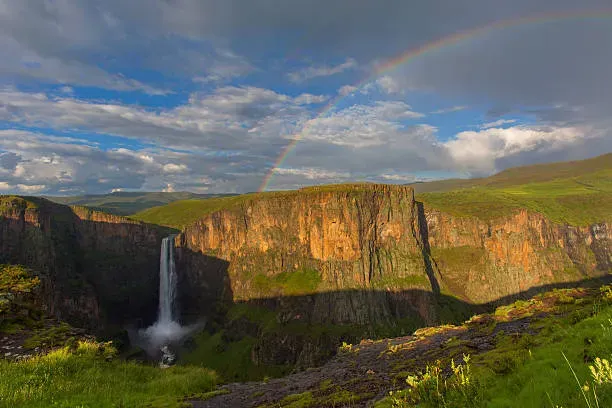
Boalathapo Falls sits in the highlands of Lesotho, and it delivers the kind of raw, unpolished spectacle that reminds you why you travel. There are no souvenir stalls, no polished walkways, and certainly no crowds jostling for selfie space. What you get instead is a dramatic cascade plunging into a lush canyon, surrounded by the rolling silence of the Roof of Africa. While Lesotho's lesser-known waterfalls are starting to show up on more travel radars, Boalathapo Falls remains a genuinely quiet spot that rewards anyone willing to make the trip.
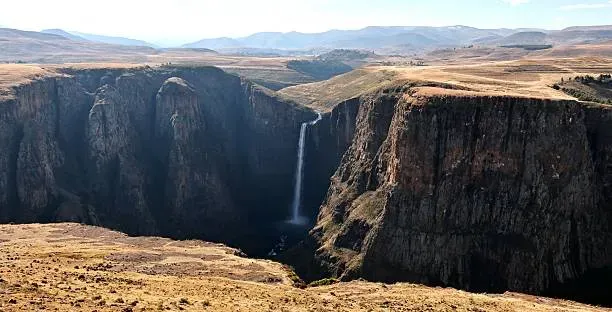
What makes Boalathapo Falls special
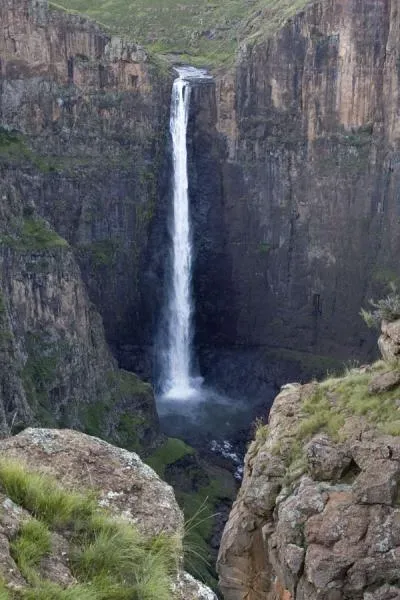
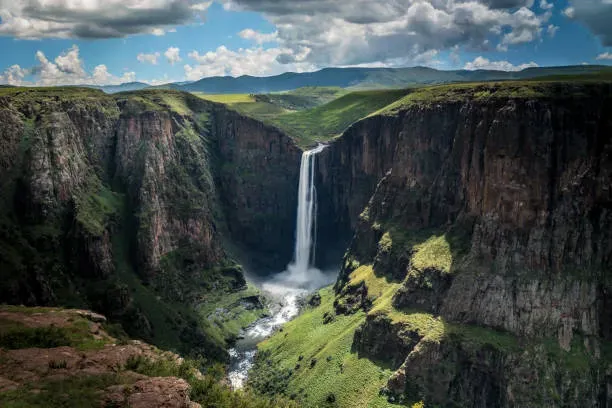
The waterfall itself is the reason you come. Visitors describe it as everything from "simply awesome" to "nature at its best," and it is not hyperbole. The sight of water thundering over a sheer cliff into a deep, green canyon has a way of making even the most hardened traveller pause. Several people have called it a near-spiritual experience, the kind of vista that "makes you believe in a higher power."
What sets Boalathapo Falls apart from more famous African cascades is the solitude. It does not carry the sheer scale of Victoria Falls, and that is precisely the point. The trail is never crowded. You can sit, breathe, and absorb the calm of the Lesotho highlands without anyone interrupting the moment. As one visitor put it, this is an area of outstanding natural beauty, pure and simple.
The atmosphere around the falls is enriched by the wildlife that calls the gorge home. Buzzards and vultures circle overhead, their calls echoing off the canyon walls and adding a wild, elemental feel to the experience. Combine that with the sight of local boys trotting past on donkeys and older men riding through on horseback, and you have something that feels genuinely untouched.
The Boalathapo Falls hike
The hike to reach the falls is as much a part of the experience as the destination itself. The terrain rolls through river-cut valleys and open fields, passing small Basotho villages where life unfolds at a pace unchanged for generations. There are no motorised vehicles on these trails. Just cows grazing, sheep shearers at work, and the occasional horse or donkey carrying its owner across the highlands.
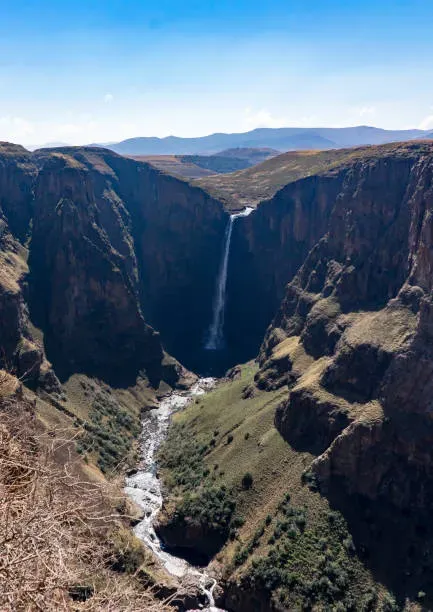
How to get to Boalathapo Falls
Finding the falls takes some determination. From Maseru, the drive is roughly two hours, but the final stretch involves unpaved roads that deteriorate quickly. A 2WD vehicle is strongly discouraged. A high-ground-clearance vehicle will make the journey far easier, and some visitors insist it is the only sensible choice. Signage is minimal to non-existent, and Google Maps has been known to lead travellers astray. Having a local guide or someone who knows the area is invaluable for navigating the last kilometres.
You pay an entrance fee at a toll booth roughly one kilometre before the viewpoint. The cost is 140 LSL (around £6) for SADC nationals and 170 LSL for visitors from other nations. You can pay in cash or by card. Some visitors have grumbled that the fees feel steep given the lack of maintained paths and facilities, but others accept it as part of supporting a developing tourism infrastructure.
Routes and distances from Semonkong
There are multiple ways to approach the falls, and distances vary depending on where you start. From Semonkong, the hike clocks in at roughly 45 minutes along an easy trail. It is a straightforward walk with "little ups and downs" that passes through villages and open countryside. From Semonkong Lodge specifically, the distance is under five kilometres. When you reach the top and spot the large building, follow the road to the right along the flat and then cut through the village to arrive at the viewpoint.
Longer treks are also possible. Some hikers have made it a full-day outing, walking six hours each way from more distant lodges, which turns the visit into a proper backcountry adventure. For those who want to get even closer, it is possible to descend all the way down to the base of the falls. That adds another two hours to the journey and requires serious caution on steep, unmaintained terrain.
Things to do at Boalathapo Falls
While the waterfall is the main attraction, the surrounding area offers enough to fill a rewarding day (or longer) in the Lesotho highlands.
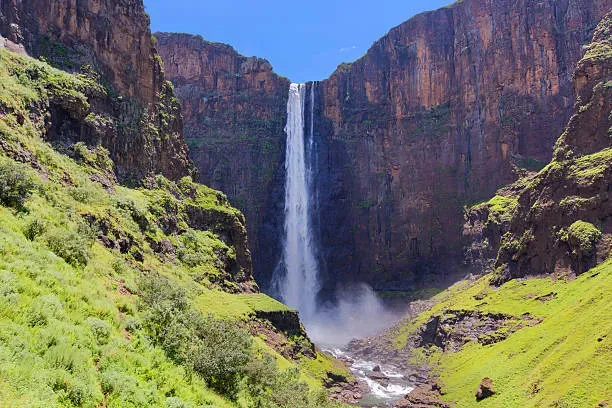
Photography and viewpoints
Around the falls, multiple vantage points offer different perspectives on the cascade. The main overlook provides the classic head-on view, but walking to adjacent spots reveals the falls framed by the canyon's curves and the rolling highlands beyond. The so-called Phororo viewpoint is particularly prized for its sweeping composition, showing the waterfall dropping into the gorge with the highlands rolling away into the distance.
Photography here is exceptional, but caution is essential. The cliff edges are unfenced, and when the ground is wet (which it often is, from spray and rain), the rock becomes dangerously slippery. The shot is never worth the risk.
Horseback riding and local encounters
One of the most memorable add-ons to a visit is exploring on horseback. Local guides operating near the falls offer rides through the surrounding terrain, and for many visitors it transforms an already impressive day into something unforgettable. The Basotho people are famously welcoming, and simply talking to the villagers, watching daily life unfold, and sharing the experience adds a cultural richness that no guidebook can capture.
Best time to visit Boalathapo Falls
The ideal window runs from March through August, when autumn and winter bring clear skies and comfortable temperatures for hiking. That said, do not underestimate the highland cold. Even in summer, nights can be biting, and being well prepared with warm layers is non-negotiable. Daytime conditions are generally pleasant for walking, though the wind can pick up unexpectedly around the gorge rim, so securing hats and loose gear is wise.
Regardless of season, the falls deliver. Visitors have reported wonderful experiences at all times of year, and the hiking remains amazing whether the terrain is summer-green or winter-bare. The main seasonal consideration is the road. Heavy rains turn the unpaved final approach into a serious challenge, making the drier months far less stressful for drivers.
Practical tips for visiting
Are Boalathapo Falls worth visiting?
For those who measure a destination by gift shops and polished facilities, the answer might be no. The visitor centre is run down, the car park gardens are poorly maintained, there are no maps, and the on-site restaurant (while present) is not always open. The entrance fee can feel disproportionate to the infrastructure on offer, and some visitors have questioned why money is collected when the path to the falls remains unimproved.
But for travellers who prioritise raw natural beauty, cultural immersion, and the quiet thrill of standing before something genuinely wild, the answer is an emphatic yes. The absence of crowds transforms the experience into something meditative. The journey through Basotho villages, watching young boys on donkeys, older men on horseback, cows and sheep grazing across open fields, is as enriching as the falls themselves. It is the kind of place you recommend to anyone who will listen.
Where to stay near Boalathapo Falls
Semonkong Lodge is the most commonly referenced base for visiting the falls, positioned less than five kilometres from the viewpoint and offering a comfortable launch point for the hike. The lodge itself is a convenient landmark for navigation. When you reach the top and see the large building, you have found your bearings. Camping is also an option for those who want to sleep under the highland stars, though the cold at night demands serious preparation, even in summer. Pack a warm sleeping bag and expect temperatures to drop sharply after sunset.
What to bring and know before you go
Sturdy hiking shoes with good grip are essential. The path is unimproved and the cliff edges become treacherous when wet. The highlands are windy and nights are cold year-round, so bring warm layers regardless of the forecast. Do not rely solely on Google Maps for navigation. Signage is poor, and having a local guide (or at least asking for directions in the village) will save time and frustration. The entrance fee can be paid by cash or card, but carrying local currency is never a bad idea in rural Lesotho. And bring patience. The road is rough, the facilities are basic, and things do not always go to plan. Approach the day with flexibility and the rewards will far outweigh the inconveniences.
Final thoughts
Boalathapo Falls is not the biggest waterfall in Africa. It is not the easiest to reach, nor does it have the most amenities. But it may well be one of the most rewarding. The combination of a genuinely spectacular cascade, the enveloping quiet of the Lesotho highlands, and the warmth of the Basotho people along the trail creates an experience that lingers long after you have left the canyon rim behind. If you find yourself anywhere near Semonkong, go. And make sure to walk all the way down to feel the full force of it.