Lençóis Maranhenses Brazil: A Desert Filled With Lagoons
Lençóis Maranhenses Brazil is a desert that isn't a desert — white sand dunes filled with thousands of turquoise lagoons. Here's how to visit.
A desert that isn't a desert
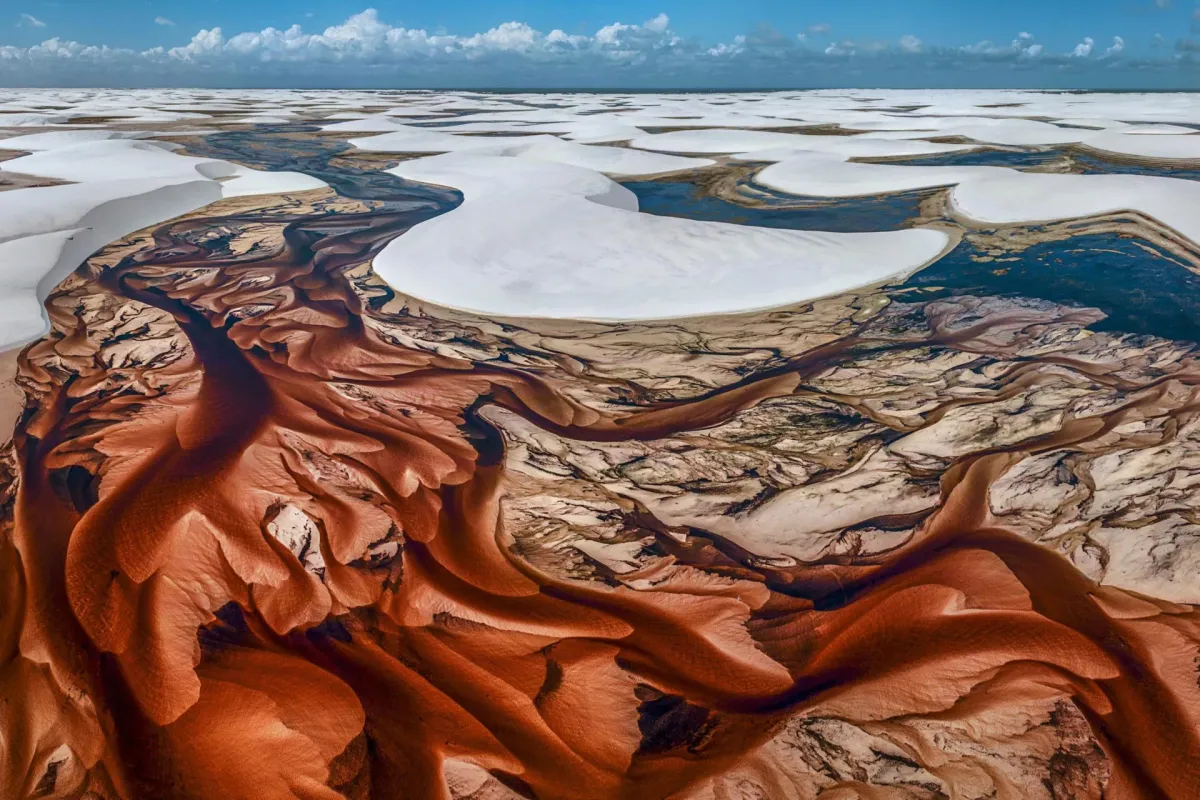
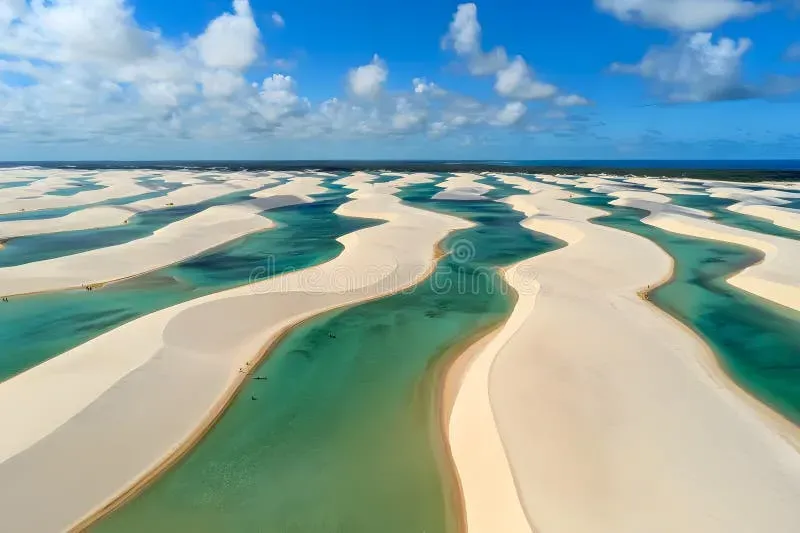
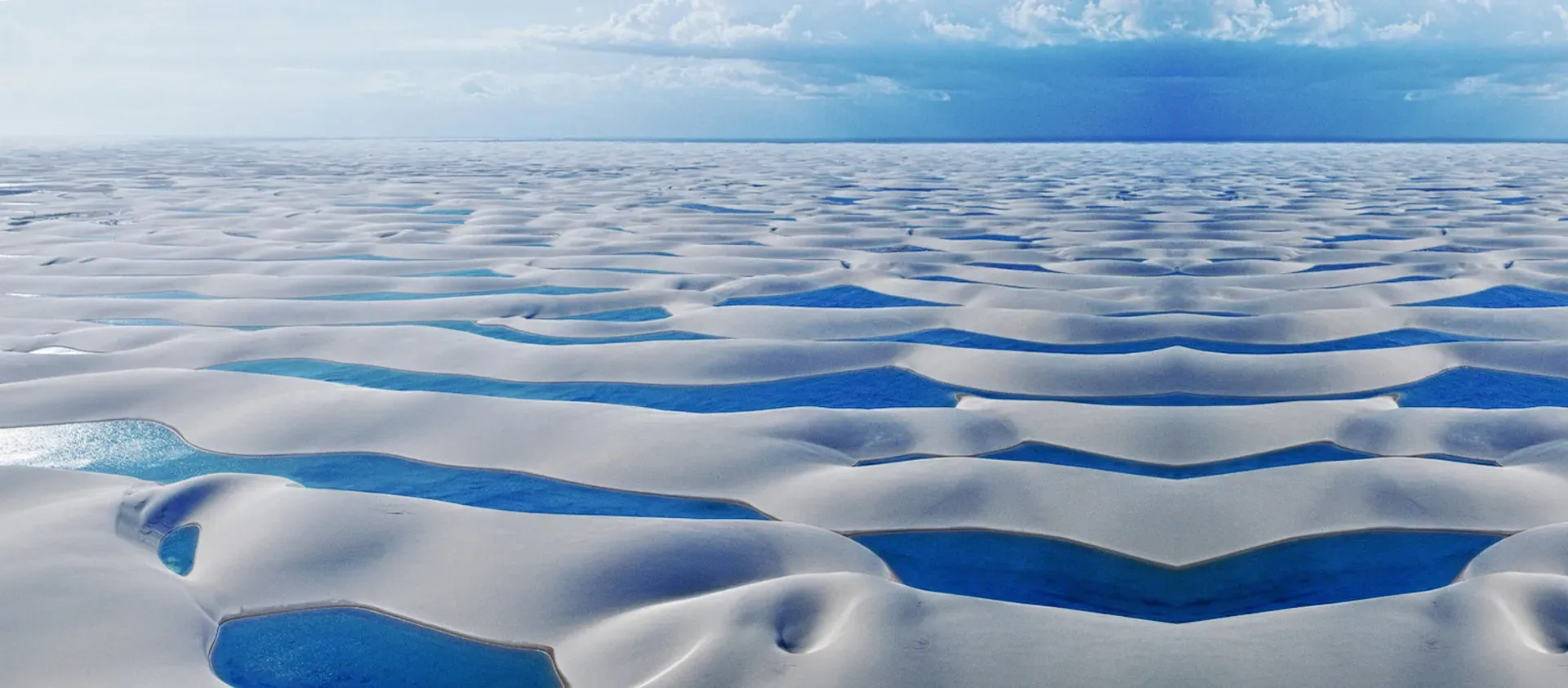
Lençóis Maranhenses Brazil looks like someone made a mistake. White sand dunes roll for miles in every direction, but instead of emptiness, thousands of freshwater lagoons fill the valleys between them. The water is turquoise, emerald, sapphire — colors that don't belong in a desert. Photographs of this place circulate constantly on social media, and still, nobody believes them until they see it themselves.
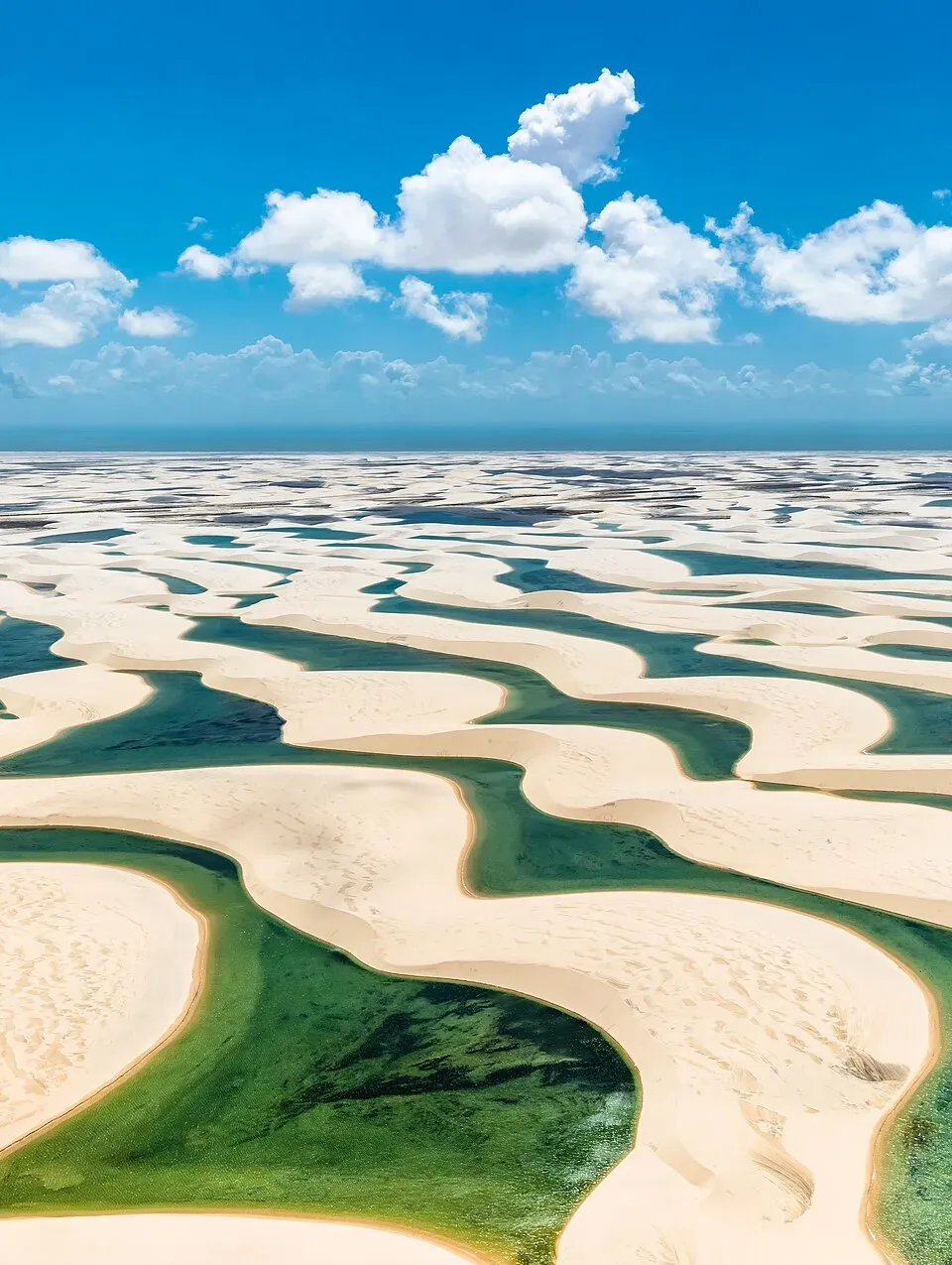
The park sits in Maranhão state, covering 600 square miles of impossible geography. Rain falls during the first half of the year, filling every depression between dunes. An impermeable rock layer underneath traps the water, creating temporary lakes that linger for months. Some lagoons are ankle-deep. Others swallow you whole. The sand is blinding white. The sky never ends.
How this place actually works
People call it the "Brazilian Sahara" but that's wrong. Deserts are dry. Lençóis Maranhenses is something else entirely — a landscape built on contradiction. The rainy season runs roughly May through July. By August, the lagoons peak. By October, many have evaporated. The timing matters. Visit in April and you see empty dunes. Visit in June and you swim in paradise.
The lagoons teem with life. Small fish live in them, delivered by birds who carry eggs or juveniles between water bodies. Wade in and these fish surround your feet, nibbling dead skin. It feels like a pedicure, if pedicures happened in warm Caribbean-temperature water while you float in the middle of nowhere. The sensation is gentle, almost ticklish, and specific to this one location on Earth.
Three towns, three different experiences
You cannot just drive into Lençóis Maranhenses. You pick a gateway town and plan from there. Each option changes what your trip looks like.
Santo Amaro sits almost inside the park boundaries. For multi-day trips, this is the logical base. The drive from São Luis airport takes three and a half hours if you rent a car. The road has potholes — many of them — but it's drivable. Santo Amaro remains small and relatively undeveloped. Lodges here are comfortable without being flashy. The main advantage is proximity. You reach the remote lagoons faster and with less hassle.
Barreirinhas functions as the traditional tourism hub. It has the most infrastructure, the most established tour operators, the most options. There's a Catholic church downtown where the priest stands at the door and greets everyone personally. During mass, he incorporates newcomers and tourists directly into the sermon — a strangely inclusive gesture regardless of what you believe. An ice cream shop nearby serves as the unofficial post-dune reward center.
Atins offers a more isolated beach-town feel. For multiple days, Santo Amaro generally wins on access. But Atins has its own rhythm if isolation is what you're after.
Getting inside the park
Independent exploration is forbidden. You need a credentialed tourist guide to enter. The process starts with a ferry crossing over a slow-moving river. The wait varies wildly depending on how many vehicles queued up before you. On the other side, four-wheel-drive trucks handle the terrain.
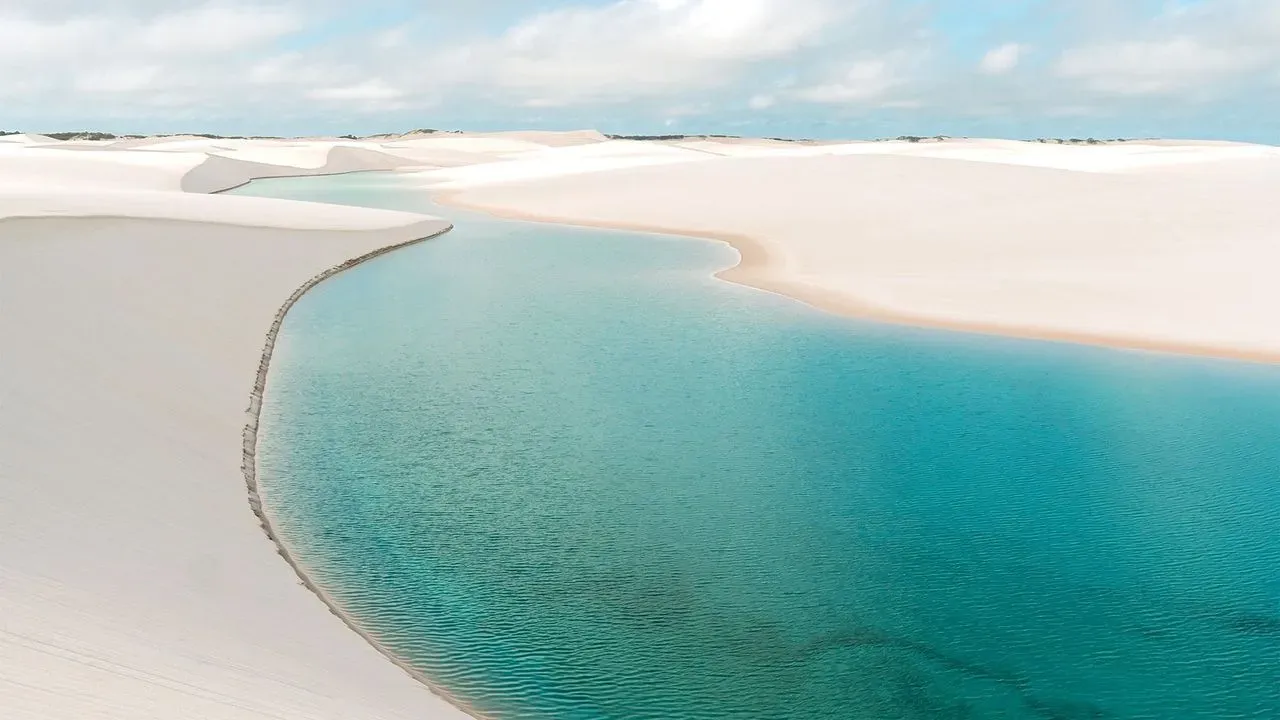
The drive is rough. The vehicles bounce through green vegetation that abruptly ends where the white dunes begin. The transition is startling — one moment you're in coastal scrub, the next you're in a landscape that resembles another planet. You climb out and hike up the dunes. The sand shifts under every step. The effort is real. Then you reach the top and see Lagoa Bonita or one of the other major lagoons — a pool of clear water surrounded by white sand, often with clouds drifting overhead.
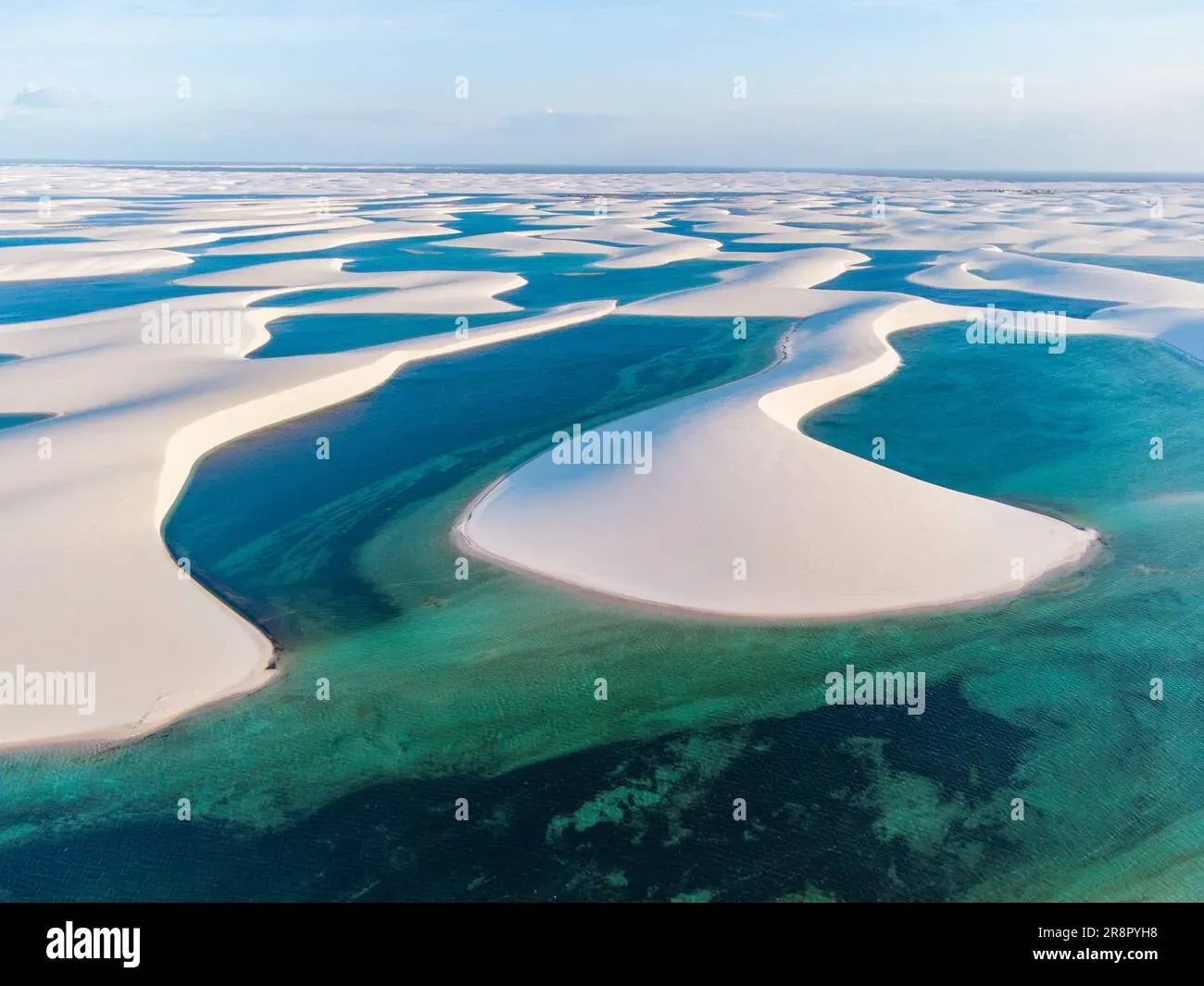
For the full perspective, book a helicopter or small airplane flight from Barreirinhas. Only from above do you understand the scale. The pattern of white and blue repeats to every horizon. It's expensive. For photography enthusiasts or anyone who isn't afraid of heights, it's worth the cost. You cannot comprehend the size from the ground.
When to go and what to bring
Timing is everything. While some lagoons hold water year-round, the complete spectacle happens May through September. Peak conditions usually arrive in June and July, after the rains have filled every trough. Wait too long and the water disappears. Arrive too early and the dunes sit empty.
The environment is harsh. There is no shade in the dune fields — none at all. You need high-SPF sunscreen, UV-protective long sleeves, and a hat with a wide brim. Bring more water than you think necessary. You can buy bottles while waiting for the ferry, but once you're in the dunes, you're exposed. Those planning overnight hammock camping (arranged through guides) need serious insect repellent and skin protection. Alcohol is banned inside the national park. Don't bring it.
What else is out there
The region hides other surprises. Natural hot streams flow toward the Atlantic, creating warm bathing areas that contrast with the cooler lagoon water. These thermal features feel like an afterthought — as if the landscape wasn't already strange enough.
English-speaking guides are scarce. Verify language capabilities when you book, or prepare to navigate in Portuguese or through translation apps. The infrastructure is intentionally limited. This preserves the area's character but requires patience. Things move slowly here. Embrace it or choose a different destination.
Making the most of your trip
The park is too large to see entirely. Even with multiple visits, you'll miss lagoons. Strategic planning helps. Multi-day stays allow you to explore different dune sectors, each with unique formations and varying crowd levels. Some areas draw tour buses. Others remain quiet.
People travel extraordinary distances to reach this place. Visitors have crossed half the globe from countries like Romania and reported that the reality surpasses every photograph, every documentary, every expectation set by David Attenborough's narration. That's rare. Most famous places disappoint in person. Lençóis Maranhenses does the opposite.
The effect this place has
I keep thinking about the silence. You stand on a dune, water on all sides, and there's nothing but wind. The combination of desert visuals with abundant freshwater shouldn't work but it does. Floating in warm water while surrounded by an ocean of white sand creates a sensation that sticks with you.
This isn't just a beautiful location. It's a geography that exists nowhere else — a reminder that Earth still produces things capable of rendering humans speechless. Most visitors start planning their return before the first trip ends. I understand why.