Yellowstone National Park Wyoming: Complete Visitor Guide
Yellowstone National Park Wyoming delivers geysers, bison jams, and landscapes that feel alien. Here's what nobody tells you about visiting America's first national park.
I've driven through a lot of parks, but Yellowstone National Park Wyoming hits different. It's not just the statistics, though they're impressive enough: over half the world's active geysers, spread across a wilderness bigger than Rhode Island and Delaware combined. It's the smell. The sulfur hits you first, then you see the steam vents hissing from the ground like the earth is breathing. This place doesn't care about your schedule or your comfort. Bison block traffic for hours. Weather changes in minutes. The geysers erupt when they want to, not when you want them to. But that's exactly why it works. The park updated some facilities in 2026, which brought fresh attention, but the core experience remains unchanged: raw, unpredictable, and indifferent to human presence.
What makes Yellowstone National Park Wyoming special
Yellowstone feels less like a park and more like landing on a planet where the physics are slightly wrong. One minute you're watching water boil out of the ground in colors that don't look real. The next, a two-thousand-pound bison is staring through your windshield from two feet away.
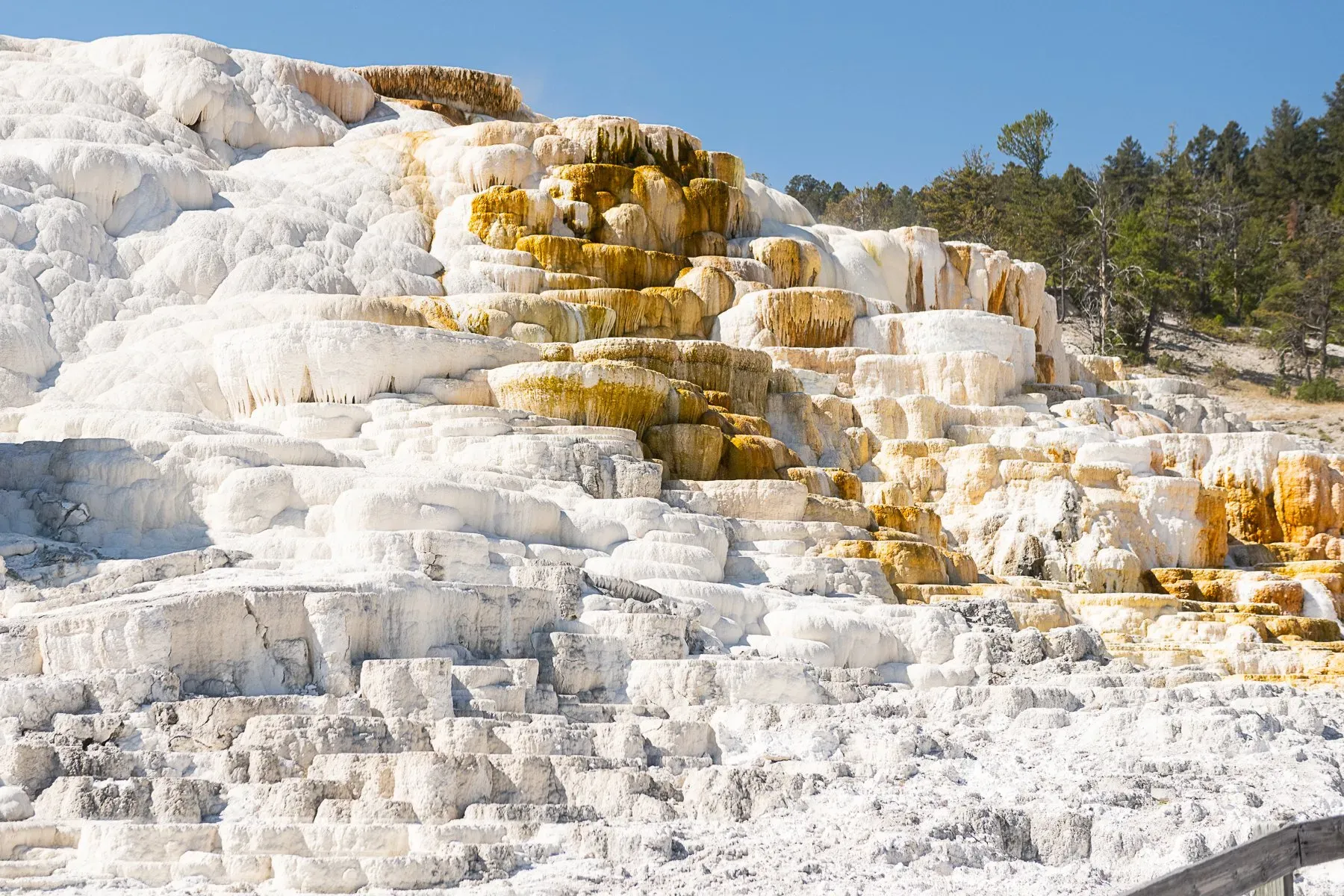
The terrain changes fast here. You can start in a pine forest with snow on the peaks, drop into a valley of wildflowers, then round a corner to find a waterfall thundering through a canyon painted yellow and orange. It's disorienting. The microbial mats around hot springs create rainbow rings that look Photoshopped. The travertine terraces at Mammoth look like expensive wedding cakes melting in slow motion. Nothing stays still. Everything shifts.
The scale messes with your head. You can drive for three hours and still be in the middle of it. That size creates pockets of silence so complete you hear your own heartbeat. Then the wind moves through the pines, or a steam vent hisses, or water rushes over rock. Everything here is in motion. The hot springs change color as microbial mats shift. The terraces at Mammoth grow or shrink depending on mineral deposits. Even the bison herds move in patterns that look random but probably aren't.
The experience: what you actually do here
Geothermal wonders that defy explanation
The hydrothermal features are why most people come, and they're weirder than you expect. Old Faithful actually works. It erupts every 90 minutes or so, shooting water into the air with mechanical precision. It's touristy. It's crowded. It's also actually impressive when that column of steam and water rockets upward against blue sky.
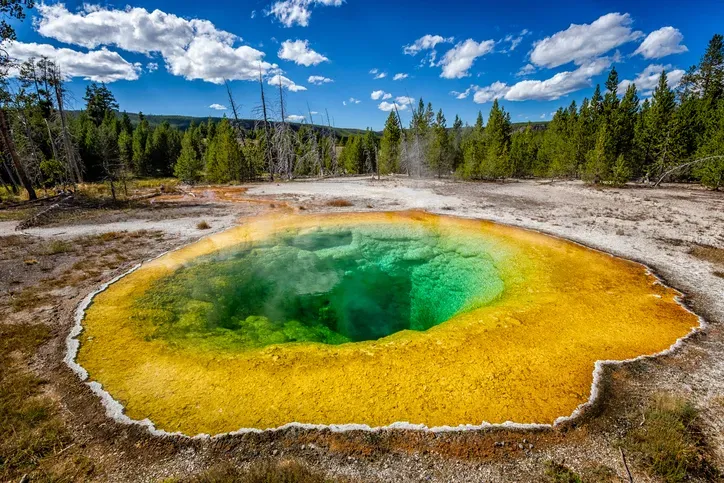
The Upper Geyser Basin nearby has better stuff if you're willing to walk. Castle Geyser looks like a ruined fortress. Morning Glory Pool has these impossible colors: deep blue in the center, ringed by bands of green, yellow, and orange. The colors come from bacteria that live in specific temperature zones. It looks fake. It isn't.
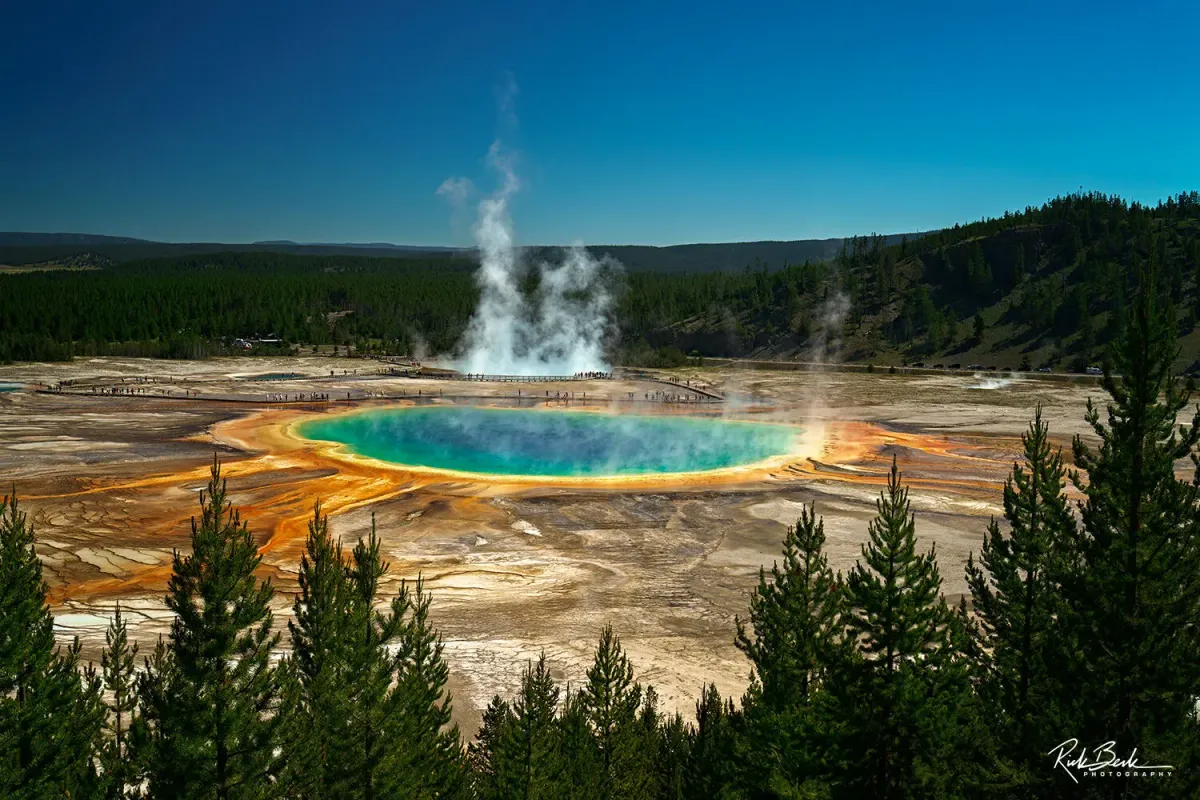
Grand Prismatic Spring is the postcard everyone recognizes, and it's bigger in person. The center runs deep blue, then rings out through green, yellow, and orange. Photos flatten it. You need to stand on the boardwalk and feel the cool mist while the colors move in the light. The scale is hard to process. It's bigger than a football field.
Mammoth Hot Springs looks nothing like the other thermal areas. White and yellow travertine builds up in terraces that resemble frozen waterfalls made of chalk. Water still flows over them, depositing fresh calcium carbonate every day. The boardwalks wind through formations that look like they belong on another planet. Come back in a year and the shapes will be different. The water finds new paths. Some terraces dry out; others grow.
Wildlife encounters on their terms
Forget Disney. This is more like crashing a party where nobody told you the rules. The animals don't perform. They don't care about your schedule. You're in their space, and they know it.
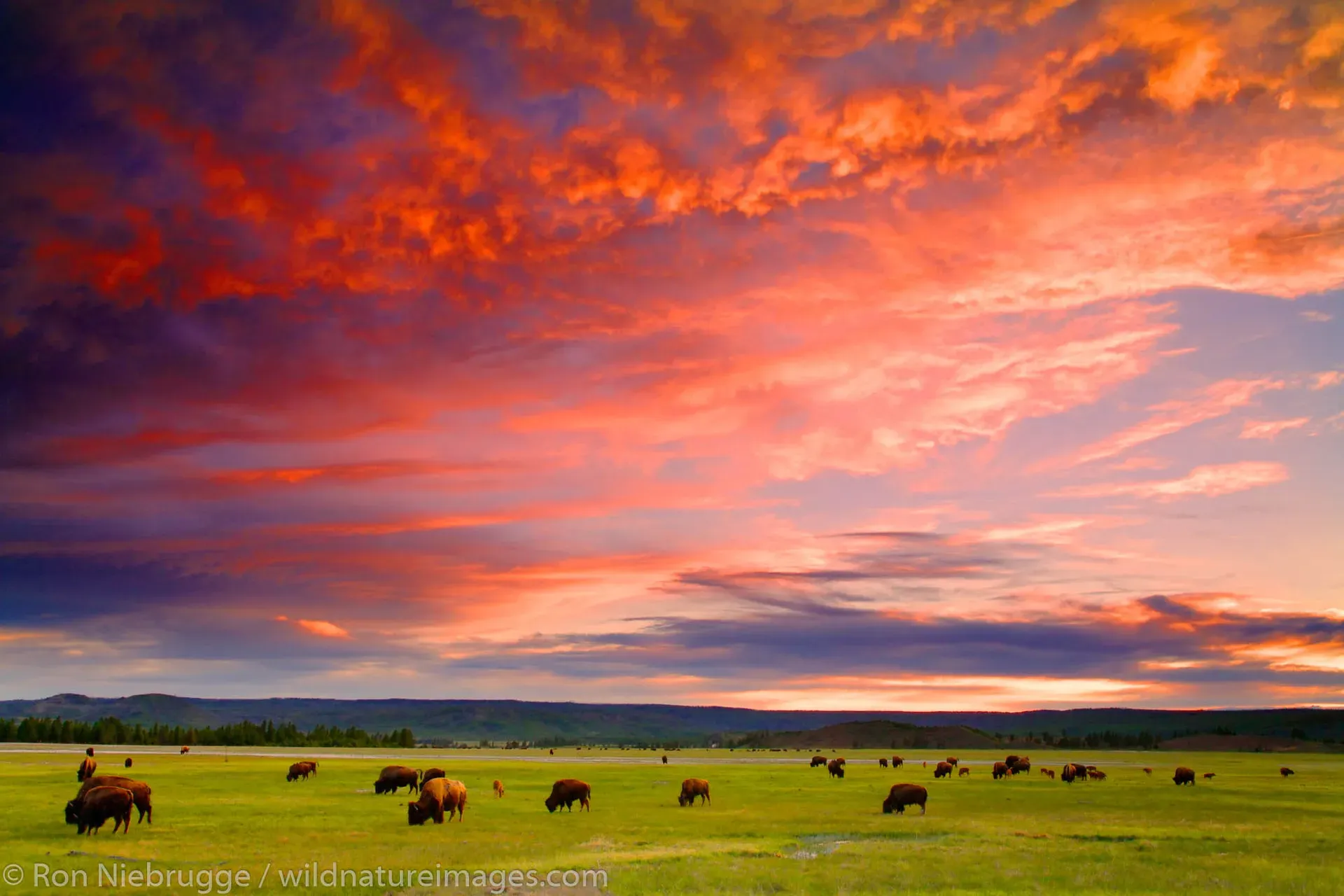
Bison run this place. They block roads for hours. They walk right up to vehicles and stare through windows. When a two-thousand-pound animal passes within arm's reach of your car door, you stop breathing. You don't honk. You don't move fast. You wait until they decide to leave.
Lamar Valley is where you go if you want to see animals. The rolling grasslands fill with movement during the hour after sunrise and before sunset. You might see bison, wolves, coyotes, eagles, foxes, elk, deer, pronghorn, or black bears. Grizzlies show up too, usually as distant brown dots on hillsides. The valley has earned the nickname 'America's Serengeti,' which sounds like marketing, but the density of large animals backs it up.
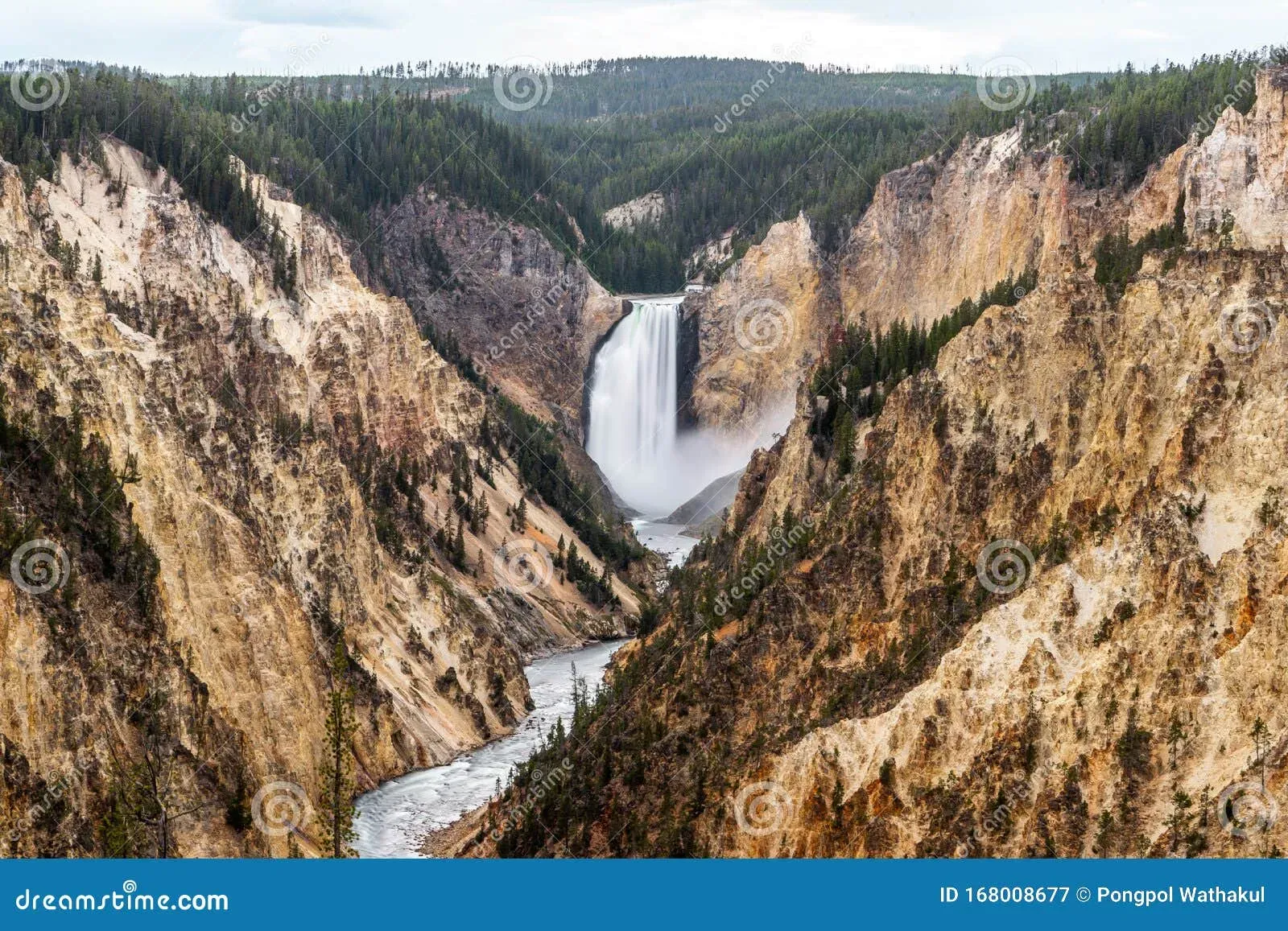
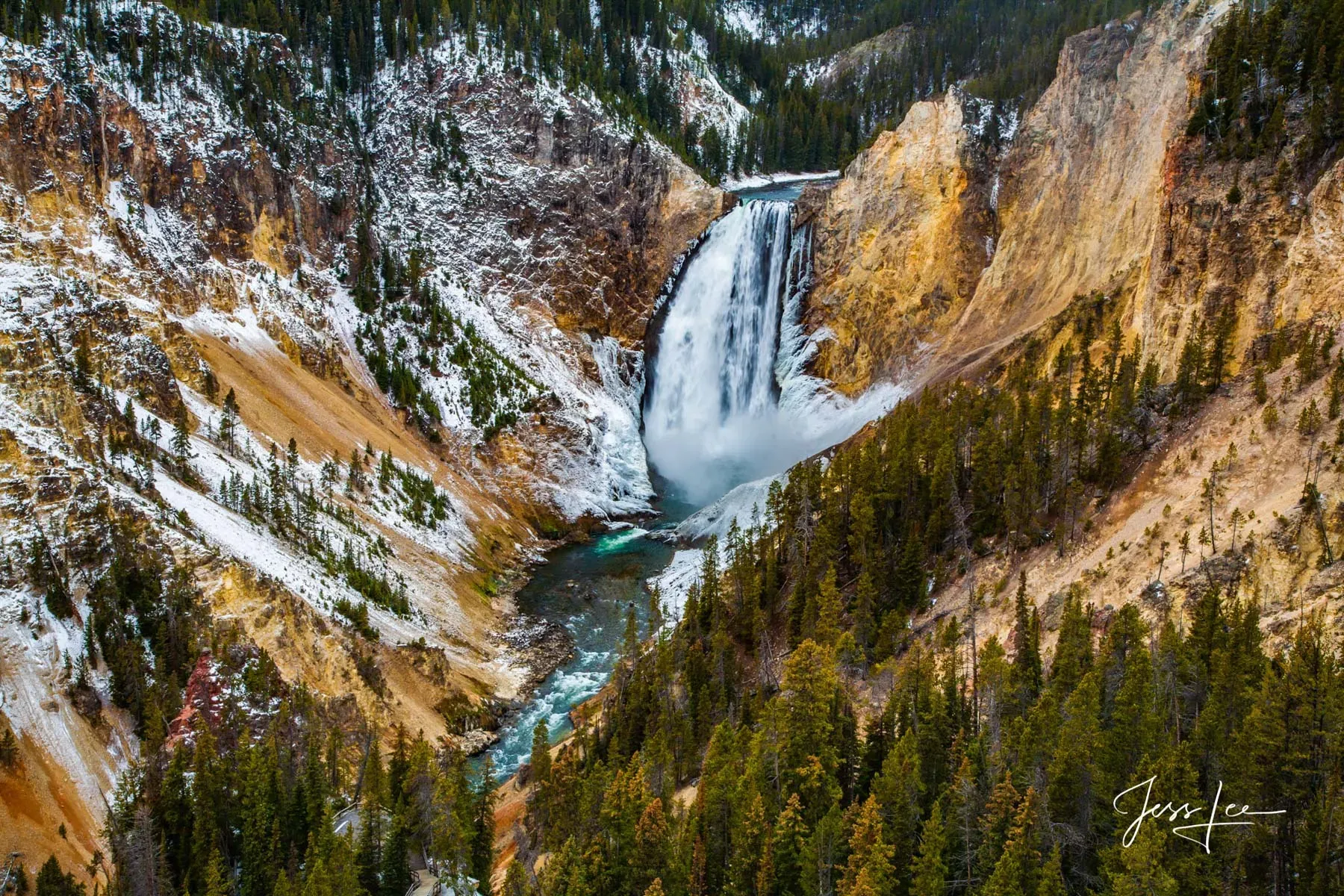
The Grand Canyon of the Yellowstone cuts a different kind of impression. The Lower Falls drops through rock walls colored yellow and orange by iron oxidation. The spray creates rainbows. The sound carries. Viewpoints like Artist Point and Inspiration Point give you different angles. Some feel intimate. Others sweep wide across the canyon.
Planning your route: where the animals actually are
Knowing where to look changes everything. Beyond Lamar Valley, animals scatter throughout Yellowstone National Park Wyoming in patterns that follow food and shelter. The drive up from Jackson through Grand Teton into the South Entrance runs along Yellowstone Lake. Good spot for picnics. You might see otters or waterfowl.
Norris Geyser Basin splits into two sections: Porcelain and Back Basin. Both mix geothermal weirdness with animal traffic. Madison and Canyon areas work too. If you want variety, drive at dawn and dusk. That's when predators hunt and herds relocate.
Practical tips for visiting Yellowstone National Park
How many days you actually need
Most people leave wishing they'd planned more time. One day is a mistake. You can't even drive the main loops in that time, let alone stop anywhere. Two days is the absolute minimum. Three is better. Four to six lets you move at human speed. A week gives you the full experience plus side trips to Grand Teton or the Beartooth Highway.
The smartest strategy involves picking one region at a time rather than attempting to tackle everything in a single day. The park's figure-eight loop road system naturally divides into manageable sections: the northern range including Mammoth and Lamar Valley, the eastern loop featuring the Canyon and Yellowstone Lake, and the western loop encompassing the major geyser basins.
Yellowstone with kids: what to know
Families need a different playbook. There is no cell service in most of the park. Download offline maps before you arrive. Pick meeting points. Pack twice as much food and water as you think you need. Supplies are scarce inside the park.
Gas stations are rare. Keep your tank full. The visitor centers at Mammoth, Old Faithful, and Canyon have educational displays and stuffed animals that help kids understand what they're seeing. Buckle up tight. The roads wind, and you'll stop often for animals blocking the road.
Best time to visit Yellowstone National Park
Timing changes everything. Most people come between May and September. Each month has its own personality.
Summer (June through August): Everything stays open. Everyone shows up. The week right after Memorial Day, when the park finishes opening all roads, still has reasonable crowds. After that, expect traffic jams. The weather flips constantly. It can snow in August. Bring layers.
September: Old-timers often pick mid-September. The crowds thin out. Animals move more, getting ready for winter. The light turns golden. Temperatures drop enough to make hiking pleasant.
Winter: Only the northern entrance stays open for regular cars. You can reach Mammoth and Lamar Valley. That's it. But the trade-off is silence. The park feels empty. Snowmobile tours reach Old Faithful and other closed areas. The steam from geysers looks sharper against snow.
Late March: The main roads stay closed, so crowds don't exist. You can still access the northern range. Animals behave more naturally without traffic noise.
Yellowstone National Park Wyoming: best places to see
Some spots deserve the hype. Old Faithful and the Upper Geyser Basin need at least half a day. Walk the boardwalks. Wait for two eruptions if you have time. Grand Prismatic works best at midday when sunlight cuts through the steam and shows the colors.
The Grand Canyon of the Yellowstone earns its reputation. The waterfalls and yellow cliffs justify the stop. Lamar Valley rewards patience. Mammoth Hot Springs is easy to reach and strange to see. You can mail postcards from the Yellowstone post office there.
If you want to skip the crowds, try Undine Falls, Tower Falls, or West Thumb Geyser Basin. Dunraven Pass gives you wide views. Gibbon Falls works for photos without long walks.
Practical logistics and pro tips
Parking: At Mammoth Hot Springs, ignore the first lot. Drive to the second one. It's closer to where the boardwalk starts.
Camping: Canyon and Madison campgrounds sit in good locations. Book months ahead for summer.
Passport stamps: Bring your National Parks passport. Visitor centers have different stamps. Old Faithful has a special one.
Safety: Stay on the wooden walkways near thermal features. The ground looks solid but often isn't. Drive slow. Animals cross constantly.
The smell: Geothermal areas stink of sulfur. You get used to it. It's a reminder that you're standing on top of an active volcano.
Final thoughts
Yellowstone National Park Wyoming lives up to the reputation, but not in the way you expect. It won't pamper you. The lodges are old, the food is expensive, and the weather does what it wants. But the place changes you.
You watch water shoot from the ground on a schedule. You sit in traffic because a bison decided to sleep on the road. You stand at the edge of a canyon and hear the river below. These moments stick. They don't fade like other vacations.
The park demands preparation. Bring time, food, and flexible plans. Rush through and you'll miss it. Give it space, and it gives you something back. Everyone should see it once. Not because it's pretty, though it is. Because it puts you in your place.