Ayaz Kala Uzbekistan: The Fortress in the Wind
Three crumbling fortresses in the middle of the Kyzylkum Desert. No velvet ropes, no gift shop, just wind, silence, and 2,400-year-old mud-brick walls.
First impressions of Ayaz Kala
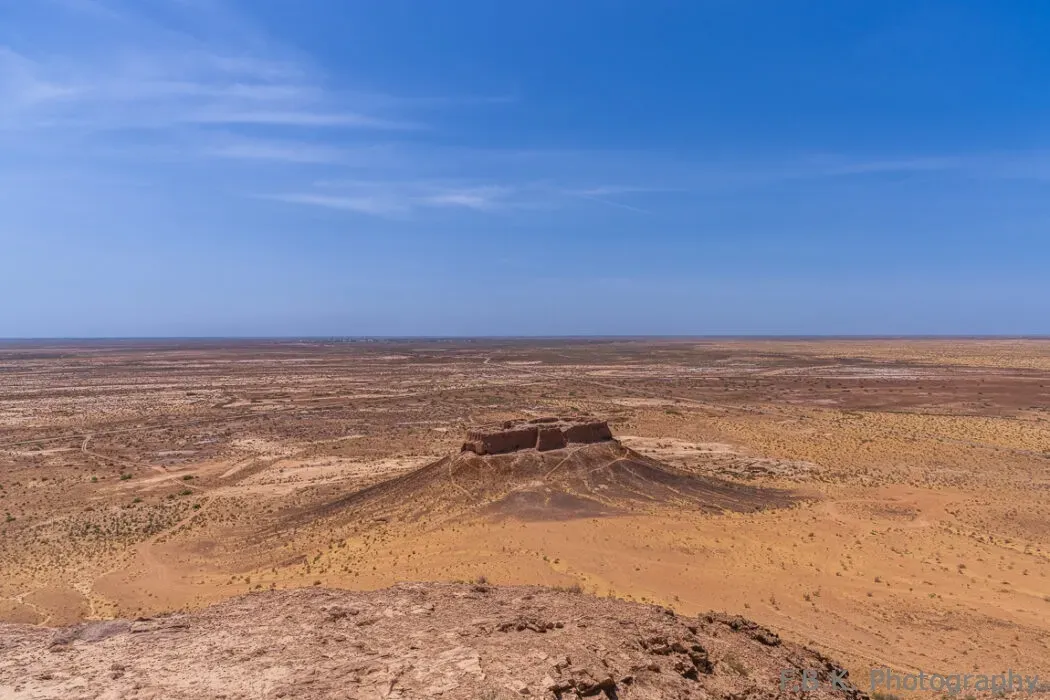
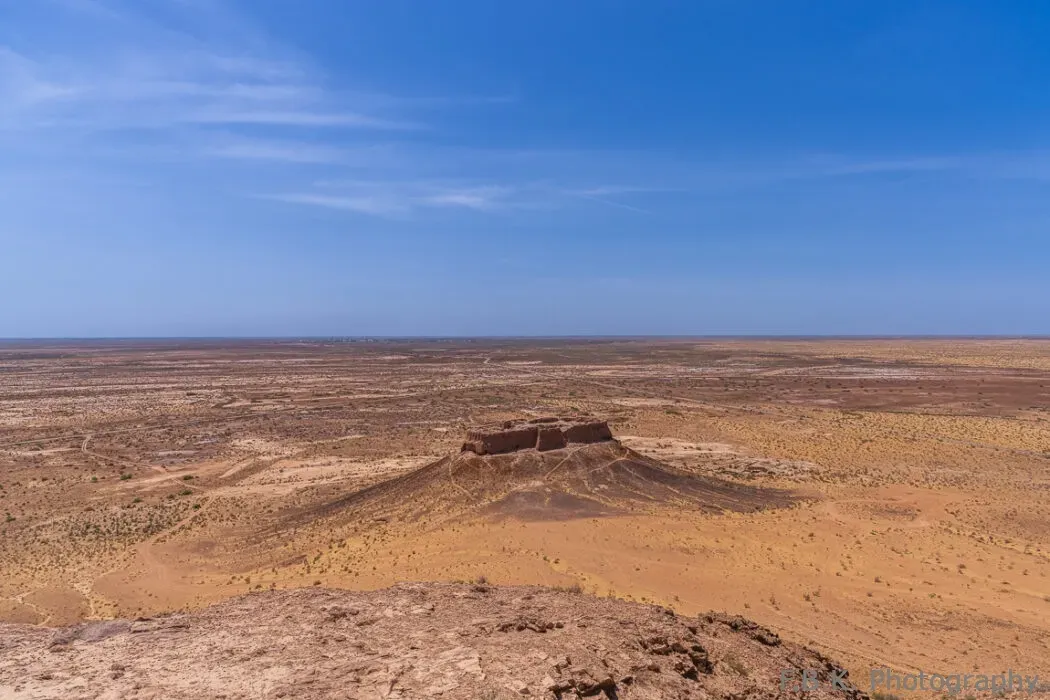
The Kyzylkum Desert doesn't give much away. Mile after mile of sand and scrub, and then the walls of Ayaz Kala Uzbekistan appear on the horizon. Not shimmering like something out of a postcard. Just there. Mud-brick, wind-scoured, and older than anyone can quite wrap their head around. This 4th-century BCE fortress complex sits in Karakalpakstan, hours from anywhere, and it has become one of those places travellers whisper about. The kind of site that makes Samarkand feel almost crowded by comparison.
What makes Ayaz Kala Uzbekistan different
The thing about Ayaz Kala is that nobody has tried to pretty it up. These are not manicured ruins behind velvet ropes. The adobe-brick walls have stood here for thousands of years without any special protection, and what remains is genuine and old in a way that gets under your skin. Nearby Toprak-Kala went through a restoration effort that left it feeling sanitised. Ayaz Kala skipped that fate. What you see is what weathered the centuries, nothing more.
The name tells you most of what you need to know. "Ayaz" means wind, and the full name translates to something like "fortress in the wind." After spending an afternoon up there, you'll understand why nobody quibbled over the naming. Visiting in February, the wind cuts bitterly cold, and yet the scenery makes every shiver worth it. The people who built and defended these walls were tough in a way that is hard to fathom from the comfort of a heated car.
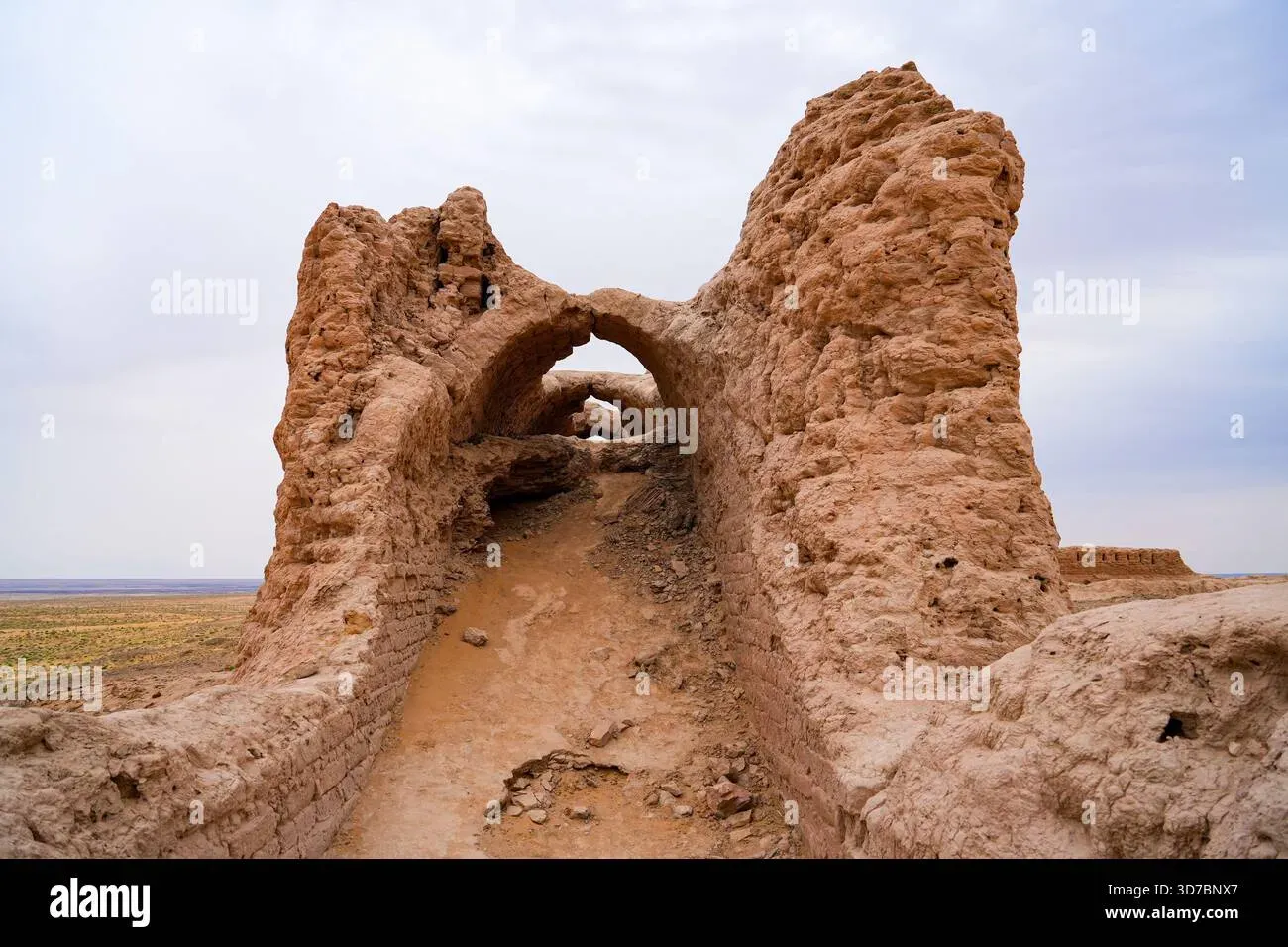
Local legends have layered themselves over the stones. One story goes that a ruler promised his daughter to whoever could build the strongest fortress, then double-crossed the young builder who won and married her off to someone else. Another version flips it: the slave Ayaz wins the princess through sheer grit. A third legend involves a saint who cursed a cruel ruler while the clever Ayaz escaped to found the state of Urgench. I have no idea which version, if any, is true. What matters is that these stories exist at all. They reveal how deeply these fortresses are stitched into the region's memory.
The isolation is the real draw, though. There is a silence here that city dwellers have forgotten exists. Deep, unbroken desert silence. Sand stretching to every horizon. If you're not in a rush, the fortress gives you room to think. Standing on the walls and staring across the Kyzylkum, it's easy to understand why so many travellers come away calling this the best historical site in Uzbekistan. I wouldn't argue with them.
The experience: visiting Ayaz Kala
The three fortresses
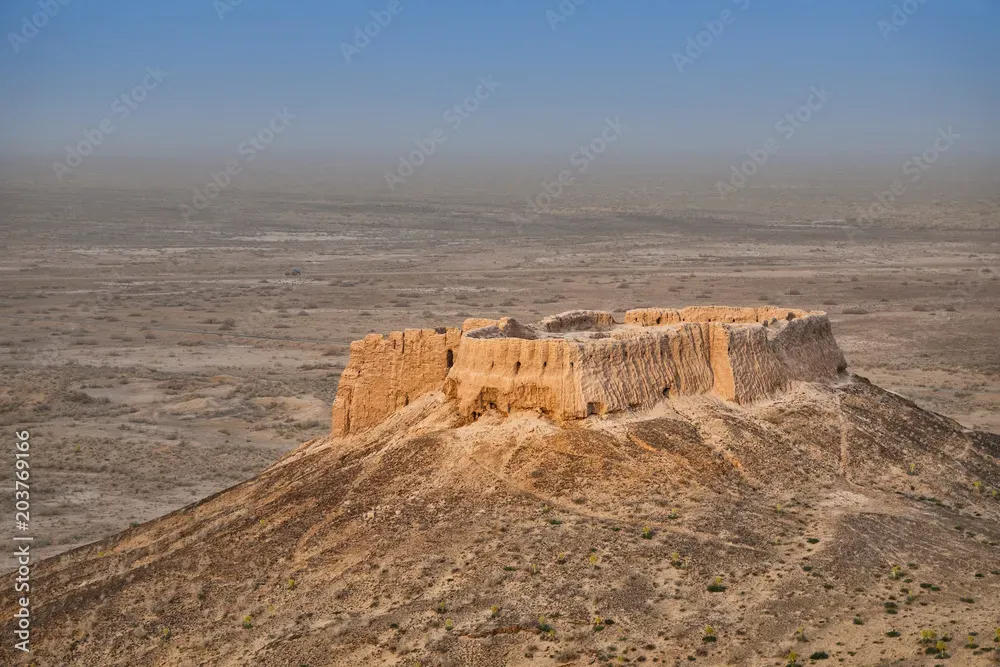
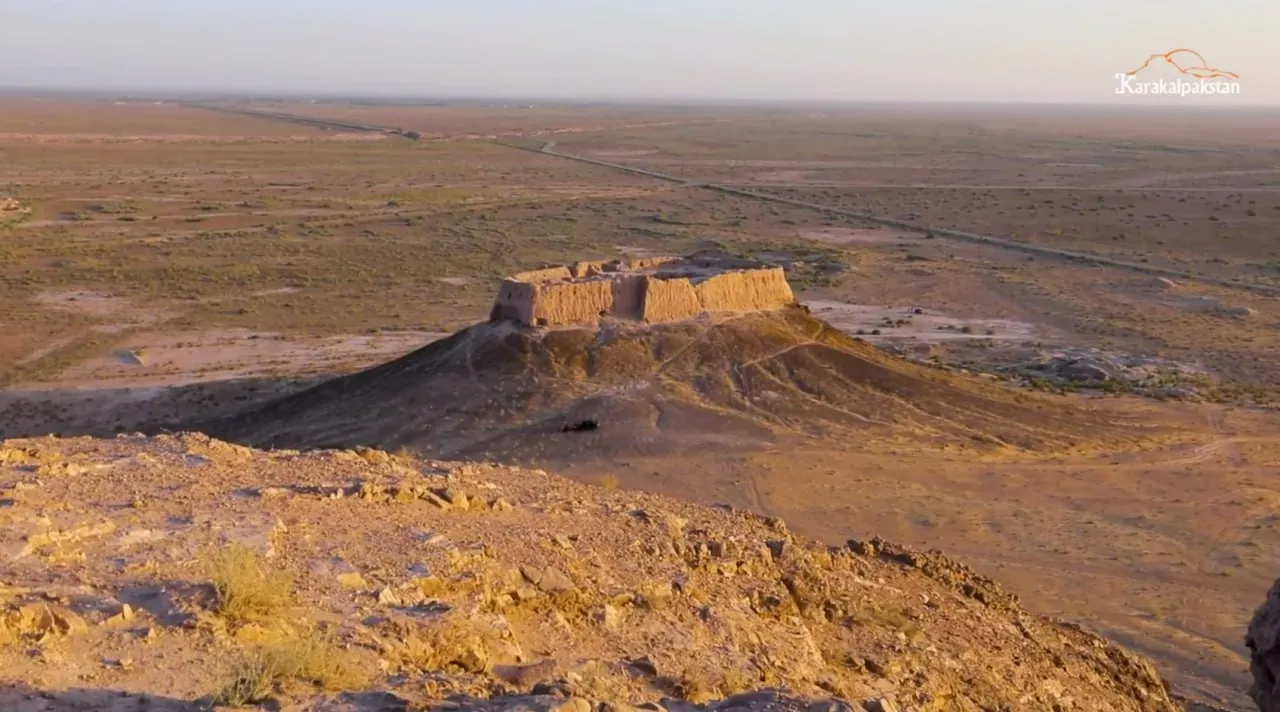
Ayaz Kala is not one fortress but three, built over centuries as protection from nomadic raiders, spanning roughly the 4th century BCE to the 7th century CE. Ayaz Kala 2, the middle fortress, is the easiest to reach and the natural place to start. From its walls, you look across the desert toward Ayaz Kala 1, which sits on the highest ground and gives you the best views by a wide margin. Ayaz Kala 3 has crumbled to little more than foundations, and traces of an even older structure have all but vanished. The advice from people who know the site is simple: spend time at both fortress 1 and fortress 2, soak in the views from each, and don't rush. A guide is worth having. Give yourself at least an hour, ideally two or three, to properly absorb the scale and atmosphere.
Getting to Ayaz Kala from Khiva
Getting here takes effort. The fortress sits deep in the Kyzylkum Desert, and the drive from Nukus runs about three hours. It lies along the route between Nukus and Khiva, which makes it an ideal stop if you're making that crossing. Local operators handle the logistics. Islambek Travel, for example, runs shared excursions covering three castles (usually Kyzyl Kala, Toprak Kala, and Ayaz Kala) for around $20 per person. That's a seven-hour round trip with lunch at Akhchakol Lake included. They offer three-, five-, and ten-castle formats, though the three-castle version covers more than enough ground for most visitors. Crowds are basically nonexistent. When your guide pulls up to the base of the fortress, chances are good you'll be the only ones there.
Climbing the ruins
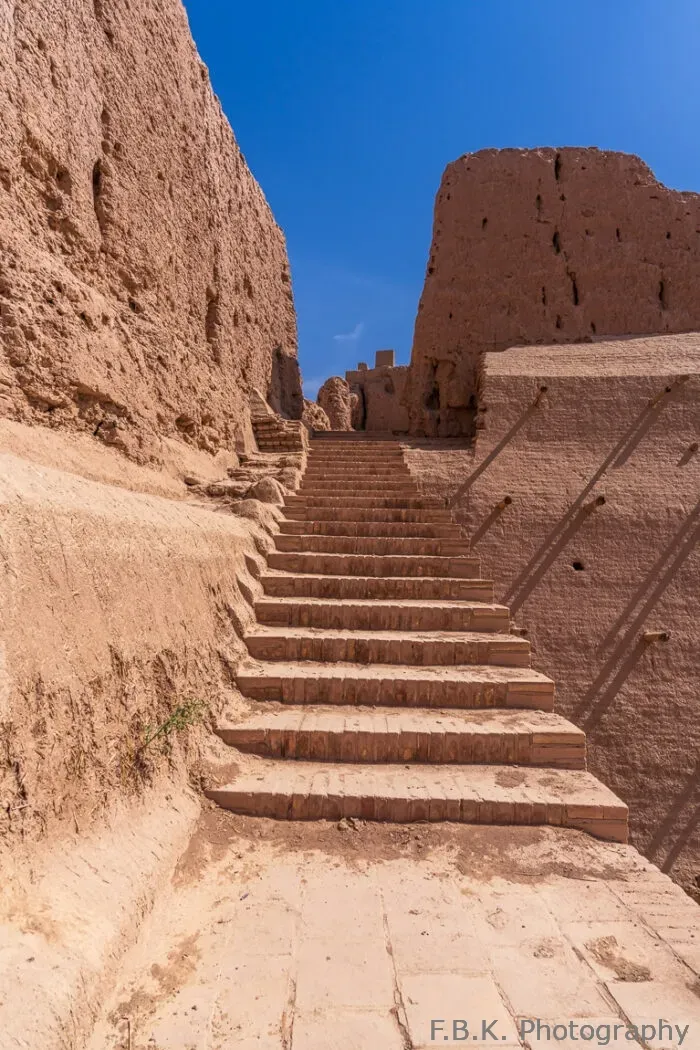
Of the desert fortresses in the region, Ayaz Kala has the toughest climb. Sand and loose rock underfoot demand steady footing and proper shoes. Two routes go up. The direct approach from the parking lot scrambles steeply over broken rocks. It's doable even with a dodgy knee, but it's not gentle. The smarter path angles left and follows a sandy incline that's longer but far easier on the way down. There is also a back entrance: turn left around the fortress wall and you'll find a small opening that requires hoisting yourself up a two-metre wall. The right-hand route has a wider entrance with steps but crosses ground that crumbles underfoot. The southern perimeter path needs sturdy shoes. Sandals and flat-soled sneakers will make you regret every choice that led you there. Anyone with a serious fear of heights should think twice before attempting the exposed sections.
What you'll find at the top
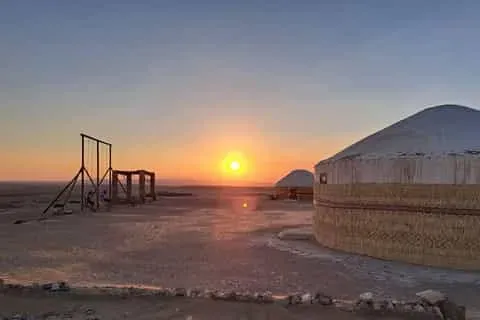
I should be honest: the interiors are mostly empty. Don't expect reconstructed rooms or display boards. What you get instead is the skeletal outline of ancient life. Traces of watchtowers and living quarters that set your imagination working harder than any museum diorama ever could. The real payoff is the view. From the highest points, the Kyzylkum Desert spreads out in every direction, a sea of sand and scrub broken only by the distant mounds of other fortresses. Sunset changes everything. Golden light catches the mud-brick walls and pulls long shadows across the desert floor. It's the kind of moment that makes you forget your legs hurt. There are even swings near the fortress, positioned to take advantage of the backdrop.
Keep an eye on the ground while you're up there. The beetles and other desert creatures going about their business in the sand are worth watching. Tiny survivors in a place that demands resilience from everything living here, humans included.
Staying overnight at a yurt camp
If you can swing it, staying at a traditional Ayaz Kala yurt camp near the fortress turns a day trip into something closer to a proper pilgrimage. The desert delivers clear skies on most nights, and the stargazing is genuinely something else. The facilities near the site are better than you'd expect for such a remote location. There are toilets next to the parking lot and basic amenities at the yurt camps. Once the day-trippers have gone and the wind settles to a whisper, the fortress belongs to whoever stayed behind, silhouetted against a sky full of stars.
Practical tips for visiting Ayaz Kala
What to bring
Sturdy footwear is the one thing you cannot skimp on. Loose rock, crumbling mud-brick, and sandy slopes will punish inadequate shoes. Hiking boots or trail shoes with proper grip are what you want. Leave sandals and flat sneakers in the car. Wind protection, a jacket or shell layer, matters regardless of the season. The fortress earns its windy name. In cooler months, especially February, pack for serious cold. The wind chill on exposed hilltops can be brutal.
Costs and entrance fees
The entrance fee is usually 20,000 sum, cash only at the main entrance. Card facilities don't exist out here. Rates vary. Some people have encountered fees of 10,000 sum, and approaching from the base of the hill can sometimes mean no charge at all. The organised tour price of roughly $20 for a three-castle circuit is solid value for a full seven-hour excursion with lunch included.
Safety and etiquette
The site has no formal safety infrastructure, no interpretive signage, and no on-site guidance. You're largely on your own, which means climbing freely over the ancient ruins is the norm. Use your judgment about where and how far to go. The hope among people who care about the site is that the government will invest in conservation that protects without sanitising. Toprak-Kala's heavy-handed restoration shows what happens when that balance tips the wrong way. Keeping the site clean matters too. The ruins deserve to stay as pristine as the desert around them.
Best time to visit
Spring, from March through May, and autumn, from September through November, offer the most comfortable conditions for exploring exposed desert ruins. March visits confirm pleasant climbing weather, though even late winter trips in February work if you're willing to brave the biting wind. Summer brings intense desert heat that makes the unshaded climb punishing. The shoulder seasons also give you the clearest skies if you're planning an overnight yurt stay, when the stars are at their brightest. Sunset visits, regardless of season, turn the whole experience up a notch. The golden-hour light across the mud-brick walls justifies every step of the climb.
Is Ayaz Kala worth the trip?
Ayaz Kala splits opinion in a way I find instructive. People who have visited multiple fortresses across the region sometimes wonder whether the hype holds up. A common refrain: cool to see, but not an absolute must. Most visitors, though, describe it as the highlight of their desert fortress circuit and one of the best historical sites in Uzbekistan. The gap seems to come down to how you approach it. If you show up rushing through a checklist, you'll leave unmoved. If you slow down, climb both main fortresses, sit with the silence, and watch the desert light shift across the ancient walls, you'll leave with something closer to awe. Ayaz Kala Uzbekistan doesn't give itself up easily. It demands the climb, the wind, the patience. In return, it offers a brush with the deep past that sticks with you long after you've left the desert behind.