Samaria Gorge Hiking Guide: Crete's Legendary Canyon Trek
The real deal on hiking Samaria Gorge in Crete: 16km of knee-pounding descent through Europe's longest canyon, what to pack, how to get back to your car, and why May is the only month that matters.
What You're Getting Into
Samaria Gorge in Crete has a way of humbling you. Sixteen kilometers of downhill hiking starts at 1,250 meters in the White Mountains and ends at the Libyan Sea. In between: scree slopes, abandoned stone villages, cliffs that narrow until you can touch both sides, and a black sand beach that hurts to walk on barefoot. The whole thing takes most people 5 to 7 hours, and your knees will complain for days. I mean this as a recommendation.
May is when the gorge reopens after winter, and it's the sweet spot. Temperatures sit around 15°C at the trailhead, wildflowers show off along the slopes, and you beat the summer parade of tour buses. July and August turn the lower sections into a furnace and the trail into a conga line. Go in May or early June, or accept that you're hiking a crowded canyon in 35-degree heat.
The Geography of Samaria Gorge Crete
The numbers sound almost fake. You drop 1,250 meters over roughly 16 kilometers, starting from the Omalos plateau and finishing at Agia Roumeli, a village with no road access. The gorge cuts through the White Mountains, which aren't white for most of the year but turn snow-capped in winter — which is why the whole park closes from November through April.
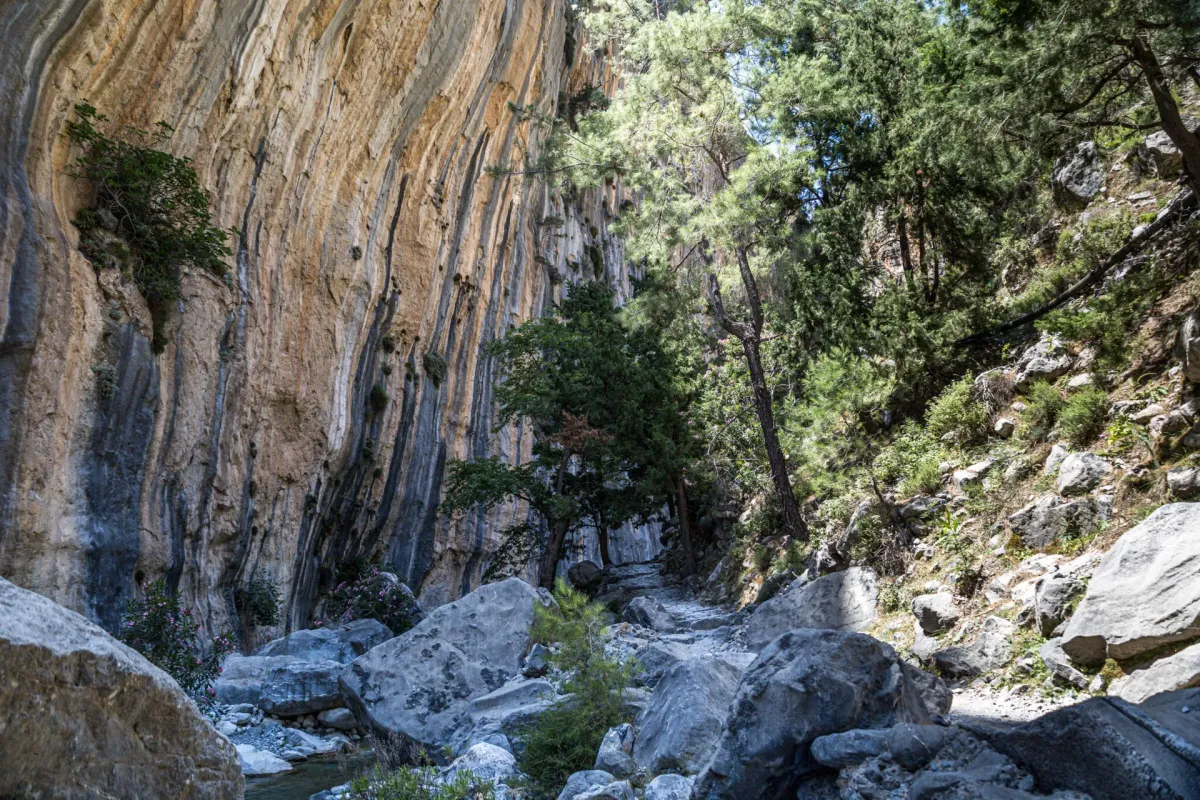
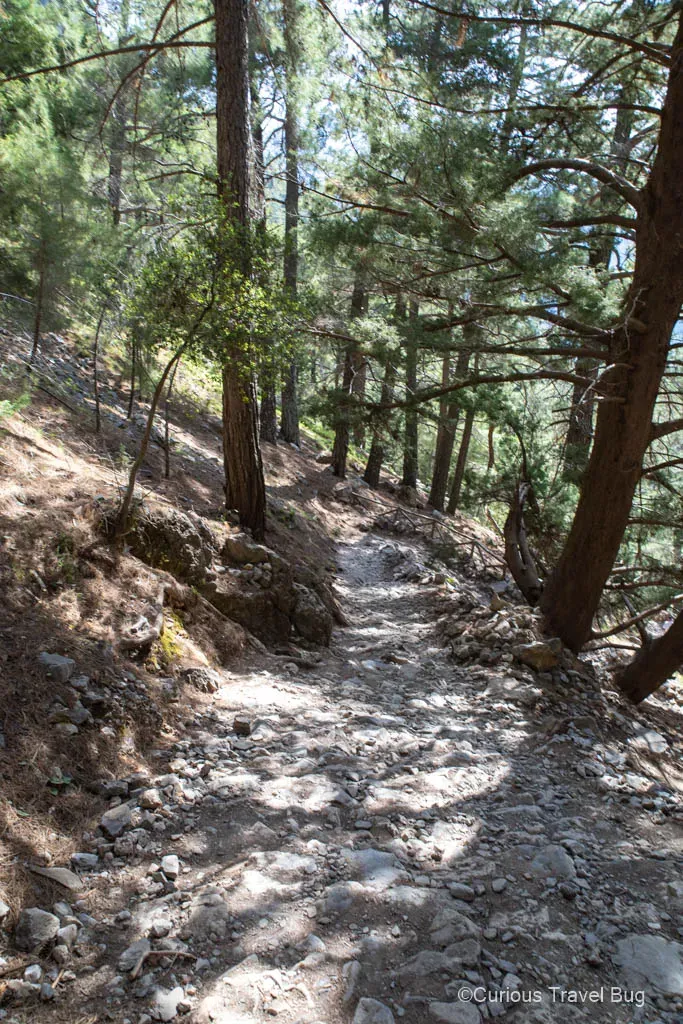
The trail works through distinct zones. First: forest descent through cypress and pine, with wooden walkways bolted over the worst sections. Then: classic gorge hiking with river crossings and boulder fields. Finally: the Iron Gates, where the walls squeeze to just 3 meters apart, and the last flat kilometers to the sea.
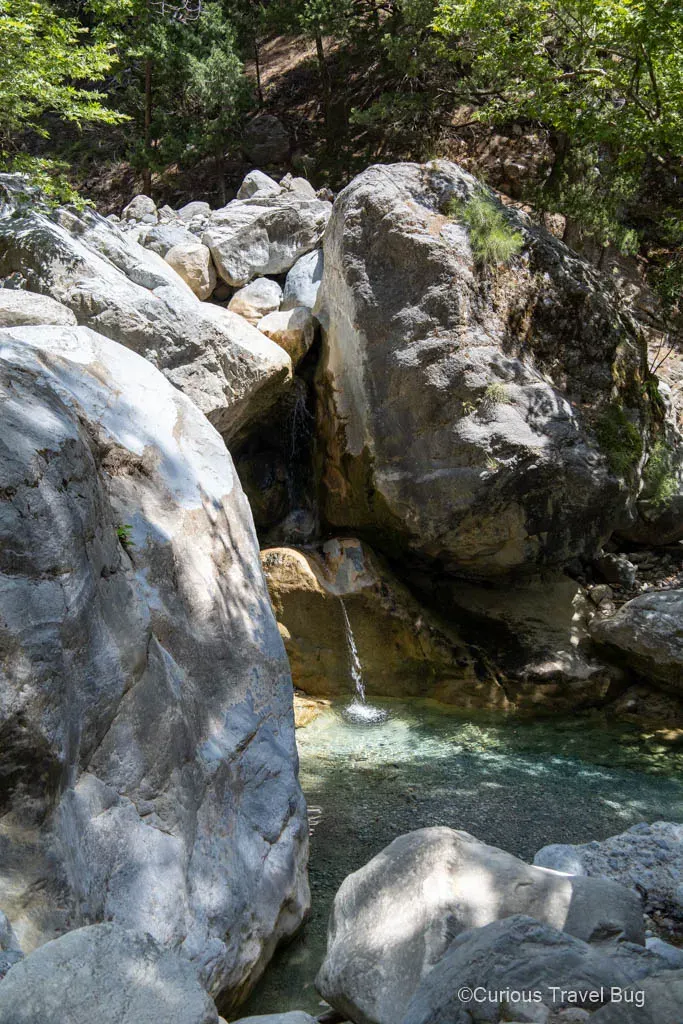
The national park infrastructure helps without sanitizing things. Spring-fed drinking water appears at roughly 2km, 3.5km, 7km, 11.5km, and 13.5km marks. Toilets exist at the same spots. Picnic tables sit in shade. But the trail itself remains rough — loose rock, uneven surfaces, sections requiring careful foot placement. This isn't a paved nature walk.
Hiking Samaria Gorge: Breaking Down the Trail
Kilometers 0-3: The Knee Destroyer
The first three kilometers are the hardest, which feels unfair since you're fresh. The descent is steep and unrelenting, dropping through forest with loose gravel and shale underfoot. Your quads burn, your knees take a beating, and you haven't even seen the interesting stuff yet.
This is where trekking poles earn their keep. I watched someone without poles wince with every step by kilometer two. The surface combines slippery pine needles, loose stone, and packed dirt that turns slick if it's rained recently. Proper hiking shoes are mandatory — trail runners work for the fit and experienced, but low ankle support shows its limits here.
Start early. The gates open at 6:00 or 7:00 AM depending on season. An early start means cool air for this section, empty trails for photographs, and time to actually swim at the beach instead of sprinting for the ferry.
The Middle Section: Samaria Village and the Iron Gates
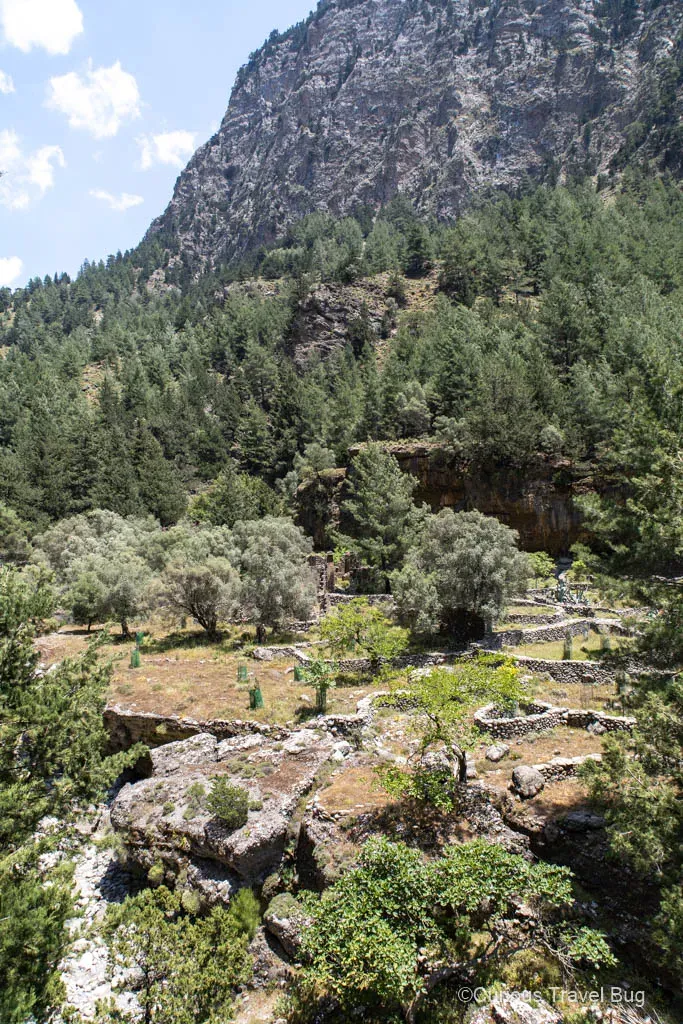
At around kilometer 7, you reach the abandoned village of Samaria. Stone houses sit empty, roofs collapsed, surrounded by oleander and the sound of water. Wild goats — kri-kri, technically, a Cretan endemic — hang around here looking for food handouts. The rangers discourage feeding them, which seems to stop approximately no one.
The village marks a checkpoint. Rangers verify your entry ticket. Medical help is available if things have gone wrong. More importantly, the terrain changes. The brutal descent ends. From here, you're walking on riverbed gravel and rock, following the stream that carved all of this over millions of years.
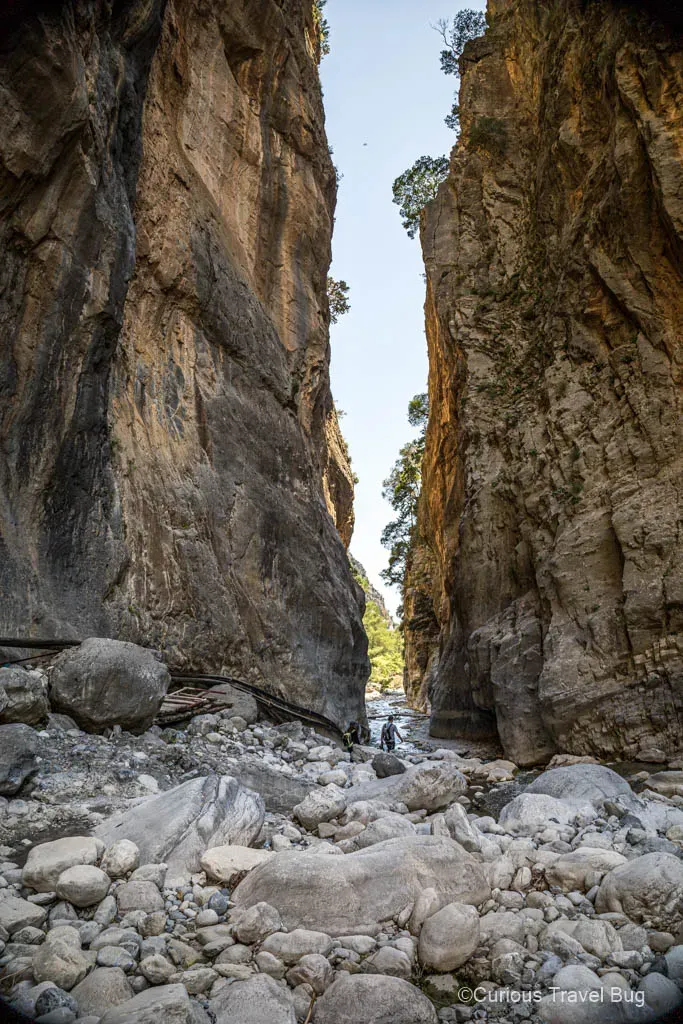
Another 4 kilometers brings you to the Iron Gates. This is why people do this hike. The canyon walls rise 300 meters and close in until you could shake hands with someone coming the other way, if anyone came the other way. They don't — it's a one-way descent officially, though nobody checks. The passage feels like walking through a cathedral built by indifferent gods. Three meters wide. Look up and you see a ribbon of sky.
The Final Push to Agia Roumeli
After the ticket checkpoint at roughly 13.5 kilometers — they check that you haven't expired in there somewhere — the remaining distance to Agia Roumeli is almost flat. The sea becomes visible. You smell salt. The heat hits harder as you lose elevation, jumping from mountain cool to coastal heat in just a few kilometers.
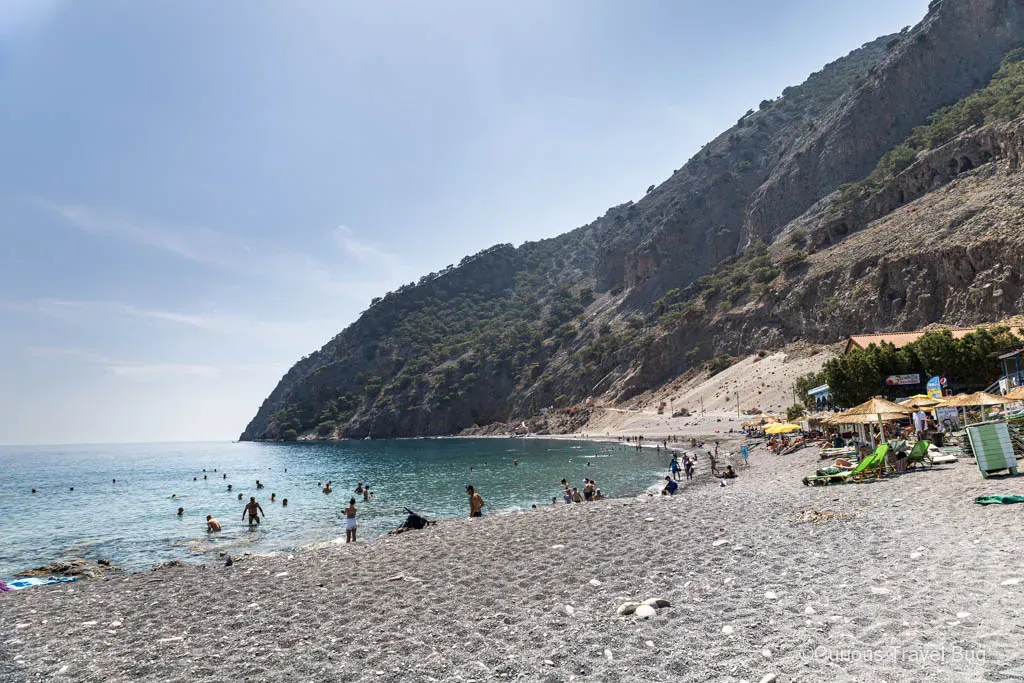
Agia Roumeli itself is a handful of tavernas and a black sand beach. The sand gets hot. Seriously hot. Bring water shoes or sandals if you plan to actually walk on it. The water is the payoff — turquoise, cool, exactly what your feet need after hours of downhill pounding.
Timing Your Samaria Gorge Trek
Most people finish in 5 to 7 hours. Athletic types moving steady with minimal photo stops might crack 4.5 hours. Anyone carrying kids, nursing bad knees, or actually stopping to look at things should budget 6 to 7.
The timing that works: arrive at Xyloskalo at 7:00 AM. Hike. Reach Agia Roumeli by early afternoon. Eat lunch, swim, wait for the 5:30 PM ferry. The timing that doesn't work: arriving at 10:00 AM, racing against the heat and the ferry schedule, finishing with no time to actually enjoy where you ended up.
A contrarian option exists. Start around 11:00 AM. By then, the early crowds have pushed deep into the gorge, and the first half of your hike passes in relative solitude. The trade-off: hotter temperatures in the exposed lower sections and less buffer time if something goes wrong. I've done it both ways. The early start is safer; the late start is more peaceful.
How to Get There and Back (The Logistics)
The Full Loop
Here's the thing about Samaria Gorge: you can't just hike back to your car. The trail ends at sea level in a village with no roads. You have to take a ferry to Sougia or Chora Sfakion, then a bus back to Omalos. During the season — roughly April through October — this all connects reasonably well. Off-season, you're not hiking this at all; the park is closed.
If you're driving, park at Xyloskalo (€5) and buy your return bus ticket from Sougia at the entrance bar before you hike. The bus ticket runs €4.80 to €7. The ferry from Agia Roumeli costs €11 to €16. The ferry takes an hour. The bus takes another hour. Factor this into your day.
Ferries typically leave Agia Roumeli around 17:30, with buses waiting at Sougia to meet them. Buy everything in advance and keep your tickets — they're checked at the park exit.
The Shorter Option
If 16 kilometers sounds like too much, reverse the route. Take the ferry to Agia Roumeli first, hike 6 kilometers upstream to Samaria village, then return. You get the Iron Gates and the abandoned village without the brutal initial descent. Terrain remains rocky but flat. Families with young kids use this option. So do people with knee issues.
Organized tours from Chania handle the logistics if you don't want to. They cost more but eliminate the parking and ticket coordination headaches.
What to Pack for Samaria Gorge
Footwear quality matters more than style. Running shoes work for the fit and experienced. Hiking shoes with ankle support help on the technical upper sections. Flip-flops will get you injured.
Trekking poles aren't essential but they're recommended by everyone who's used them. The descent is long and steep enough that your knees will thank you if you bring them, curse you if you don't.
Water and food. Drinking water exists along the route but carrying a bottle is wise. Food doesn't exist — pack snacks or accept hanger. Breakfast before entry is non-negotiable.
Sun protection gets serious as you drop in elevation. The top might be 15°C and overcast. The bottom can hit 30°C in direct sun. Sunscreen, hat, sunglasses. The lower gorge offers limited shade.
Weather awareness matters more in September, when afternoon storms trigger rockfall warnings. May through June offers the most stable conditions.
Samaria Gorge Costs and Fees
National park entry: €5. Ferry to Sougia: €11-€16. Return bus: €4.80-€7. Parking: €5. Budget roughly €25-€35 per person for the day, plus whatever you spend on food in Agia Roumeli.
Keep all tickets. Rangers check at the control point and the exit. Losing a ticket means buying another.
When to Hike Samaria Gorge
May wins. Wildflowers bloom, temperatures stay reasonable, crowds haven't peaked. June is still good but warming. July and August are doable but hot and busy. September carries storm risk but fewer tourists. The gorge closes October through April.
The Bottom Line
Samaria Gorge isn't subtle. It's 16 kilometers of descent, logistics that require planning, and a ferry schedule you don't control. Your knees will hurt. You'll eat more dust than expected.
But the Iron Gates are real — 300 meters of cliff squeezing to arm's width. The abandoned village is real — stone houses emptied by time and earthquakes. The beach at the end is real — black sand, turquoise water, nowhere to go but by boat into the Mediterranean.
This is why you hike Samaria Gorge. Not because it's easy. Because the canyon exists, and it's massive, and walking through it from mountain to sea still feels like an actual adventure in a world that has sanitized most of those.
Bring good shoes, start early, carry water. The rest happens as you walk.