Mosquito Bay Puerto Rico: Brightest Bioluminescent Bay
Plan around the new moon or you'll miss the show. Here's everything you need to know about kayaking through liquid starlight at Mosquito Bay Puerto Rico.
Why Mosquito Bay Puerto Rico is unlike anywhere else
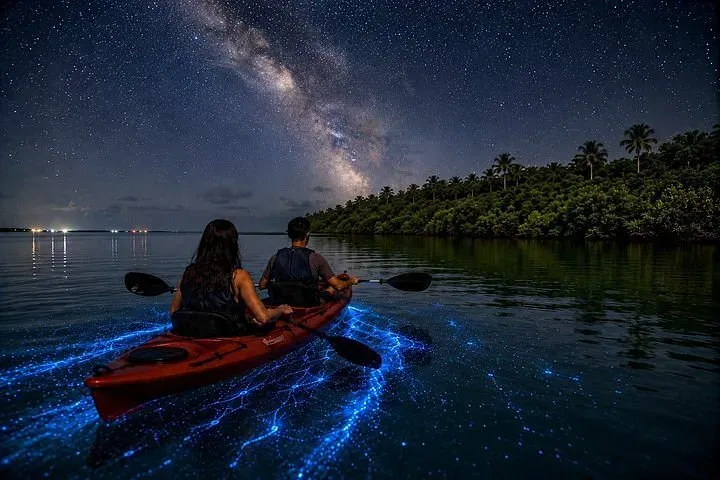
Holding the Guinness World Record for the brightest bioluminescent bay on Earth, Mosquito Bay Puerto Rico sits on the island of Vieques. Millions of microscopic dinoflagellates fill the mangrove-fringed lagoon. Disturb the water and they emit a blue-green glow that looks almost fake until you see it yourself.
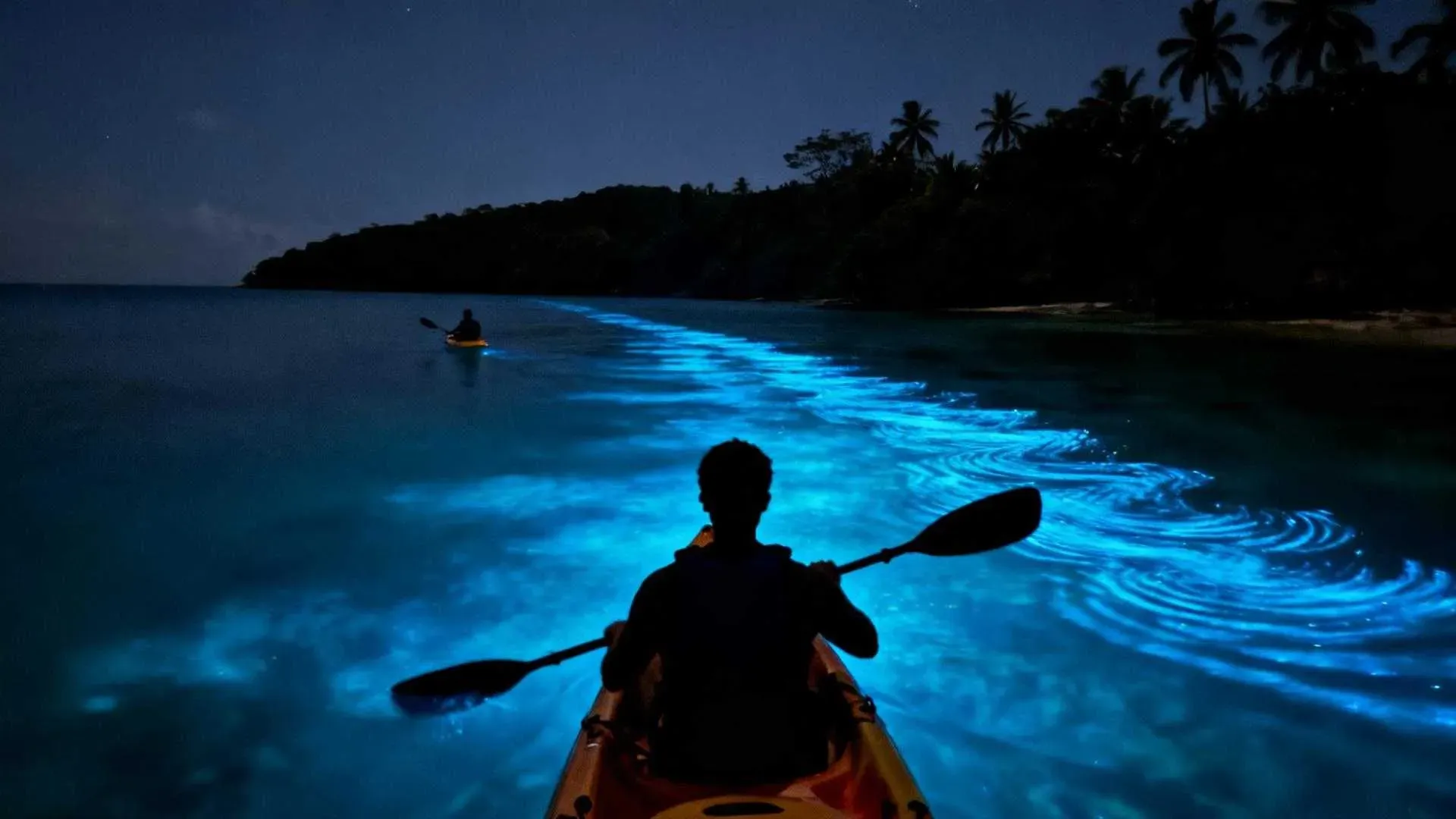
Night kayaking here turns every paddle stroke into light. Ripples sparkle beneath your hull while fish dart through the darkness leaving glowing trails behind them. Bioluminescence videos keep going viral and travelers keep chasing the next big natural phenomenon. Mosquito Bay Puerto Rico has become one of those places everyone says you have to see before you die.
What actually happens out there
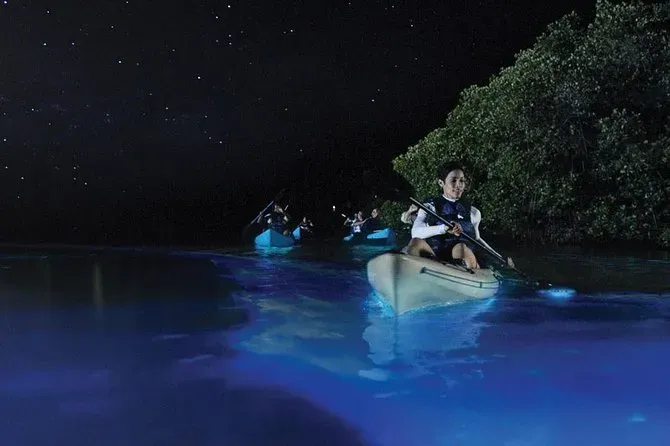
Everyone comes back saying the same thing: they have never seen anything like it. The magic builds slowly. You kayak through dark mangrove channels before reaching the open lagoon, where every movement triggers cascades of light.
The best moments come when fish swim beneath your kayak, their movement creating sudden bursts of illumination that race through the water like underwater lightning. Combine this with some of the darkest skies in the Caribbean, where constellations shine overhead and guides use laser pointers to map the sky. It is a strange feeling: stars above you, stars below you, and you floating in the dark somewhere in between.
Things to do in Mosquito Bay Puerto Rico
Kayaking through liquid stars
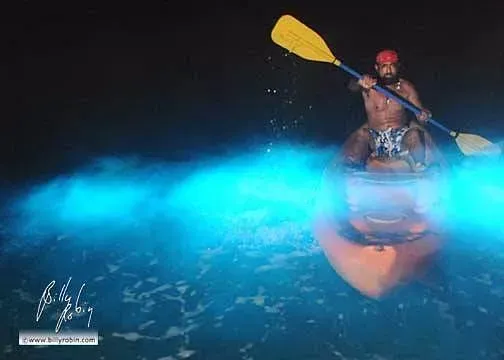
Kayaking is the best way to see the bioluminescence. As you paddle deeper into the bay, the water responds to every stroke with blue sparks. The organisms are motion-activated. The glow intensifies when you run your paddle or hand through the water. Each movement creates a small light show just for you.
If you have kayaked before, you will get more out of it. If not, you might spend half the trip figuring out how to steer instead of watching the water light up. The water stays shallow throughout the bay, so falling in is not dangerous. Just accept that you will get wet and dress accordingly.
Boat tours vs. kayak adventures
Kayaking gives you the closest connection to the bioluminescence, but boat tours work for those who cannot kayak: families with toddlers, older travelers, or anyone with mobility limitations. Boat tours typically cost around $15 per person for viewing only, while kayak excursions range from $40 to $65 depending on the operator and inclusions.
Some operators offer swimming experiences for approximately $40, letting you slip into the water and surround yourself with the glow. Most visitors agree that kayaking is better though. You sit closer to the surface. You feel the paddle in your hands. You can explore independently. That physical connection creates a more memorable encounter.
When the fish create the show
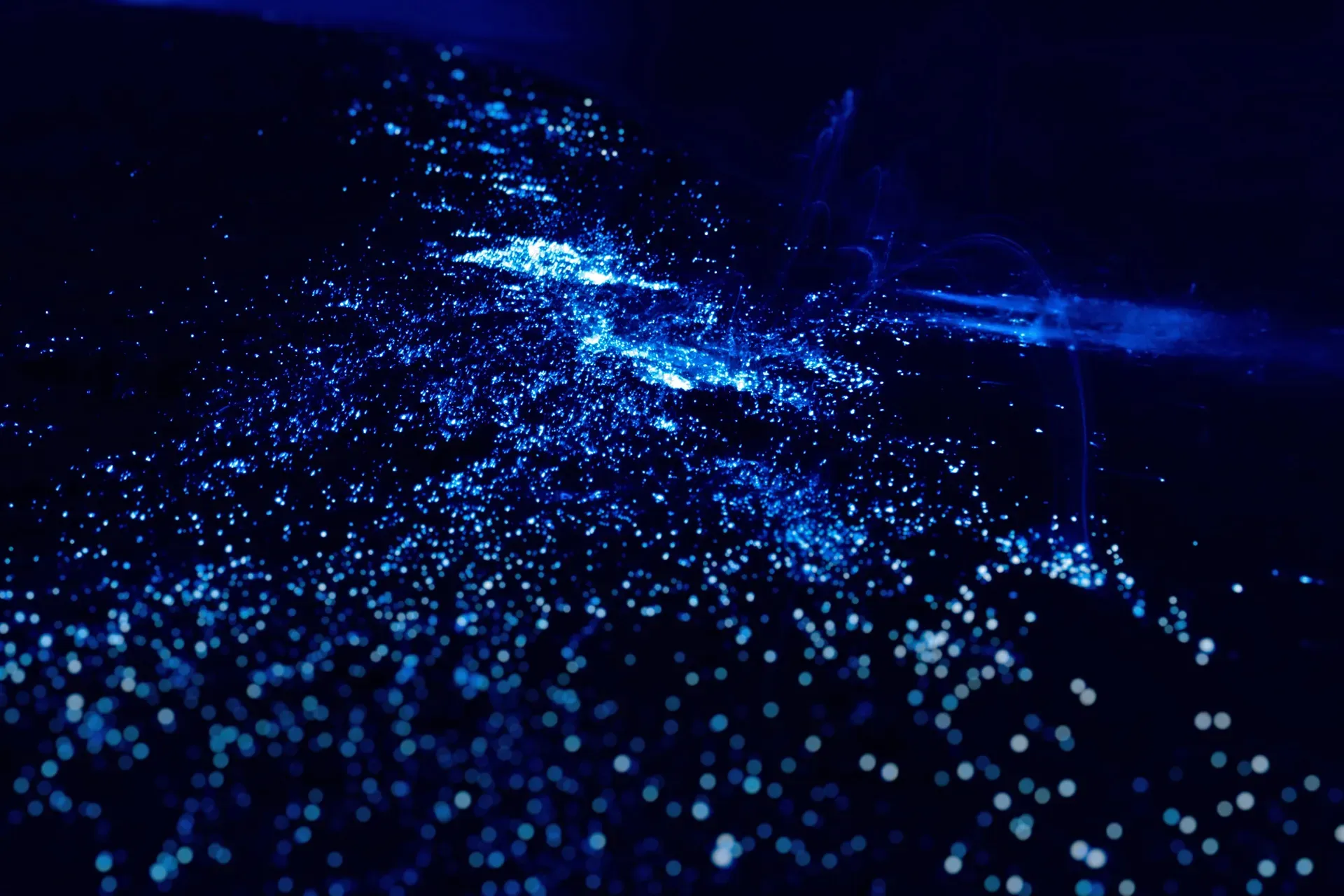
The best phenomenon occurs when fish swim through the dinoflagellate-rich water. As they chase and feed on the microscopic organisms, they create streaks of light that dart beneath the surface like underwater fireflies on fast-forward. These sudden illuminations are faster and more dynamic than paddle-induced glow. They often become the highlight of the entire excursion.
Best time to visit Mosquito Bay Puerto Rico
The moon phase makes or breaks your visit
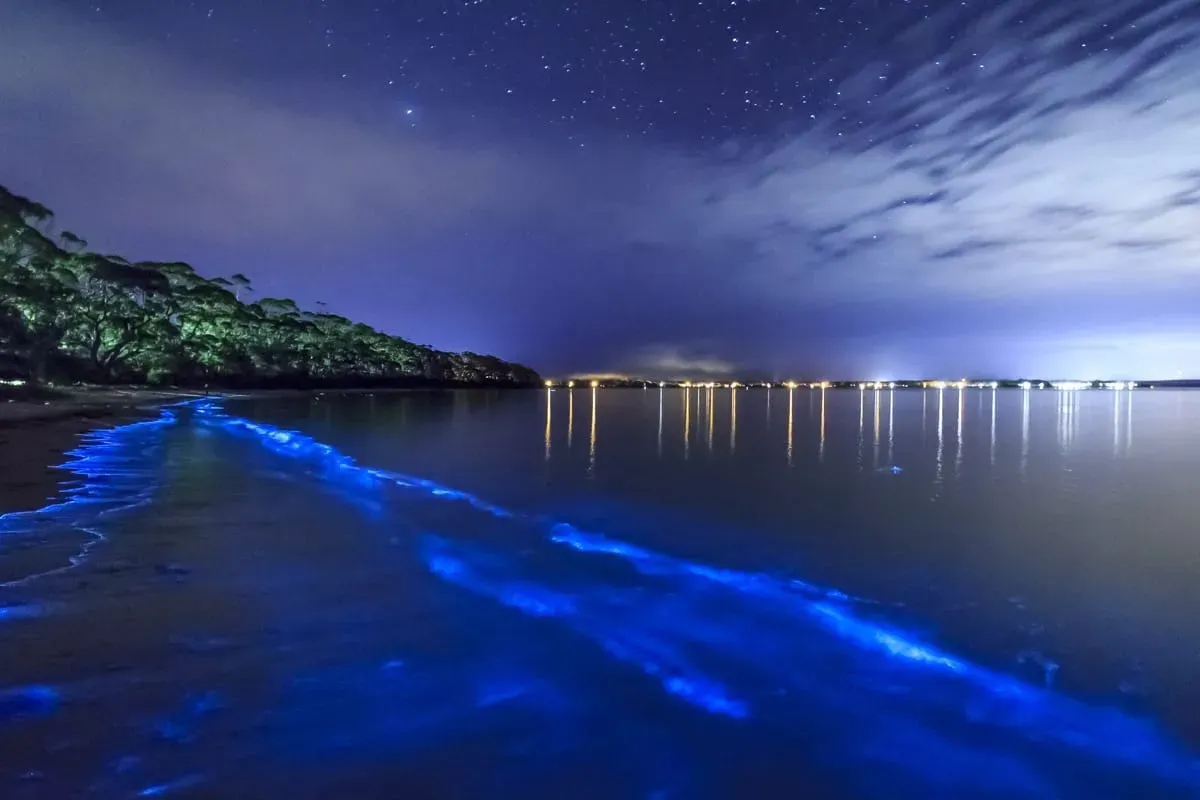
If you remember nothing else from this article, remember this: moon phase determines everything. A bright full moon can render the bioluminescence nearly invisible. A new moon creates the darkness you need for maximum glow. The dinoflagellates emit a dim white or blue-white light that competes with any ambient brightness. When moonlight floods the bay, you might find yourself kayaking around in the dark wondering what the fuss is about.
The best time to visit Mosquito Bay Puerto Rico is during the new moon phase, typically July through December when skies are darkest. Check lunar calendars before booking and aim for nights when the moon is either new or hidden behind clouds. Tour times matter too. Later departures, typically post-8:30 PM, often deliver better visibility as darkness deepens.
Seasonal considerations
The bay operates year-round, though July through December typically delivers the brightest displays with minimal moonlight interference. Regardless of season, prioritizing dark-sky conditions over specific months will give you better results than visiting during the "right" season under a full moon.
Practical tips for your Mosquito Bay visit
Is Mosquito Bay worth it?
Absolutely, provided you time it correctly. Visitors rate this as the highlight of their Puerto Rico trip, calling it "100% worth it" and "one of the coolest things I've ever seen." The caveat is always the moon phase. A poorly timed visit under bright moonlight can feel underwhelming. A properly planned excursion during new moon conditions creates pure magic.
How to get to Mosquito Bay from San Juan
Reaching Mosquito Bay means reaching Vieques island first. From San Juan, drive or take transportation to Ceiba on Puerto Rico's east coast, then catch the ferry to Vieques. The ride takes about 30 to 45 minutes. Small planes also operate from San Juan's Isla Grande Airport to Vieques.
Once on Vieques, reaching Mosquito Bay means navigating rough roads. This is especially challenging at night. If driving yourself from Sun Bay or other parts of the island, scout the route during daylight first. The path can be treacherous after dark, with reefs and rough terrain to navigate. Many visitors opt for tour operators who handle transportation, eliminating the stress of night driving on unfamiliar roads.
Mosquito Bay at night: what to expect
The experience runs about 1.5 hours total, though actual kayaking time spans roughly 30 to 40 minutes. The remainder covers transportation, safety briefings, and equipment distribution. The bay itself is calm and warm. Mangrove forests surround it, blocking ambient light and adding to the darkness.
Bring mosquito repellent, but apply it before arriving at Mosquito Bay. You cannot spray insect repellent once there. The chemicals harm the delicate ecosystem and the microscopic organisms that create the bioluminescence. Apply repellent thoroughly at your accommodation before departure.
Can you swim in Mosquito Bay?
Certain tour operators allow swimming for approximately $40 per person, compared to $15 for boat viewing only. Kayaking remains the better choice for most visitors though. Swimming lets you surround yourself with the glow, but kayaking gives you sustained interaction and mobility.
Photography tips: capturing the glow
Manage your expectations. Most smartphones cannot capture the bioluminescence effectively. The glow requires long exposure photography that phone cameras usually cannot manage in such low light. Professional cameras with manual settings, tripods, and long exposure capabilities fare better, but even then results vary.
If attempting photos, configure your camera for low-light shooting before departing. Use red light to help your camera focus without disturbing others. Never use camera flashes. Most visitors find that accepting the limitation and simply absorbing the experience creates better memories than struggling with unsuccessful photography. As many note, "capture it with your eyes."
Planning your Mosquito Bay kayak tour
Book your kayak tour as early as possible. Popular operators sell out quickly, especially during new moon periods. Tours accommodate children above age 4 technically, but most guides suggest kids should be at least 6 or 7 years old to avoid fear during the dark kayak ride.
Practice basic kayaking beforehand if you have never paddled. The dark conditions make learning on the spot stressful and cut into your viewing time. Experienced kayakers glide through the mangroves while novices may struggle with steering and coordination.
What to bring
- Water-friendly clothing (you will get wet)
- Mosquito repellent (applied before arrival)
- Water shoes or sandals
- Towel and dry clothes for after
- Camera with manual settings (optional, expect limited success)
- Small amount of cash for tips
Mosquito Bay travel guide: planning essentials
To fully experience Mosquito Bay without rushing, plan to stay overnight on Vieques. The late-night timing of tours, typically 7:30 to 8:30 PM departures or later, combined with the journey back to the main island makes same-day returns exhausting. Vieques offers beaches, wild horses, and a relaxed Caribbean atmosphere that rewards a multi-day stay.
Independent travelers can save money by driving themselves to the bay and purchasing tickets at kiosks in the main plaza for $15 to $40 rather than booking comprehensive tours. However, the convenience of guided tours, including equipment, safety briefings, and transportation, often justifies the higher cost for first-time visitors.
Expectations matter: the bioluminescence appears as white or blue-white sparkles triggered by motion, not as a perpetually glowing purple lagoon. The organisms respond to disturbance: paddles, hands, fish. They do not illuminate constantly. Understanding this before arriving prevents disappointment and lets you appreciate the magic for what it actually is.
What I actually think
Mosquito Bay Puerto Rico delivers one of travel's strangest natural spectacles. Every movement creates light. Fish become underwater comets. Darkness reveals rather than conceals. Yes, planning around moon phases requires flexibility. Yes, photography is frustratingly difficult. Yes, you will get wet and possibly bitten.
But when your paddle first disturbs the water and blue sparks erupt around your kayak, when fish dart beneath leaving trails of light, when you look up at a sky full of stars and down at an ocean full of stars simultaneously, all the logistical challenges suddenly do not matter anymore.
Time your visit for a new moon, book early, embrace the limitations of photography, and prepare for one of those rare experiences that actually lives up to its reputation. Mosquito Bay is exactly as magical as promised. Maybe more so.