Lower Antelope Canyon Page Arizona: Complete 2026 Visitor Guide
Descend into Lower Antelope Canyon Page Arizona for swirling sandstone corridors that turn every camera into a professional setup. Here's how to book, what to expect, and why this slot canyon beats its famous sibling.
Lower Antelope Canyon Page Arizona: What to expect
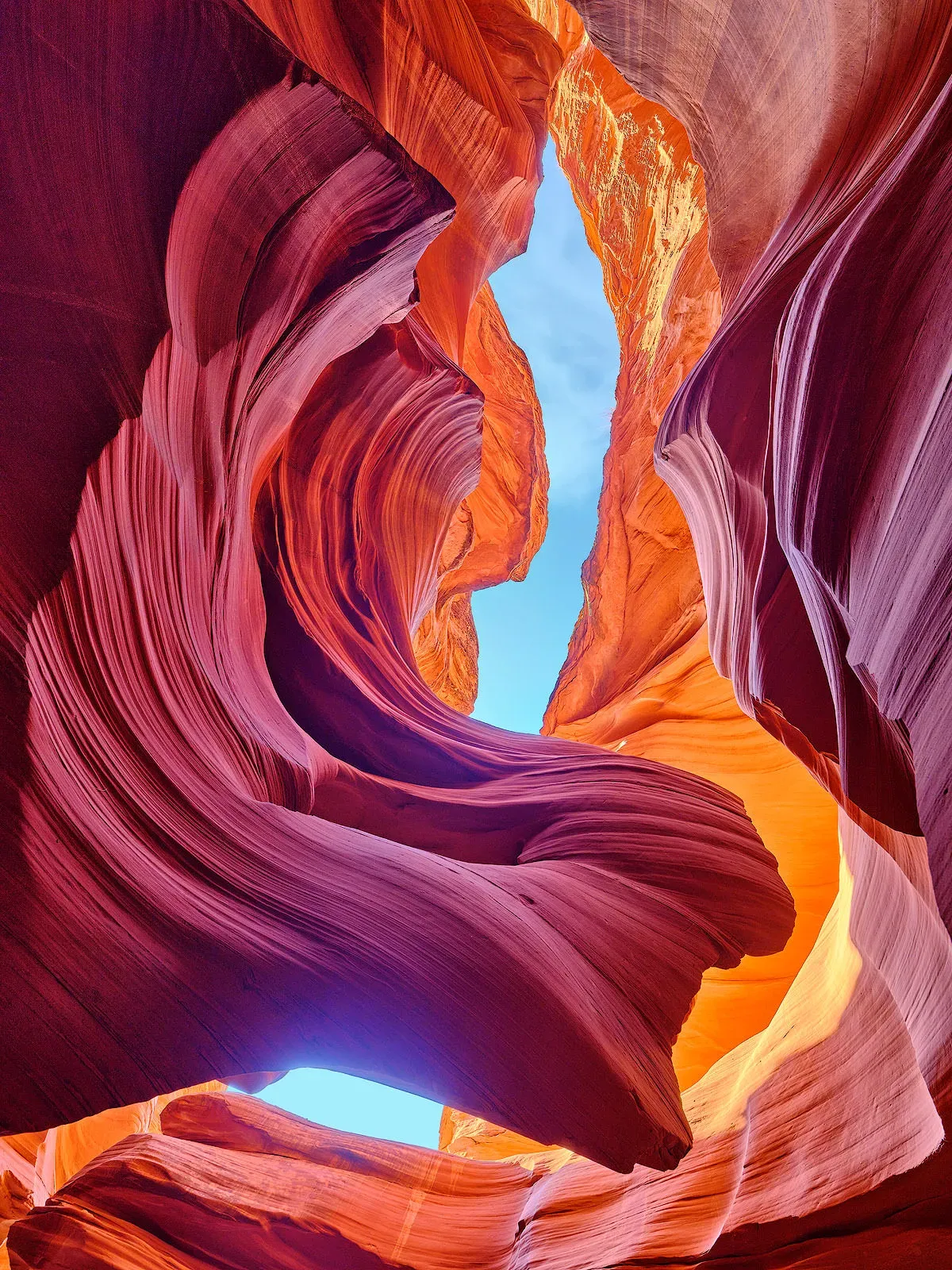
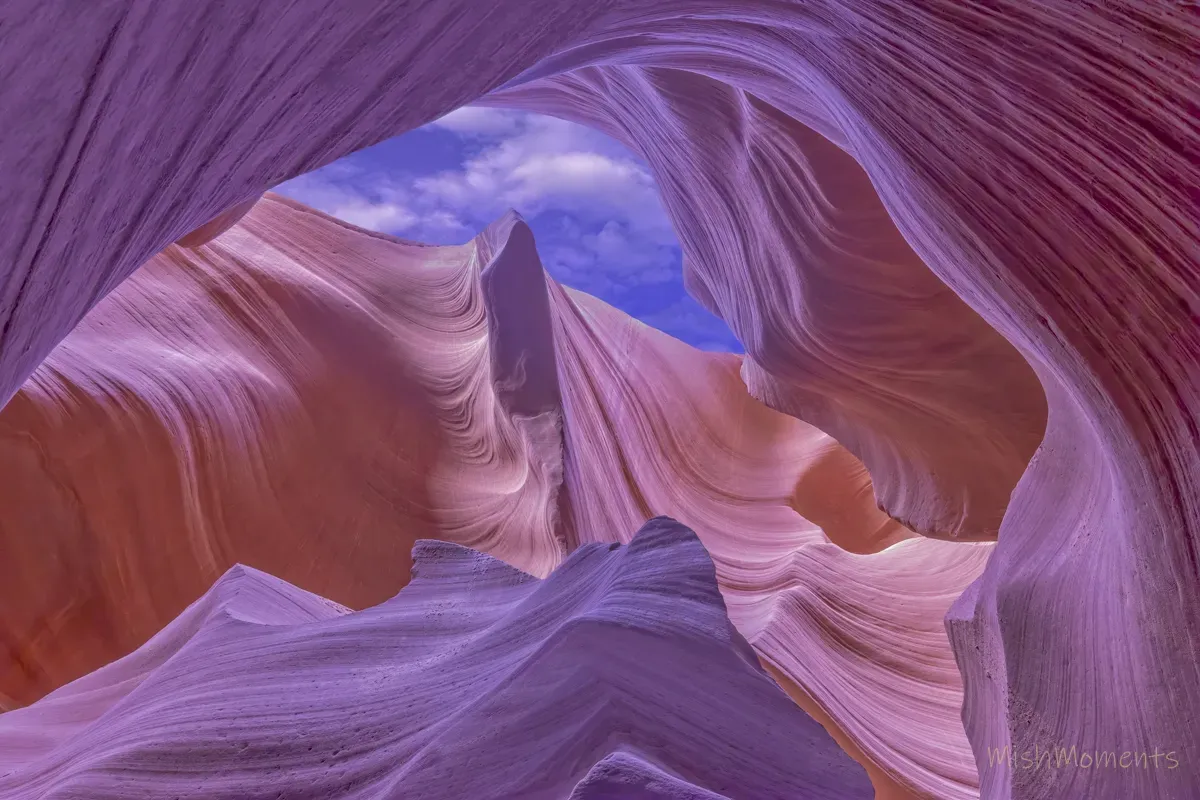
Lower Antelope Canyon Page Arizona sits on Navajo Nation land where Highway 98 cuts through the desert, just east of the town center. Unlike its more famous sibling to the north, this slot canyon requires descending through the earth itself. Metal stairs and ladders lead into a crack in the ground that opens into another world entirely. Every 2026 American Southwest itinerary seems to include this winding sandstone corridor, and for good reason. Water and wind carved these smooth, flowing walls over thousands of years, leaving swirling layers of orange, amber, and purple that shift with every angle of light.
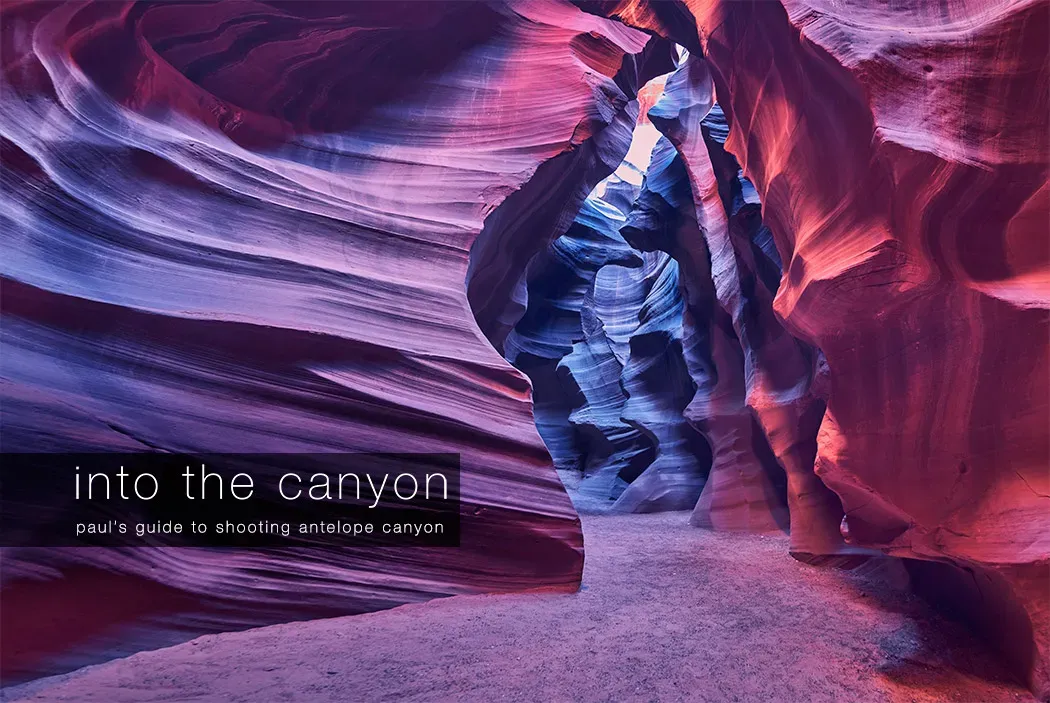
What makes Lower Antelope Canyon Page Arizona special
The canyon offers something rare: a longer, more intimate experience than Upper Antelope Canyon at a lower price point. The sandstone walls here display more saturated colors, and the extended 1.1-mile round-trip journey winds through passages so narrow at points that visitors must turn sideways to pass. The sensation is otherworldly. You touch walls carved by ancient floods while sunlight pierces through narrow overhead openings, illuminating dust motes and creating natural spotlights that photographers chase for hours.
Navajo guides turn this from a simple walk into an educational and cultural experience. These guides know exactly where to position cameras for impossible-looking illusions: rock formations that appear as seahorses, arches, and the famous "Woman in the Wind" when viewed from specific angles. Many visitors discover that the canyon looks completely different through a camera lens than to the naked eye, revealing hidden dimensions and colors invisible to casual observation.
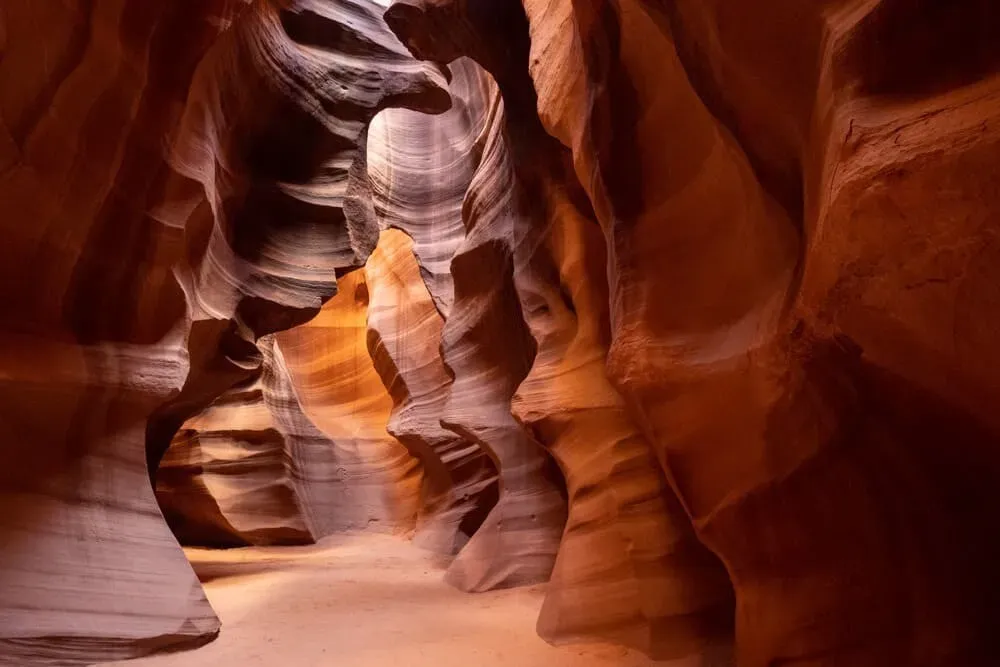
Lower Antelope Canyon tours: the experience
How to visit Lower Antelope Canyon
Access requires booking through one of two authorized Navajo-operated tour companies. Dixie's and Ken's Tours both run professional operations. Advance reservations are essential, particularly during peak periods like Thanksgiving week when crowds can make the narrow passages feel congested and rushed. Tours depart from a meeting area equipped only with porta-potties and foot-pump water stations (no soap available), so plan accordingly.
The Lower Antelope Canyon Page Arizona entrance lies below ground on the opposite side of Highway 98 from Upper Antelope Canyon. After checking in, groups descend multiple flights of steep, narrow metal stairs and ladders that drop visitors into the slot canyon's depths. The descent demands attention. No photography or video is permitted on the ladders, and attempting to capture content while navigating the steep steps creates genuine safety hazards.
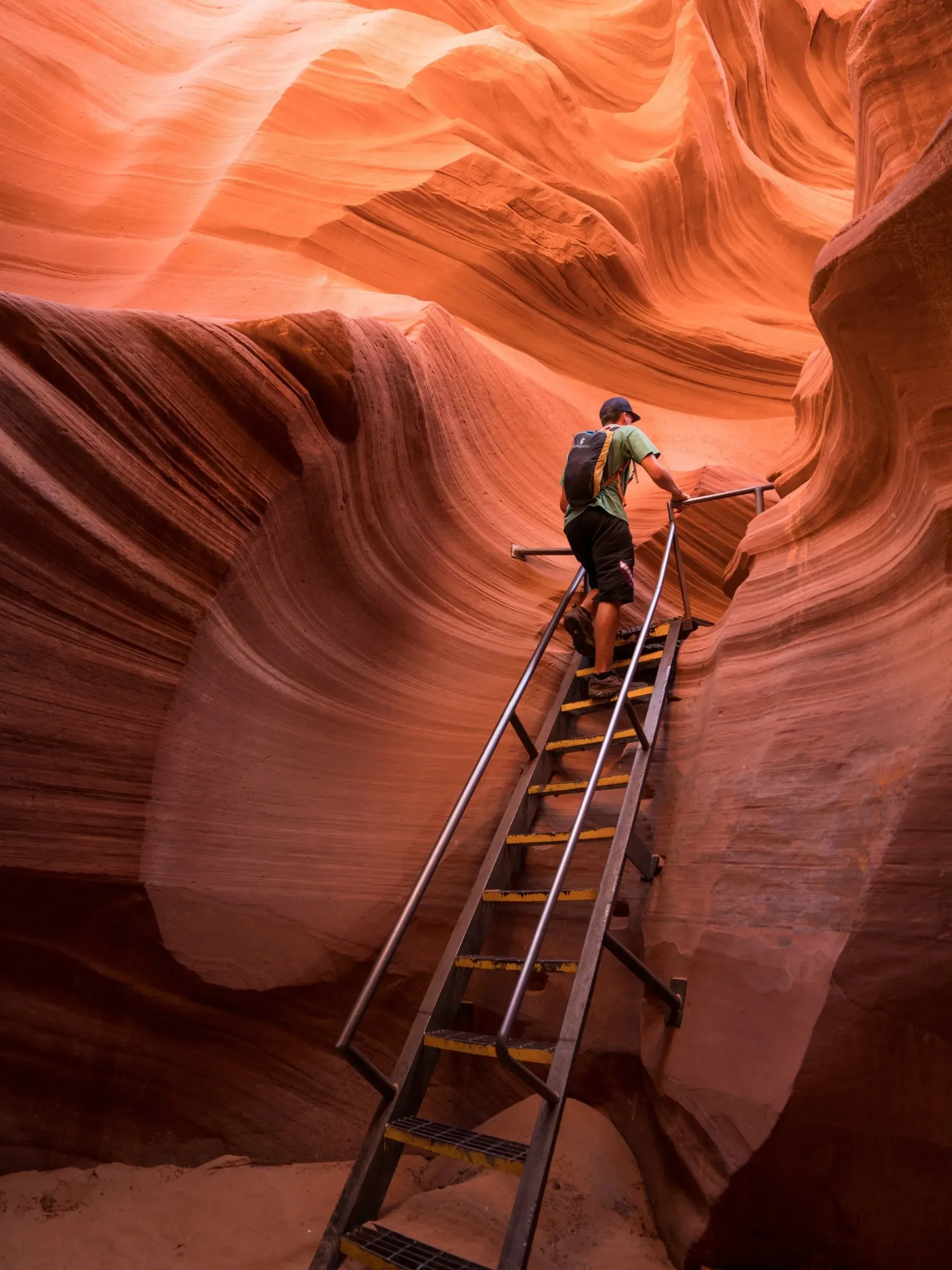
Navigating the terrain
Once inside, the sandy, uneven ground continues for approximately 1.1 miles round trip. The walk itself takes roughly 30 to 90 minutes depending on group pace and photography stops. While the canyon floor remains relatively flat, the return journey to the parking area involves a small elevation gain that can challenge those with mobility limitations.
The narrowest sections at the canyon's bottom require squeezing through tight spaces. Some visitors find they can barely fit through certain passages. Those uncomfortable with confined spaces or steep ladders should consider Upper Antelope Canyon instead, which offers ground-level entry without the vertical descent.
For visitors concerned about the return climb, guides offer an alternative route back through the canyon itself, bypassing the steep ascent entirely. This option makes the experience accessible to a broader range of fitness levels while still delivering the full visual impact.
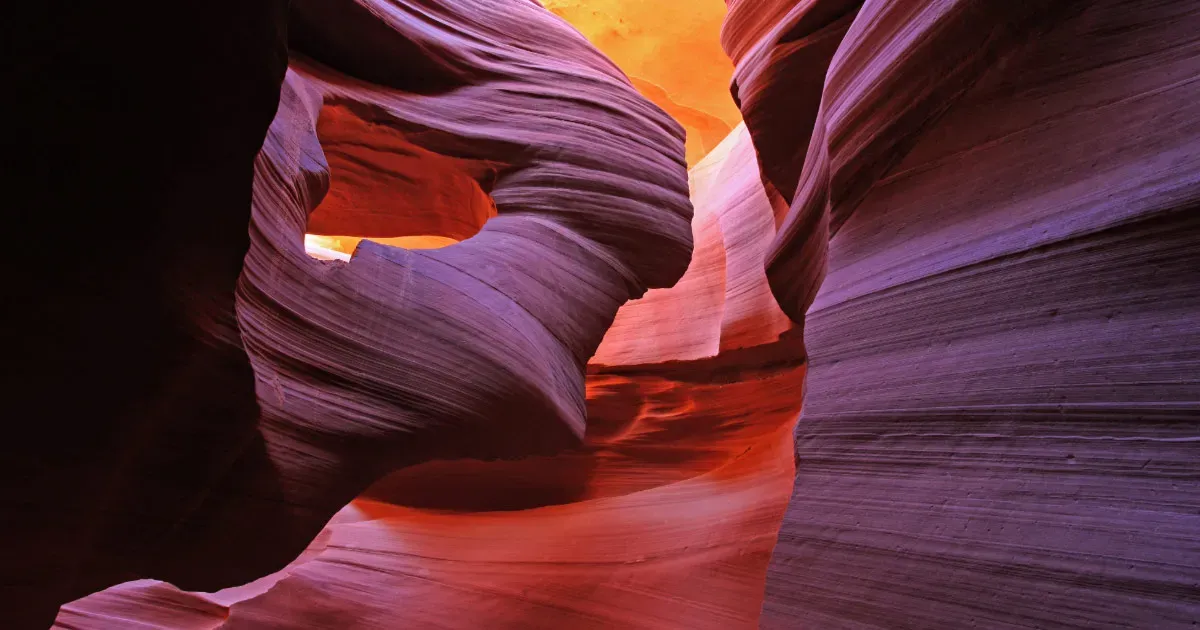
Photography and rock formations
The canyon rewards patient photographers with genuinely remarkable compositions. Guides help with camera settings and positioning, helping visitors capture images that look like professional stock photos. Specific formations to watch for include Seahorse Point, natural arches, and the curves that create optical illusions when viewed from the right angle.
However, strict rules govern photography inside the canyon. Videos are prohibited entirely. Selfie sticks and bags of any kind are banned; visitors may carry only cameras and small water bottles. Tour groups must stay together and keep moving through congested sections, so time for individual photography depends heavily on crowd levels.
Is Lower Antelope Canyon worth it?
For anyone physically capable of managing ladders and narrow passages, Lower Antelope Canyon Page Arizona delivers exceptional value. The experience costs approximately $70 per person, significantly less than Upper Antelope Canyon, while offering a longer route through more brightly colored formations. Many visitors who tour both canyons report preferring this slot canyon for its sense of adventure and superior photographic opportunities.
Upper Antelope Canyon commands premium pricing primarily for its famous light beams, which occur only around noon during specific months. Outside those narrow windows, Upper offers no lighting advantage. Lower Antelope Canyon, by contrast, receives beautiful sunlight filtering through its narrow openings throughout the day, with afternoon tours in October still capturing excellent illumination even at 2:30 PM or 4:00 PM.
Practical tips for your visit
What to bring and what to leave behind
Leave bags, backpacks, and umbrellas in your vehicle. They are not permitted inside the canyon. An umbrella just gets in the way in the narrowest sections where space barely accommodates a person, let alone extra gear. Hats and sunglasses offer better sun protection while navigating the exposed entry area. Shoes with good grip work on the sandy, uneven canyon floor far better than smooth-soled shoes.
Safety considerations
Flash flooding poses a genuine risk in slot canyons. If rain threatens anywhere in the watershed, operators close the canyon immediately. The metal stairs and ladders become slippery when wet, demanding full attention during descent and ascent. Know your physical limits. One visitor described watching a larger traveler turn back at the first ladder, realizing the narrow descent and return climb would prove impossible.
Lower Antelope Canyon with kids
Families can visit with children who can handle the ladders on their own and follow directions. The tour requires constant movement and following the guide's directions, making it unsuitable for very young children or those who cannot handle steep stairs without assistance.
Best time to visit Lower Antelope Canyon
Spring and fall (March through May, September through November) offer ideal conditions: moderate temperatures and manageable crowd levels. Mid-August visits provide great views despite summer heat, while early October delivers excellent late-afternoon light.
Expect congestion during holiday weekends, particularly Thanksgiving. The 10:15 AM time slot in mid-August works well for photography, though backup can occur when groups stop for photos in the narrowest passages. Booking well in advance secures your preferred time slot, especially for the popular late-morning tours when light beams penetrate deepest into the canyon.
Final thoughts
Lower Antelope Canyon is a living geography lesson, an accessible yet adventurous journey into geological time. The combination of Navajo cultural interpretation, excellent photography opportunities, and the physical challenge of descending into the earth creates an experience that isn't your typical tourist stop. Standing inside those smooth, swirling sandstone walls, touching surfaces shaped by ancient floods, watching light dance through narrow overhead cracks. This is why the American Southwest draws visitors in 2026. Book ahead, respect the rules, bring your camera (but not your bag), and prepare for one of the most unforgettable natural encounters in North America.