Fairy Meadows Pakistan: An Alpine Paradise Beneath Nanga Parbat
Fairy Meadows Pakistan sits at 3,300 meters beneath Nanga Parbat, the world's ninth-highest peak. From dangerous jeep rides to alpine meadows, here's what it actually takes to get there.
Fairy Meadows Pakistan: Gateway to the Killer Mountain
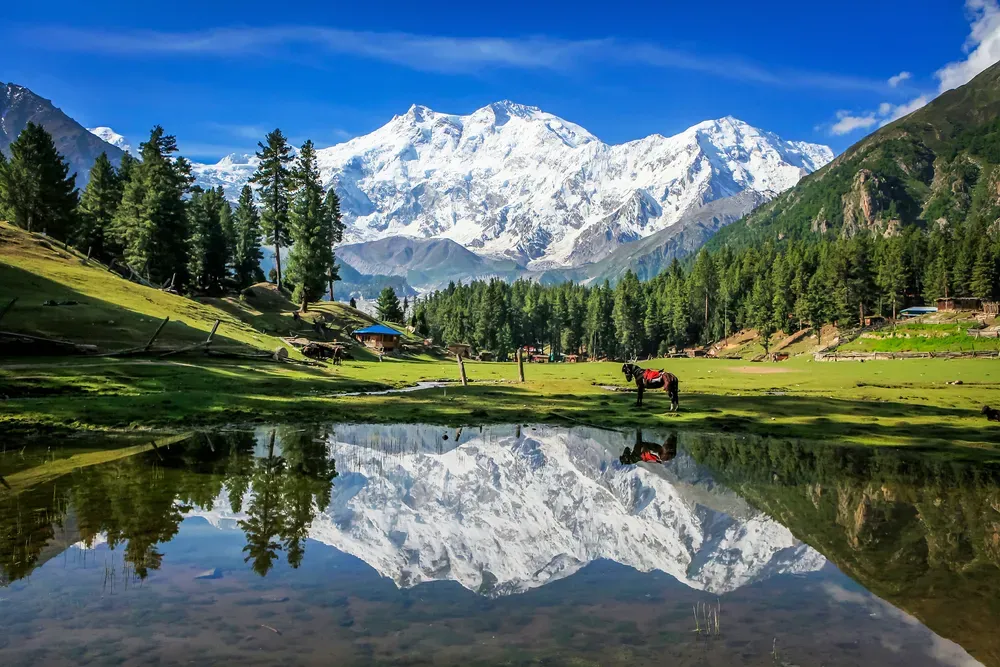
Fairy Meadows Pakistan sits at 3,300 meters in Gilgit-Baltistan, a grassland clearing that looks directly up at Nanga Parbat. The world's ninth-highest peak rises above the meadow, close enough that you can watch avalanches fall from its ice fields on clear afternoons. Getting here takes effort. Most visitors arrive after a two-hour jeep ride on a road the WHO once ranked as the second most dangerous on Earth, followed by a steep three to four-hour hike up from Tatu Village. The place filters out casual tourists by design.
What you actually find there
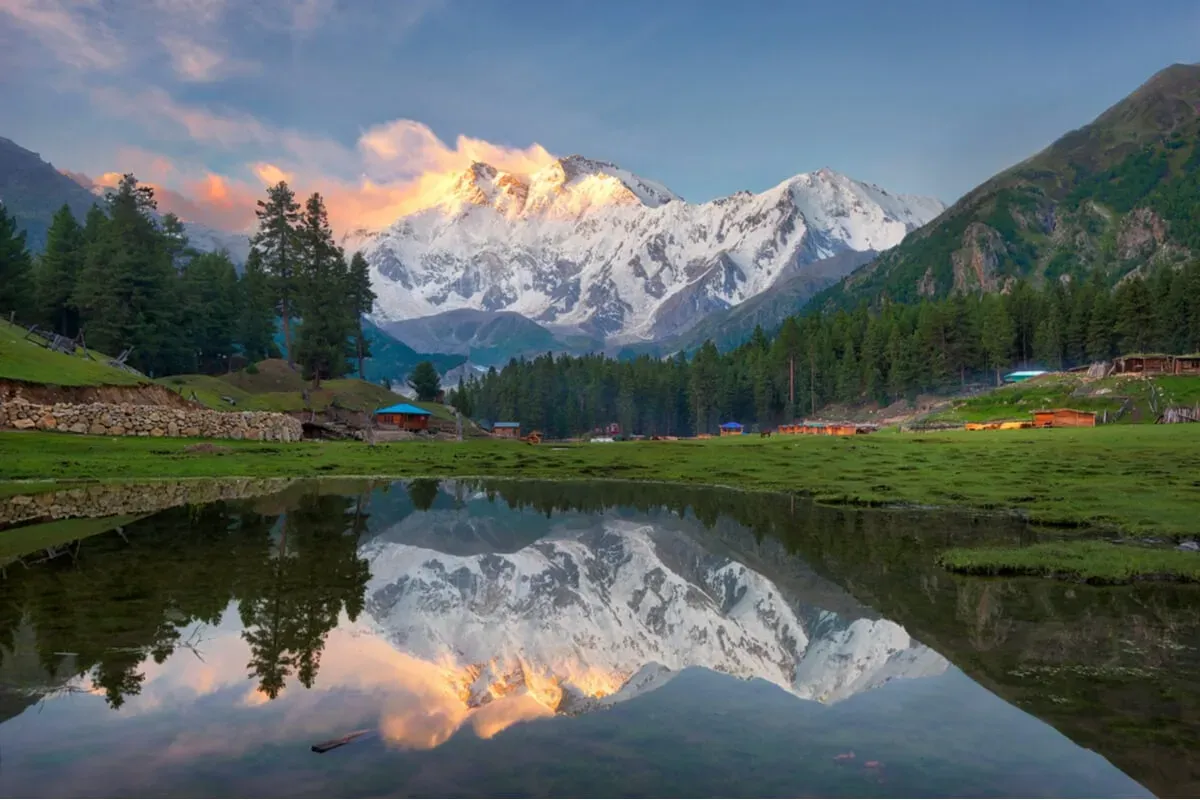
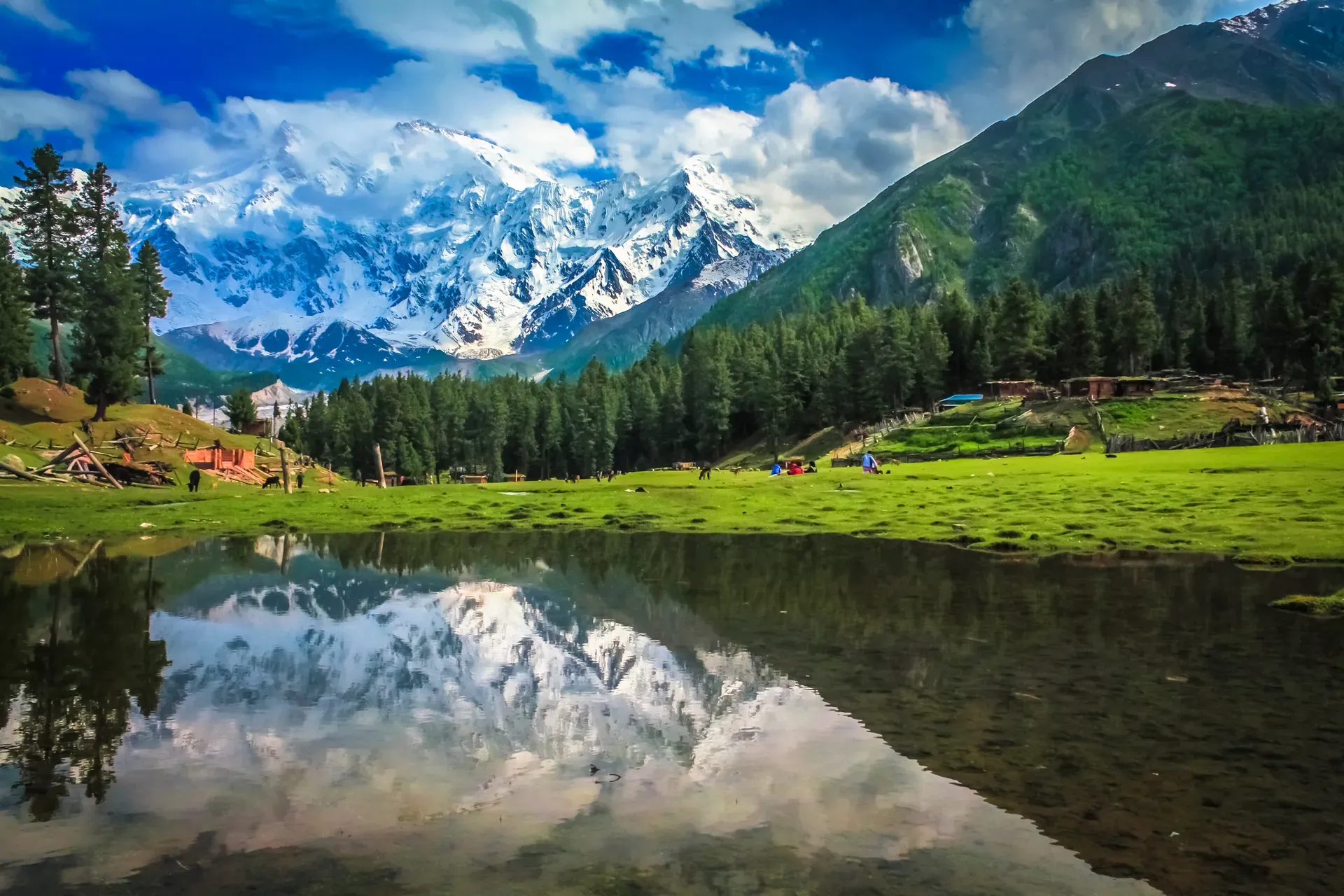
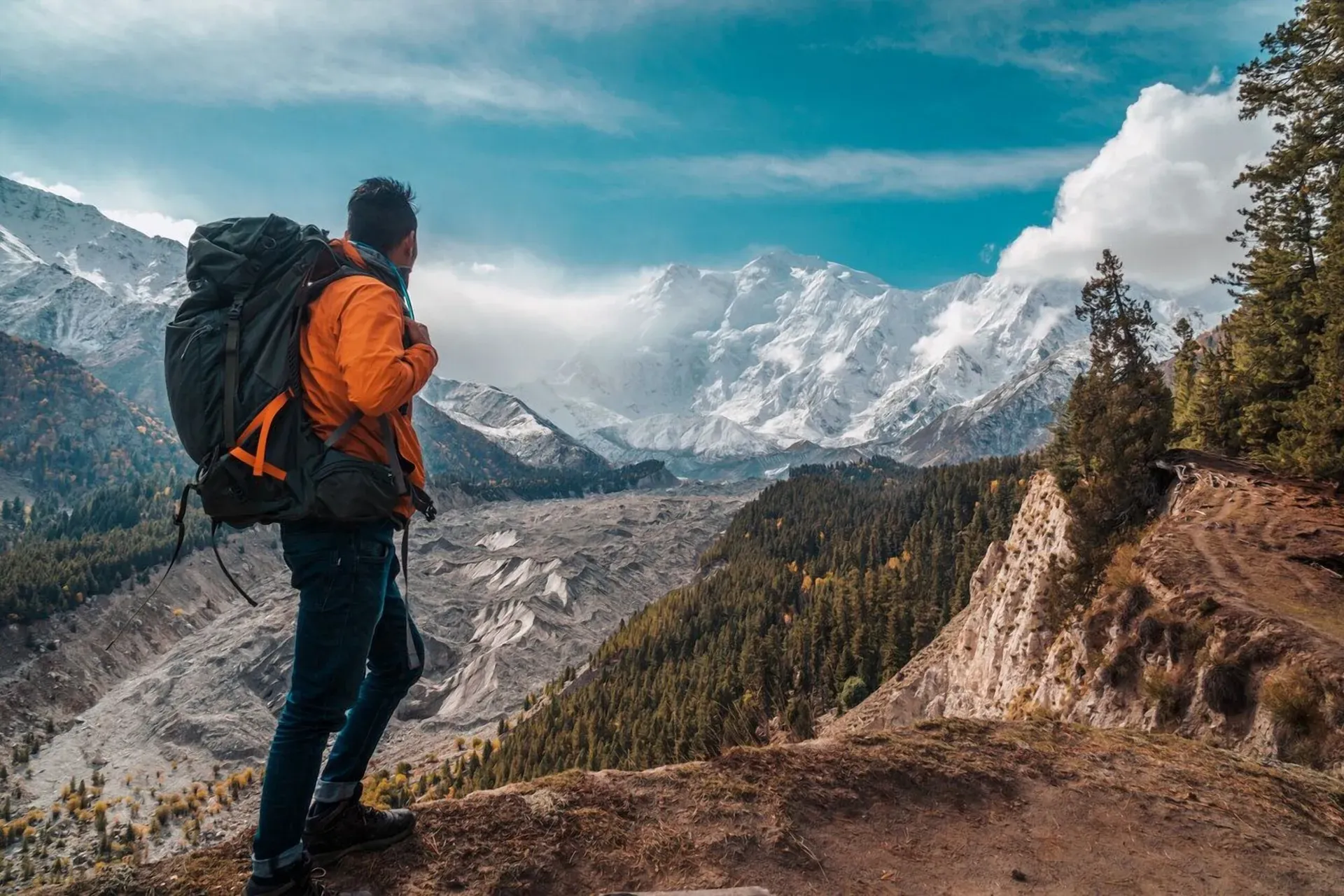
The thing that hits you first is the contrast. Soft green meadows and thick pine forests sit in the foreground while Nanga Parbat, known locally as the "Killer Mountain," dominates everything behind them. The mountain has earned its nickname; over 60 climbers have died on its slopes, and the peak maintains one of the highest fatality rates of any 8,000-meter mountain. Yet from the meadow, it looks almost peaceful, a white pyramid catching the morning light.
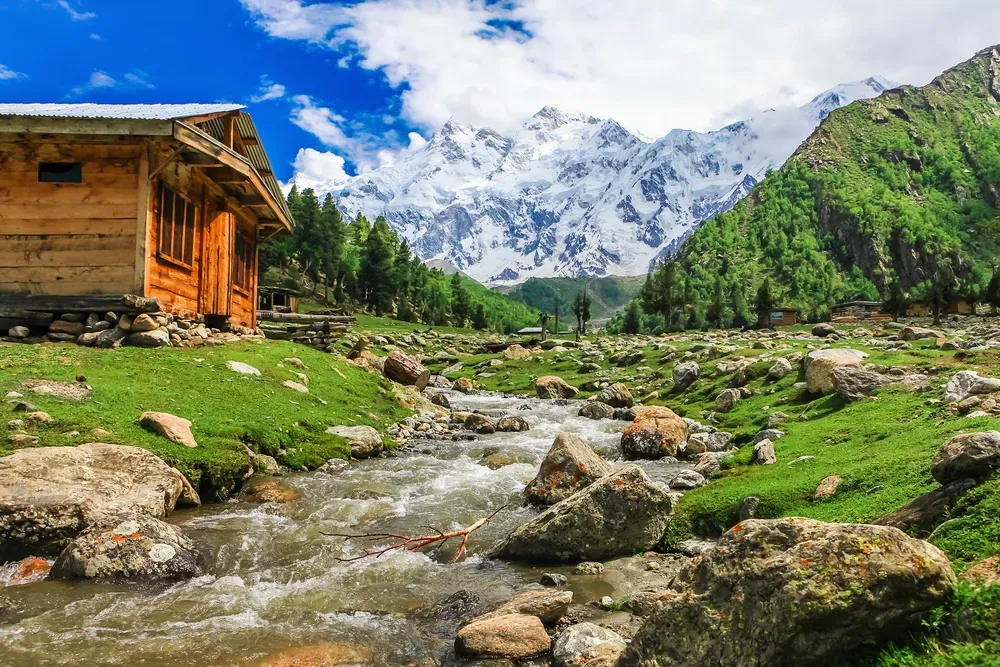
The air smells of pine and wood smoke. Water from glacial melt runs clear and cold through the grass. At night, without any light pollution for miles, the Milky Way appears directly overhead, arching across Nanga Parbat's silhouette. I have talked to travelers here from Poland, Germany, and Malaysia who describe the experience with the same phrase: they felt small. Not diminished, but properly sized in relation to something much older and larger than themselves.
This is not a destination you stumble upon accidentally. The difficulty of the journey, the expense, and the physical demands mean that people who make it here really want to be here. The result is a strange, temporary community of hikers who share firewood and tea and stories about other mountains they have climbed.
Where Fairy Meadows Pakistan is located
The meadow lies in the Diamer District of Gilgit-Baltistan, in northern Pakistan. It sits at the end of the Rakhiot valley, next to the Rakhiot glacier that flows directly off Nanga Parbat. The grassland covers roughly 2,000 acres and has been a National Park since 1995. You reach it via Raikot Bridge on the Karakoram Highway, the same road that continues north toward the Khunjerab Pass and China.
How to get there
The journey breaks into three parts, each with its own logistics and risks.
All private vehicles stop at Raikot Bridge. Local jeep operators control access to the mountain road, and outside drivers are not permitted to attempt it. The jeep covers 15 kilometers to Tatu Village in 1.5 to 2 hours. In 2013, the World Health Organization classified this road as the second deadliest on Earth. The surface is gravel, the width barely accommodates one vehicle in places, and the drops are sheer.
The jeep fare is fixed: 12,100 to 16,100 PKR for a round trip, with each vehicle holding a maximum of six passengers. You cannot negotiate this price. The solution is to coordinate with other travelers at Raikot Bridge to split the cost. The ride is rough. The jeeps bounce over rocks, grind through switchbacks, and occasionally scrape their sides against the cliff face. The views down into the valley make you grip your seat despite yourself.
From Tatu Village, you walk. The trail to Fairy Meadows is 5 to 6 kilometers and takes between 3.5 and 4.5 hours depending on your fitness and load. It climbs steadily through pine forest, crosses several glacial streams, and gains about 1,200 meters in elevation. If you are carrying heavy gear or do not hike regularly, hire a horse. Local operators charge approximately 100 PKR per kilogram to carry luggage. A return horse ride costs around 4,100 PKR and takes two hours up, 1.5 hours down.
Accommodation and life at the top
When you arrive, the exhaustion hits differently than normal fatigue. There is a specific kind of tiredness that comes from altitude and physical exertion combined, and it takes about ten minutes of sitting on grass before you notice the view again.
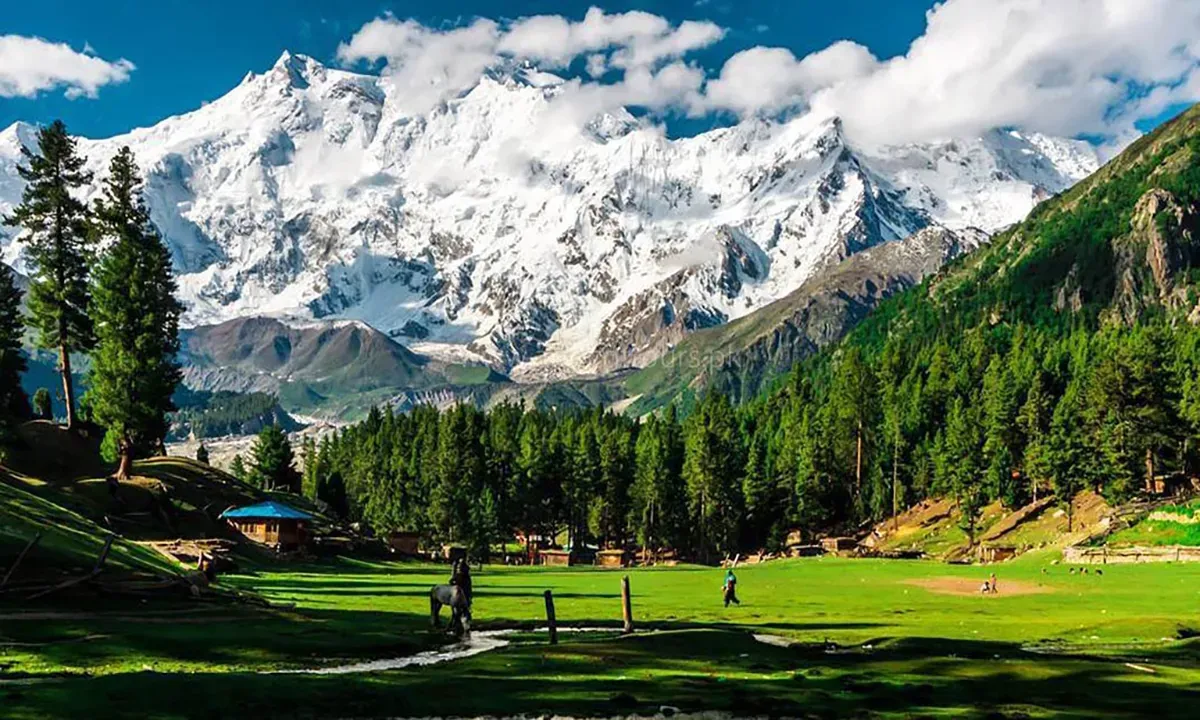
Fairy Meadows itself is a wide plateau of grass and scattered wooden huts. Nanga Parbat hangs overhead, close enough that you can see individual snowfields and rock bands. Sleeping options range from basic wooden cabins to proper hotel rooms, with prices from 3,000 to 15,000 PKR per night. Many visitors bring tents and camp in designated areas, which costs less and puts you outside for the night sky.
Most lodges run buffet meals, but prices are high at altitude where everything must be carried up by horse or jeep. Smart travelers bring their own food: nuts, dried fruit, energy bars, and instant coffee. The local staff are genuinely welcoming, offering tea and helping orient newcomers to the layout of the meadow.
If you have energy after arriving, two main viewpoints await. Beyal Camp sits closer to Nanga Parbat and requires a 2 to 3 hour trek from the main meadow. The Nanga Parbat Base Camp is more serious: a 4.5 hour trek each way that brings you to the toe of the Rakhiot Glacier. Standing at the base camp, you look up at the mountain's south face, a 4,600 meter wall of ice and rock that has only been climbed a handful of times.
Best time to visit Fairy Meadows Pakistan
The season runs from April through September. June to August offers the most reliable weather and clear views of Nanga Parbat. July provides warm temperatures even at night, but it is also the busiest month. The trail gets crowded, accommodation fills up, and you share the meadow with dozens of other groups.
For fewer people, try June or September. The weather is slightly less predictable, but you have more space to yourself. May can work if you want cool temperatures and minimal crowds, though some guesthouses may not be fully open yet. Weather at 3,300 meters changes fast. Rain gear is mandatory regardless of when you visit.
What it actually costs
Fairy Meadows is expensive by Pakistani standards. The fixed jeep fares, limited competition, and logistics of altitude create a high-cost environment. Here is the breakdown:
- Car parking at Raikot Bridge: 500 PKR per day
- Jeep round trip (6 people max): 12,100 to 16,100 PKR
- Horse for luggage: 100 PKR per kilogram
- Horse ride return: 4,100 PKR
- Accommodation: 3,000 to 15,000 PKR per night
- Food: significantly more expensive than lowland Pakistan
The total adds up quickly. A three-day trip for two people can easily run 50,000 to 70,000 PKR including transport, lodging, and food. Whether this is worth it depends on your budget and your priorities. The scenery is genuinely extraordinary. Whether it is worth the expense is a personal calculation.
Essential practical information
Timing and logistics
Reach Raikot Bridge before 2:00 PM. Late arrivals risk hiking in darkness or paying for an unplanned night in Tatu Village. The jeep takes 1.5 to 2 hours, and the hike requires 3.5 to 4.5 hours. Plan your departure with the same math: the jeep down takes 1.5 hours, horses about 1.5 hours.
What to bring
Warm clothes are non-negotiable. Even in July, temperatures at 3,300 meters drop below 10°C at night. Take warm layers from your car before boarding the jeep; you will not return to it until you leave. Bring hiking boots with good grip. The trail is steep and can be muddy or slippery after rain. Pack a raincoat. Weather turns quickly at altitude. Bring your own snacks and basic food to avoid lodge prices. Get an SCOM SIM card before traveling. Standard Pakistani networks do not work in this area. SCOM is the only provider with coverage, and it only functions during daylight hours when solar-powered towers are active.
Physical preparation
The altitude affects everyone differently. Even fit hikers sometimes experience headaches or shortness of breath at 3,300 meters. The trek is manageable if you exercise regularly, but it is challenging if you do not. If your pack weighs more than 10 kilograms, consider paying for a horse. Carrying heavy loads up 1,200 meters of elevation gain is grueling work. Drink more water than you think you need. The air is dry and thin, and dehydration happens faster at altitude.
How long to stay
Stay at least two nights. This gives you one full day to recover from the ascent and either explore Beyal Camp or simply sit in the meadow and absorb the place. Three days allows you to attempt the base camp trek without rushing. The experience of Fairy Meadows unfolds slowly. The first day is arrival and shock. The second day is exploration. The third day is reluctant departure.
Is it worth the effort?
If you care about mountains, the answer is yes. The combination of dangerous roads, physical exertion, altitude, and expense filters out casual visitors. What remains is a small community of people who really want to be there, sharing a meadow beneath one of the most formidable mountains on Earth.
There are valid concerns about development. Guesthouses multiply each year. The construction is starting to clutter the edges of the meadow. But the core experience remains: standing at 3,300 meters, looking up at an 8,000-meter peak, breathing air that smells of pine and cold water. German climbers named this place "Fairy Tale Meadows" in the 1950s because the scene looked unreal to them, too perfect to exist in ordinary geography.
Photographs fail to capture the scale. You see pictures of Nanga Parbat from Fairy Meadows and think you understand the size. Then you stand there and realize the mountain is three kilometers higher than where you are standing, and you are already higher than most of Europe. Watching sunrise hit the summit, watching the snow fields turn orange and then gold, is a specific kind of experience that stays with you.
Final thoughts
Fairy Meadows Pakistan demands effort, patience, and money. It delivers a landscape that justifies all three. The dangerous jeep ride, the long hike, the altitude: these are not obstacles but filters. They ensure that the people who reach the meadow really want to be there.
For hikers, photographers, and anyone who feels the pull of high mountains, this place is essential. It is not comfortable. It is not easy. It is one of the most spectacular places in Pakistan, and one of the few where the difficulty of access has preserved something genuinely special.